1、 Silencer for Electromagnetic Waves: Working Principle of Soft Magnetic Absorbing Materials
The basic function of absorbing materials is to convert the energy of incident electromagnetic waves into thermal energy and dissipate it, thereby eliminating unnecessary electromagnetic reflections and interference. There are mainly two core mechanisms for achieving this function: dielectric loss and magnetic loss.
Soft magnetic absorbing materials follow the technical route of "magnetic loss". It utilizes the magnetization response of soft magnetic materials (such as ferrite, carbonyl iron, iron silicon aluminum alloy powder, etc.) in an alternating electromagnetic field, and converts electromagnetic energy into thermal energy through mechanisms such as hysteresis loss, eddy current loss, and natural resonance or exchange resonance. Compared with materials that rely solely on dielectric loss, soft magnetic absorbing materials have a wider absorption bandwidth and better impedance matching characteristics in the low to high frequency range - this means that electromagnetic waves can "enter" the interior of the material rather than be reflected on the surface, thereby achieving more thorough absorption.
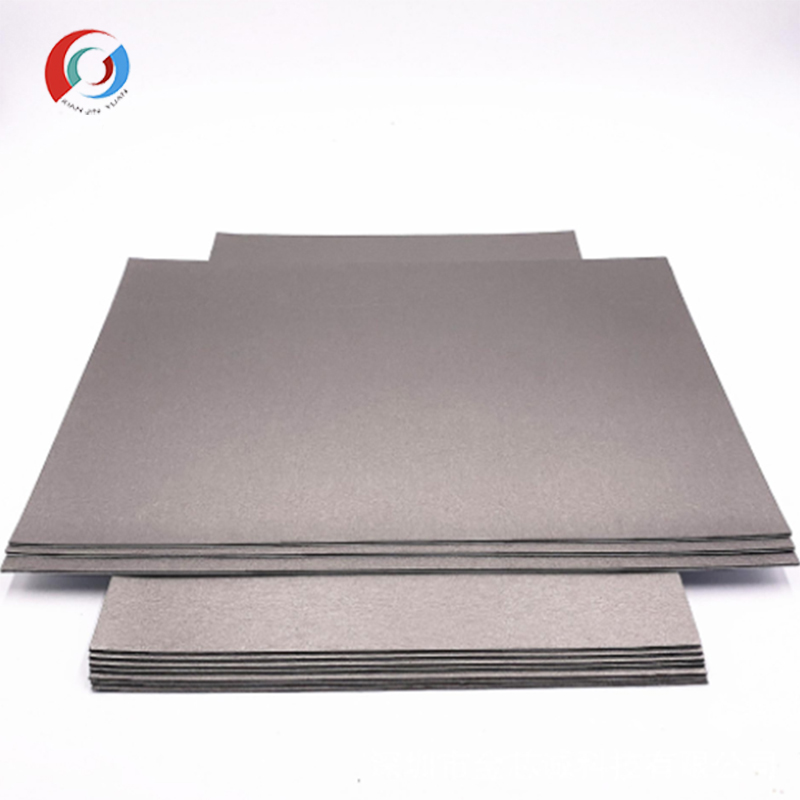
Soft magnetic absorbing materials are usually composed of micrometer sized sheet-like soft magnetic alloy powder and polymer matrix (such as silicone rubber, polyurethane, acrylic resin, etc.) composite. The orientation and arrangement of sheet-like powders can significantly enhance the magnetic permeability of materials at high frequencies, while the polymer matrix endows the materials with flexibility and processability. Advanced Institute Technology has achieved customized absorption performance in different frequency bands through precise control of particle size, orientation arrangement, and filling ratio of soft magnetic powders, covering a wide spectrum of absorption requirements from 100MHz to millimeter wave frequency bands (such as 77GHz vehicle radar frequency band).
2、 From "thin, light, wide, strong" to flexibility: the direction of technological evolution
Modern electronic devices have put forward the core requirements of "thin, light, wide, and strong" for absorbing materials - thin thickness, light weight, wide frequency band, and strong absorption. Traditional magnetic absorbing materials often have high density and are prone to magnetic permeability attenuation in the high frequency range, making it difficult to simultaneously meet the four dimensions mentioned above.
Technological breakthroughs in recent years are changing this situation. Research has shown that through magnetic field assisted orientation technology, sheet-like carbonyl iron particles can form ordered chain like structures in polymer matrices, construct gradient impedance distributions, and achieve an effective absorption bandwidth of 7GHz at a thickness of only 1.8mm. Another study has achieved a minimum reflection loss of -47.68dB and an effective absorption bandwidth of 6.56GHz at a thickness of 1.5mm by introducing rare earth soft magnetic materials (such as cerium iron nitride Ce ₂ Fe ₁₇ N ∝ - δ) and composite with carbon nanotubes. At the same time, the fracture elongation rate reached 135.8%, which means that the material can still maintain stable absorption performance under mechanical deformation such as bending and stretching.
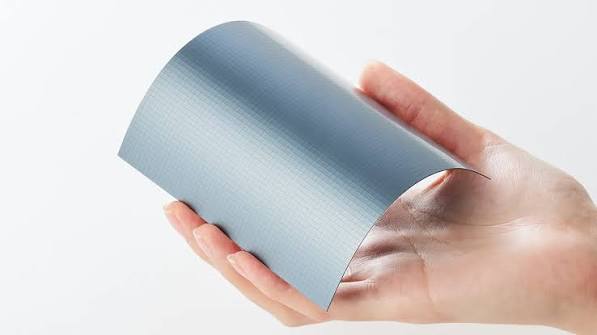
Flexibility is another important direction. In applications such as wearable devices, foldable smartphones, and flexible circuit boards, absorbing materials need to be able to adhere to irregular surfaces and maintain performance during dynamic bending. The soft magnetic absorption products of Advanced Institute Technology have achieved excellent flexibility and die cutting ability by optimizing the matrix material formula and powder filling process, while ensuring absorption performance. They can be customized into different shapes and sizes of absorption plates, absorption films or absorption foam according to customer needs.
3、 Three major application scenarios: from communication base stations to intelligent vehicles
The application scope of soft magnetic absorbing materials is rapidly expanding, and currently three core application matrices have been formed.
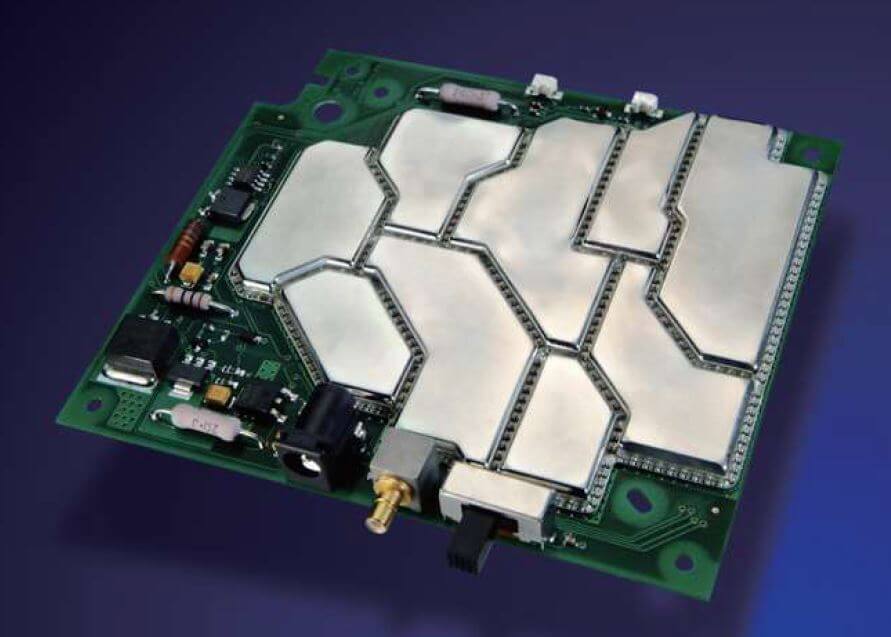
5G/6G communication devices are currently one of the most active application areas. As communication devices evolve towards miniaturization and high power density, electromagnetic radiation interference between internal modules of base stations has become a key challenge affecting device stability. Soft magnetic absorbing materials are widely used in components such as base station antennas, RF front-end modules, filters, etc. They suppress resonance, reduce noise, and ensure signal integrity by absorbing stray electromagnetic waves inside the cavity. In the millimeter wave frequency band (such as 5G millimeter wave and future 6G frequency band), the magnetic loss mechanism of soft magnetic absorbing materials has natural advantages compared to pure dielectric materials, especially suitable for high-frequency and high integration scenarios.
New energy vehicles and intelligent driving are another rapidly growing market. The millimeter wave radar (24GHz, 77GHz, etc.), laser radar, and in vehicle communication module in advanced driver assistance systems (ADAS) have extremely strict requirements for electromagnetic compatibility. Soft magnetic absorbing materials can be used inside radar modules to suppress cavity resonance and reduce sidelobe interference; In battery management systems (BMS) and electronic control units (ECU), wave absorbing plates are used to absorb high-frequency switching noise and prevent interference to sensitive circuits. With the continuous increase in global sales of electric vehicles, the electromagnetic compatibility demand for in car electronic devices is driving the accelerated expansion of the absorbing material market.
Consumer electronics and wearable devices are the largest application areas. Smartphones, tablets, smartwatches, and other devices have extremely limited internal space, and electromagnetic coupling between components may cause signal attenuation or functional abnormalities. The ultra-thin flexible soft magnetic wave plate can be attached to key parts such as processors, antennas, camera modules, display driver chips, etc., effectively suppressing near-field noise. In RFID/NFC applications, soft magnetic absorbing materials can also solve the problem of reading distance attenuation when RFID tags are attached to metal surfaces.
4、 Selection points and design suggestions
When selecting soft magnetic absorbing materials, engineers need to focus on the following dimensions: working frequency band - the optimal absorption frequency band for different material systems is different, and it needs to be matched according to the main interference frequency of the equipment; Absorption performance - usually evaluated by reflection loss (RL) and effective absorption bandwidth (EAB); Thickness and spatial constraints - in a finite space, it is necessary to find the optimal balance between thickness and absorption performance; Environmental tolerance - requires evaluation of working temperature range, flame retardant rating, and weather resistance requirements; Installation method - whether adhesive backing is required, whether die-cutting is required to create a specific shape.
Advanced Institute Technology provides full process technical support from material selection, performance simulation to sample trial production, and batch delivery, helping customers incorporate absorption solutions into electromagnetic compatibility considerations in the early stages of product design.
5、 Outlook
The global electromagnetic wave absorbing material market is continuously expanding at a compound annual growth rate of 8.4%. With the deepening of 5G/6G infrastructure construction, the continuous improvement of automotive intelligence level, and the accelerated popularization of wearable devices, the market demand for soft magnetic absorbing materials is expected to maintain strong growth. At the same time, the industry is continuously evolving towards the direction of "thinning, flexibility, broadband, and integration" - a new generation of soft magnetic absorbing materials with higher magnetic permeability, wider absorption bandwidth, and better mechanical flexibility will become key enabling components in electromagnetic compatibility design.
Advanced Institute (Shenzhen) Technology Co., Ltd. will continue to deepen its cultivation in the field of soft magnetic absorbing materials, providing customers with higher performance and more reliable electromagnetic compatibility solutions through material innovation and process optimization.

 en
en  Español
 Français
 Português