1、 Why is it a 'phase transition'? ——Understanding performance transitions from physical mechanisms
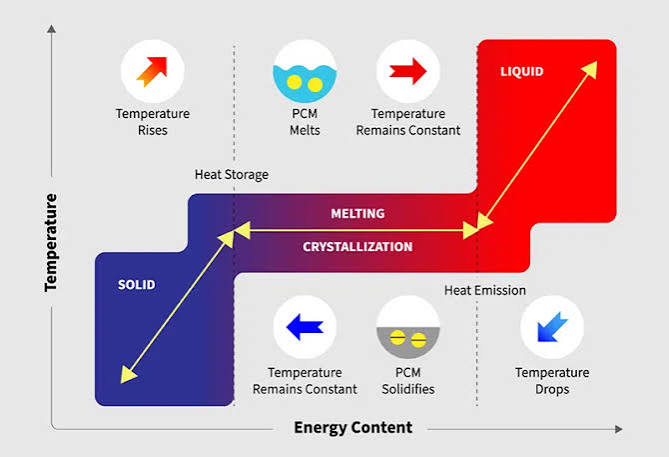
The core working principle of Phase Change Thermal Interface Material (PC-TIM) can be summarized in eight words: solid-state at room temperature and liquid at high temperature.
At room temperature, phase change materials exist in the form of solid sheets or pastes, which are convenient for storage, transportation, and installation. When the device starts working and the temperature of the heating element rises to the phase transition temperature point (usually 45 ℃ -50 ℃), the material undergoes solid-liquid phase transition, softening and filling the micro concave convex gap between the heating chip and the heat sink. This physical process brings two key advantages:
Extremely low interface contact thermal resistance. Although traditional thermal pads have a high thermal conductivity, due to their high hardness, they cannot fully adhere to micro uneven contact surfaces. The residual air gap at the interface (with an air thermal conductivity of only about 0.026W/m · K) becomes the main bottleneck for thermal conduction. Phase change materials can "wet" the contact surface like thermal paste after liquefaction, completely expelling air and achieving true "zero gap" contact.
Excellent long-term reliability. Unlike thermal paste that gradually "pumps out" or dries up during long-term high-temperature operation, phase change materials recover to a solid state below the phase change temperature and do not undergo flow migration. After baking at 150 ℃ for 1000 hours and cycling at -55 ℃ to 125 ℃ for 1000 times, its thermal resistance can still remain stable. This cycle mechanism of "solid-state installation, liquid service, and solid-state retention" gives phase change materials an irreplaceable advantage in high reliability application scenarios.
2、 Advanced Institute Thermal Phase Change Material Matrix: Complete Coverage from 2.5W to 10W
Based on its technological accumulation in the field of thermal management materials, Advanced Institute Technology has launched a phase change thermal conductive material product line covering the entire spectrum of medium and high thermal conductivity. The material systems with different thermal conductivity correspond to different application scenarios and performance requirements, forming a complete solution matrix from consumer electronics to AI servers.
The 10W/m · K ultra-high thermal conductivity series is currently the highest thermal conductivity phase change material product of Advanced Institute Technology, positioned for TIM 1.5 level (chip level thermal interface) applications. The thermal resistance of this series of materials is reduced by 10% -15% compared to Honeywell PTM7950, and it does not contain zinc oxide components. It has excellent electrical insulation performance while maintaining high thermal conductivity. For different application scenarios, this series also offers two sub gradients of 9.6W/m · K and 9.5W/m · K, which are respectively benchmarked against the Honeywell PTM 7950 and PTM 7958 series.
The 8.0W/m · K-8.5W/m · K high-performance series is positioned as a benchmark for Honeywell PTM 7950-SP and PTM 7958-SP. This level of material is widely used in AI server CPU/GPU, high-performance computing clusters and other scenarios, and can provide stable and reliable thermal management guarantee in the chip power consumption range of 200W-400W.
The 5.0W/m · K-6.5W/m · K medium high thermal conductivity series covers multiple benchmark product lines from Honeywell PTM7000 to PTM5000. The 6.5W/m · K series offers a low phase transition temperature (35 ℃) option, suitable for devices sensitive to start-up temperature. This series has a wide range of applications in consumer and professional devices such as laptops, game consoles, and communication modules.
The 2.5W/m · K-4.5W/m · K economical series is positioned as a benchmark product for Honeywell PCM45F and PTM6000, providing higher cost-effectiveness while ensuring basic thermal conductivity. It is suitable for cost sensitive low to medium power equipment cooling scenarios.
Advanced Institute Technology ensures that each series of products maintains a high degree of consistency with international first-line brands in key parameters such as thermal resistance, phase change temperature, viscosity, and specific gravity through precise formula control and process optimization, while providing more competitive delivery cycles and technical support services.
3、 Three core application scenarios: from AI servers to new energy vehicles
AI servers and data centers: "hot buffers" to cope with instantaneous hot peaks.
The workload of AI chips exhibits significant "pulse like" characteristics - power consumption skyrockets instantly at the start of training tasks, and rapidly falls back during task intervals. Traditional thermal conductive materials face severe challenges in this thermal cycle: thermal paste is easily pumped out, and thermal pads are difficult to cope with instantaneous thermal shocks. Phase change materials utilize the latent heat of phase change absorbed during the solid-liquid phase transition process to act as a "thermal buffer" when the chip generates an instantaneous heat peak - absorbing excess heat and temporarily storing it inside the material, and slowly releasing it to the heat sink after the load falls back. This mechanism effectively suppresses the instantaneous peak of chip junction temperature, providing a key guarantee for the long-term stable operation of AI servers. Research has shown that the new phase change thermal interface material can reduce steady-state temperature by 10-15 ℃ and peak temperature by 8-10 ℃ in actual CPU heat dissipation testing. High end phase change materials are becoming a standard choice in the AI server market.
New Energy Vehicles and Power Electronics: Reliable Thermal Management in High Voltage Scenarios.
In the battery management system, motor controller (MCU), and on-board charger (OBC) of electric vehicles, the heat dissipation management of IGBT and SiC power modules is directly related to the safety and performance of the entire vehicle. The application of phase change thermal conductive materials in high-voltage EV battery packs has been proven to effectively manage transient thermal spikes during ultra fast charging, reduce the risk of thermal runaway, and improve battery cycle life. The low thermal resistance characteristics of PC-TIM make it particularly suitable for interface heat transfer between IGBT modules and liquid cooled plates, achieving efficient heat transfer while ensuring electrical insulation.
5G communication equipment and high-frequency electronics: a heat dissipation necessity under the trend of miniaturization.
The trend towards miniaturization and high integration of 5G base stations and communication equipment has led to a sharp increase in heat density per unit volume. Phase change materials not only perform thermal conductivity under normal operating conditions in communication equipment, but also play a buffering role in phase change heat storage during sudden high loads. Its characteristics of being solid during installation and liquid during operation make assembly on the production line more convenient, without the need for strict control of coating thickness and uniformity like thermal paste, significantly improving manufacturing efficiency and product consistency.

4、 Selection Guide: How to Choose the Most Suitable Phase Change Material for Your Equipment
When engineers choose thermal phase change materials, it is recommended to conduct a comprehensive evaluation from the following dimensions:
The balance between thermal conductivity and thermal resistance. Although high thermal conductivity is important, the actual heat transfer efficiency depends more on the total thermal resistance (including bulk thermal resistance and contact thermal resistance). The core value of phase change materials lies in significantly reducing contact thermal resistance through phase change liquefaction. Therefore, in some scenarios, materials with slightly lower thermal conductivity but excellent phase change characteristics can actually achieve lower overall thermal resistance.
Matching phase transition temperature with working environment. The phase transition temperature should be slightly higher than the normal operating temperature of the equipment to ensure that the material is in a liquid state during normal operation (fully utilizing its filling capacity), and returns to a solid state in standby or low-temperature environments (preventing migration). Advanced Institute Technology provides multiple phase change temperature options ranging from 35 ℃ to 50 ℃, suitable for different application scenarios.
Long term reliability and environmental tolerance. The thermal cycling stability of materials is crucial for devices such as servers, base stations, and vehicle electronics that operate 24/7. The performance retention ability of phase change materials in repeated solid-liquid phase change cycles is the core indicator for evaluating their long-term reliability.
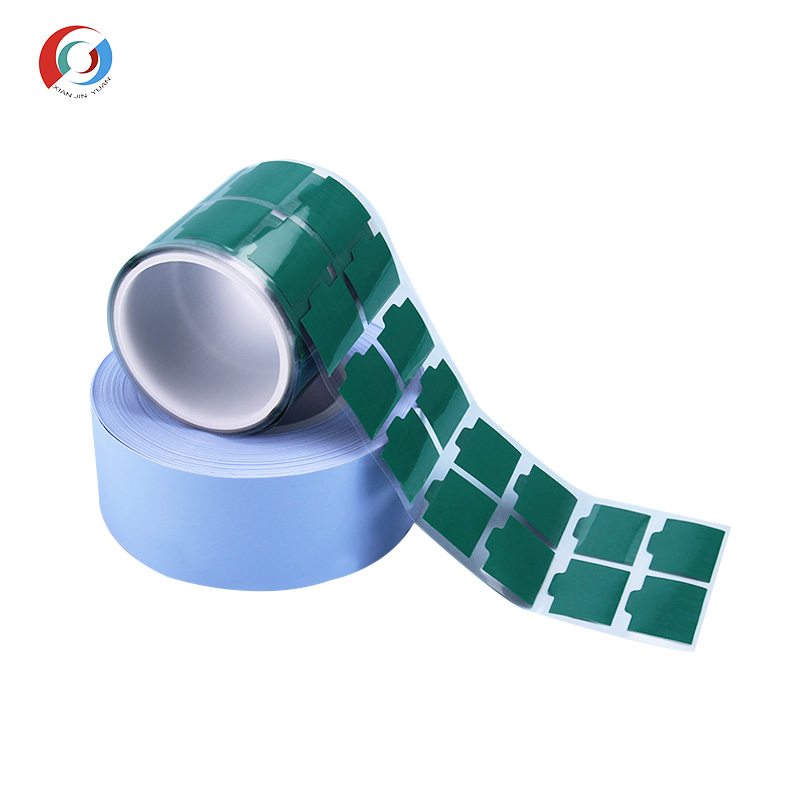
Installation process and repairability. Phase change materials are provided in the form of solid sheets, which can be die cut into any shape and attached to the surface of heating devices or heat sinks. If repair is required, the material can be easily removed by softening after heating, without the need for special cleaning processes.
Advanced Institute Technology provides full process technical support from material selection, performance testing to sample trial production and batch delivery, helping customers incorporate phase change thermal conductivity solutions into system considerations in the early stages of thermal design.
5、 Outlook
The global market sales of phase change thermal conductive materials are expected to reach approximately 1.2 billion US dollars in 2025, and are expected to reach 1.3 billion US dollars by 2026. The compound annual growth rate from 2026 to 2032 is about 10.9%, and the market size is expected to reach 2.4 billion US dollars by 2032. The explosion of AI computing power, continuous promotion of automotive electrification and 5G/6G communication are pushing phase change thermal conductive materials from "niche materials" to "mainstream TIM solutions".
Advanced Institute (Shenzhen) Technology Co., Ltd. will continue to deepen its cultivation in the field of phase change thermal conductive materials, providing customers with higher thermal conductivity, lower thermal resistance, and more reliable interface thermal management solutions through constantly iterating material formulas and manufacturing processes.
 en
en  Español
 Français
 Português