1、 Why "Platinum" - Understanding the Irreplaceability of PET Platinum Coating Film from the Periodic Table of Elements
In the precious metal coating family, gold, silver, and platinum are the three most commonly used coating metals. Each of the three has its own focus - gold plating is known for its chemical inertness, silver plating is known for its optimal conductivity, and platinum plating exhibits unique comprehensive advantages in three dimensions: high transparency, biocompatibility, and extreme environmental corrosion resistance.
The chemical stability of platinum is the fundamental reason why it cannot be replaced in high-end applications. Platinum is one of the most stable precious metals in nature, with strong resistance to the vast majority of acids, bases, salts, and organic solvents. The characteristic of platinum enables its coating to maintain structural integrity and stable performance in highly corrosive environments for a long time - whether it is the long-term service of medical equipment in complex body fluid environments or the repeated processing of optical devices in harsh cleaning processes, platinum coating can provide reliable protection. The chemical inertness of gold endows gold-plated electrodes with excellent corrosion resistance, making them suitable for long-term implantation scenarios; Platinum plating not only ensures corrosion resistance, but also has better electrode catalytic activity and signal transduction efficiency.
The transparency advantage of platinum makes it irreplaceable in the field of optics. Compared with metal coatings such as gold and silver, platinum coatings have higher light transmittance in specific wavelength bands. The PET platinum plated film of Advanced Institute Technology has undergone special processing to ensure that light passes through with extremely high efficiency, reducing light scattering and absorption, and providing clear and accurate imaging effects for optical instruments. Whether it is the optical components of high-precision microscopes, professional photography lenses, or the optical windows of advanced laser equipment, the high transparency of PET platinum coated film can meet the stringent requirements for optical performance.
The biocompatibility of platinum gives it a unique advantage in the biomedical field. Platinum and its alloys exhibit excellent biological inertness in the human environment, making them less likely to trigger immune rejection reactions or tissue inflammation. This makes PET platinum coated film an ideal material for manufacturing products such as biosensors and electrodes for implantable medical devices. In recent years, platinum based thin-film microelectrode arrays have been proven to achieve high fidelity neural signal recording and electrical stimulation. Platinum plated electrodes have become an ideal choice for high-frequency EEG monitoring due to their low resistivity characteristics.
2、 From Process Breakthrough to Performance Leap: The Technological Path of Advanced Institute
The preparation of PET platinum coated film requires high adhesion, uniformity, and density of the platinum layer while maintaining the flexibility and transparency of the PET substrate, which places extremely high demands on process accuracy.
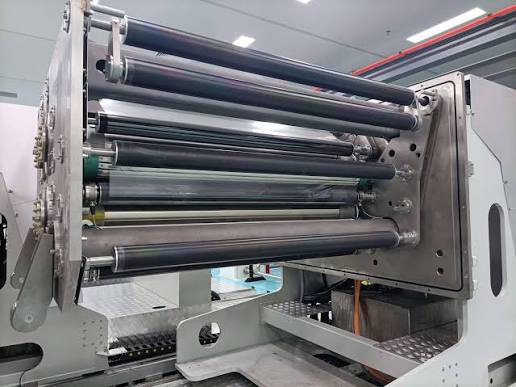
Advanced Institute Technology adopts Physical Vapor Deposition (PVD) technology, including magnetron sputtering and vacuum evaporation, to achieve precise nanoscale deposition of platinum atoms on the surface of PET substrates. The company has independently built a roll to roll (R2R) vacuum coating production line, which can continuously deposit metal layers on the surface of flexible polymer films. The process features include uniform coating, strong adhesion, and support for large-scale supply. Suitable substrates include various flexible materials such as PET, PI, FEP, LCP, PPS, PEN, PP, etc., and can be plated with metals including gold, silver, copper, aluminum, tin, nickel, titanium, platinum, etc. The thickness of the platinum layer can be controlled between a few nanometers and several hundred nanometers.
On the core challenge of interface bonding, Advanced Institute Technology has developed a plasma pretreatment process, which effectively improves the bonding strength between PET substrate and platinum layer by bombarding the substrate surface with plasma. The metal coating achieves stress transition from the substrate to the metal layer through gradient coating design, effectively avoiding interface delamination caused by modulus differences. In the platinum plating process, the company adopts pulse electroplating technology, which effectively reduces the porosity in the coating and improves the density and uniformity of the coating by precisely controlling the switching time and frequency of the current. The company has passed ISO9001 quality management system certification, and its products comply with GJB 773A aerospace related standards and RoHS environmental requirements.
In terms of core performance indicators, the platinum electrode slurry developed by Advanced Institute Technology has a sintered resistivity as low as 1.65 μ Ω· cm and a square resistance as low as 20 ± 5m Ω/□, ensuring high sensitivity and fast response of the electrode. The adhesion strength of the coating can reach 5B level after 100 grid tests. Customers can customize the thickness and width of the film according to the needs of different application scenarios.
3、 Four core application scenarios: from precision optics to biomedical applications
High end optics and precision instruments are one of the application areas with the highest content of PET platinum coating technology. In high-end camera lenses, microscope optical components, laser equipment optical windows, and other scenarios, materials need to ensure high transparency while also possessing conductivity and environmental stability. The PET platinum plated film from Advanced Institute Technology ensures that light passes through with extremely high efficiency, reducing light scattering and absorption. PET platinum coated film also exhibits unique application value in infrared windows and fiber optic communication devices. A well-known enterprise in Nanjing, in search of high-performance thin film materials, conducted a series of strict tests on transparency, conductivity, and corrosion resistance, and determined that the PET platinum plated film from Advanced Institute Technology fully meets the production requirements of its products.
Biomedical and medical devices are the fastest-growing application directions for PET platinum coated films. In cutting-edge fields such as biosensors, implantable medical device electrodes, neural probes, and brain computer interfaces, materials need to simultaneously meet the triple constraints of conductivity, biocompatibility, and long-term stability. Advanced Institute Technology, with metal coating technology as its core, has developed three types of flexible substrate coating solutions: silver plating, gold plating, and platinum plating. Through material modification, it breaks through the performance boundaries of traditional electrodes and provides high-precision solutions for the cutting-edge field of neural probes and brain computer interfaces. In the application of SEEG (Stereoscopic Electroencephalogram) deep electrodes, platinum plated electrodes have become an ideal choice for high-frequency EEG monitoring due to their low resistivity characteristics, which can effectively capture the transient discharge activity of epileptic foci. The excellent chemical stability of platinum metal layers makes platinum plated films have broad application prospects in the manufacturing of protective coatings for endoscopes, surgical instruments, and electrode materials for biosensors. After multiple investigations and rigorous testing, a well-known enterprise in Suzhou ultimately chose Advanced Institute Technology's PET platinum plating film for the production of its products.
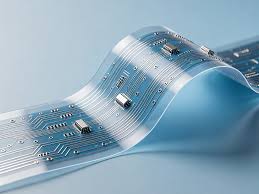
Precision electronics and flexible circuits are one of the fields with the highest usage of PET platinum plating film. In the manufacturing of electronic products such as touch screens, flexible circuit boards, and thin-film batteries, PET platinum coated films have shown extensive application value. Platinum metal has stable chemical properties and excellent conductivity, which enables platinum coated films to effectively conduct current in electronic circuits, reduce energy loss, and improve the operational efficiency of electronic devices. In touch screen applications, the excellent conductivity of PET platinum coated film ensures the sensitivity and accuracy of touch operations; In flexible circuit boards, their good conductivity can ensure stable transmission of circuit signals. In the manufacturing of high-end electronic products such as smartphones, tablets, wearable devices, etc., the excellent conductivity of PET platinum coated film can meet their demand for high-performance conductive materials.
Sensors and catalytic platforms represent the cutting-edge applications of PET platinum coated films in emerging technological fields. The catalytic activity of platinum makes it uniquely valuable in fields such as electrochemical sensors and biofuel cells. Research has shown that platinum and gold platinum bimetallic thin films prepared by electrodeposition on flexible ITO-PET substrates exhibit excellent conductivity and dielectric properties, and are expected to be used in flexible optoelectronic devices, transparent electrodes, and advanced catalytic or sensing platforms. Precious metals, especially platinum and gold, are widely used in thin film technology due to their excellent conductivity, chemical stability, corrosion resistance, and catalytic activity. With the rapid development of flexible electronics and wearable sensing technology, the application prospects of PET platinum coated film in the field of sensors are continuously expanding.
4、 Selection points and design suggestions
Engineers need to focus on the following dimensions when selecting PET platinum plated films: balance between transparency and conductivity - different application scenarios have different priorities for transparency and conductivity, which need to be matched according to specific optical or electronic performance requirements; Platinum layer thickness and adhesion - thinner platinum layers (nanometer level) are suitable for high transparency optical scenes, while thicker platinum layers (micrometer level) are suitable for biomedical and sensor scenes that require high reliability; Environmental tolerance - requires assessment of chemical corrosion risks, biocompatibility requirements, and sterilization process compatibility in the work environment; Customized requirements - Advanced Institute Technology supports on-demand customization of film thickness and width to meet the personalized needs of different industries.
Advanced Institute Technology provides full process technical support from material selection, sample testing to batch delivery, helping customers incorporate PET platinum plating film solutions into their system considerations in the early stages of product design.
5、 Outlook
The global precious metal thin film market is expected to continue expanding at a compound annual growth rate of 3.8%. The global metalized film market is expected to steadily grow at a compound annual growth rate of 4.10%. The global flexible substrate market is estimated to reach $7.516 billion in 2024 and is expected to grow to $22.452 billion by 2032. Driven by the rapid development of high-end optical upgrades, biomedical innovation, precision electronic iteration, and flexible sensing technology, PET platinum coated films with high transparency, excellent conductivity, and outstanding corrosion resistance are moving from "high-end professional materials" to standard functional substrates for precision manufacturing in multiple fields.
At the same time, the industry is continuously evolving towards thinner platinum layers, higher light transmittance, stronger adhesion, and more functional integration. The electronic synergy effect of bimetallic systems (such as AuPt) is being extensively studied, which is expected to further enhance the conductivity and charge transfer efficiency of the material. The application of flexible and stretchable platinum based thin film electrodes in neural interfaces and wearable devices is accelerating industrialization. PET platinum coated film will continue to play an irreplaceable key role in high-end manufacturing due to its comprehensive advantages in four dimensions: transparency, conductivity, corrosion resistance, and biocompatibility.
Advanced Institute (Shenzhen) Technology Co., Ltd. will continue to deepen its expertise in the field of PET platinum coating, providing customers with higher performance and more reliable flexible substrate precious metal coating solutions through material innovation and process optimization.
 en
en  Español
 Français
 Português