1、 Why "PP" and Why "Copper" - Understanding the Performance Logic from Material Selection
The technical logic of PP copper plating film is rooted in the deep synergy between substrate selection and coating selection.
The value of PP substrate lies in its "lightness" and "stability". Polypropylene (PP), as a semi crystalline thermoplastic polymer material, is receiving increasing attention in the field of flexible electronics. PP film has significant characteristics such as light weight, good flexibility, high chemical stability, and strong corrosion resistance. Its density is only 1/8 of copper, giving the composite material significant lightweight advantages. Compared with high-performance polymers such as PI, PP has lower cost, simpler processing, and is easier to apply on a large scale. The melting point of PP film is usually between 160-170 ° C, and the long-term use temperature can reach about 110 ° C, which is much higher than the requirements of conventional high-temperature environments. PP has been proven to be a safe and stable plastic material in the electrolyte environment for lithium-ion battery applications.
The value of copper plating lies in its "conductivity" and "screen". Copper, as an excellent conductive material second only to silver, reduces the surface resistivity of PP copper plated films to the order of 10 Ω· cm, meeting industrial grade conductivity standards. This level of conductivity enables it to directly replace traditional copper foil in applications such as electromagnetic shielding and flexible circuits. At the 10GHz frequency band, the shielding effectiveness of PP copper plated film can reach 85dB, which is 40% higher than that of aluminum foil.
However, the metallization of PP is not an easy task. The low surface energy, weak polarity, and non-polar molecular structure of PP result in poor adhesion to the metal layer. Solving this interface bonding problem is the core proposition for PP copper plating film to move from the laboratory to industrialization.
2、 From Process Breakthrough to Performance Leap: The Technological Path of Advanced Institute
Advanced Institute Technology adopts a dual process route of "magnetron sputtering chemical electroplating" to form a nano level copper seed layer on the surface of PP substrate, and accurately control the thickness of the copper layer in the range of 1-8 μ m through aqueous medium electroplating. This technological path systematically solves three major industry challenges:
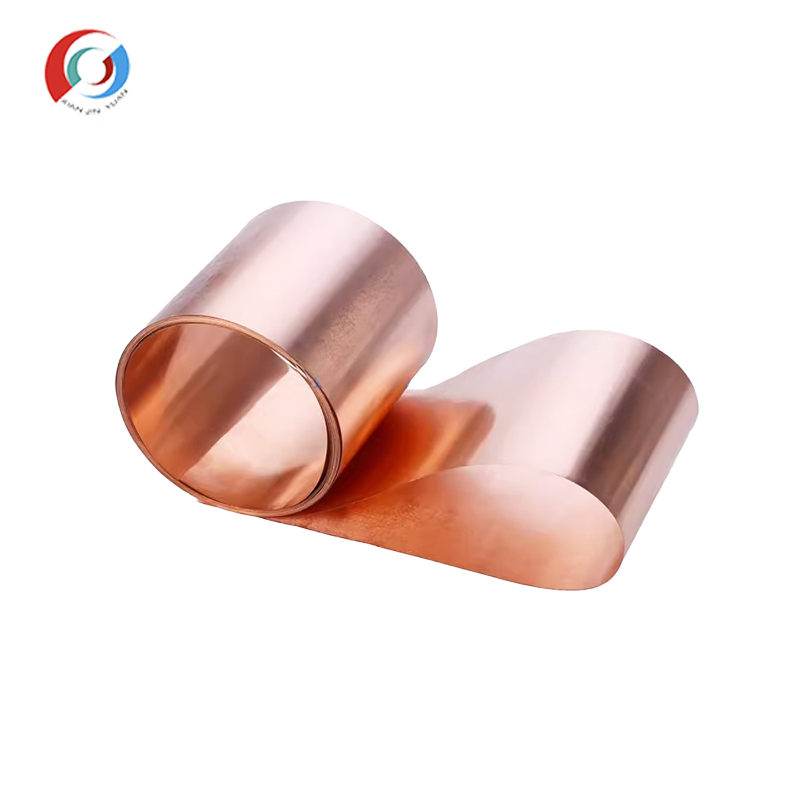
The breakthrough in interface bonding strength is the primary challenge. The surface chemical inertness of pure PP is strong, and the adhesion between untreated PP and sputtered copper layer is extremely poor. Advanced Institute Technology uses plasma pretreatment technology to etch micro nano anchoring structures on the surface of PP and introduce active functional groups, increasing the peel strength between the copper layer and PP substrate to over 2.5N/mm, far exceeding the industry standard of 1.2N/mm. The international academic community is also making continuous breakthroughs in this direction - some studies have used a synergistic surface modification strategy of oxygen plasma activation and HDDA graft polymerization to achieve a PP/copper interface adhesion strength of 6.13N/cm, which is 121.30% higher than the untreated sample; Another study used a combination of plasma treatment and chemical copper plating to prepare a highly conductive PP copper plated substrate with a conductivity of 2.56 × 10 Ω· m and an adhesion strength of ASTM 5B.
The precise control of thickness uniformity is equally crucial. Advanced Institute Technology adopts dynamic current density control technology to control the thickness deviation of the copper layer within ± 0.1 μ m, meeting the strict requirements of 5G communication devices for signal consistency.
The improvement of high-temperature stability is another important dimension. At 150 ° C, the copper layer migration rate of PP copper plated film is reduced by 67% compared to traditional PET substrate, ensuring the structural integrity of power batteries in fast charging cycles.
3、 Three core application scenarios: from consumer electronics to new energy
Consumer electronics and flexible circuits are one of the fields with the highest usage of PP copper plating film. PP copper plated film can be used as the basic material for flexible printed circuit boards (FPCs). Compared with traditional rigid PCB boards, FPCs are lighter in weight, smaller in size, have better bending ability, and higher in space utilization, making them very suitable for portable devices such as smartphones and tablets. In foldable screen phones, PP copper plated film replaces traditional FPC substrates, reducing the thickness of the ribbon from 80 μ m to 45 μ m and freeing up critical space for hinge mechanism design - according to actual measurement data from a leading manufacturer, this directly reduces the thickness of their foldable screen phones by 1.2mm. After 200000 bending tests, the impedance change rate of FPC ribbon using PP copper plated film is only 0.3%, while traditional PI substrate products reach 1.2%.
The current collector of power batteries represents the fastest growing application direction of PP copper plating film. In lithium-ion batteries, the current collector is an important component of the battery, and its performance directly affects the charging and discharging efficiency and cycle life of the battery. Traditional copper foil accounts for about 8% of battery quality and about 9% of manufacturing cost, making it the largest non active component in batteries. PP copper plated film, as a new type of current collector material, has higher conductivity and lighter weight. The surface density is reduced by 72% compared to traditional copper foil with a thickness of 6 μ m, resulting in a 5.8% increase in energy density of the power battery. The actual test data of a new energy vehicle enterprise shows that the battery pack with PP copper plated film reduces the weight by 12kg and increases the range by 38 kilometers. In terms of safety, PP copper plating film reduces the risk of short circuit inside the battery by 82% - a test conducted by a battery company showed that in the needle puncture test, cells using PP copper plating film did not experience thermal runaway, while traditional copper foil cells exceeded 600 ° C in temperature within 3 seconds. Inspired by the phenomenon of mussel adsorption, biomimetic research also confirmed that the surface density of copper metalized PP film is only 4.79mg/cm ², which is 46.48% lighter than traditional copper foil (8.95mg/cm ²).
Electromagnetic shielding and high-end manufacturing are the most demanding application areas for PP copper plating film technology. At the 10GHz frequency band, the shielding effectiveness of PP copper plated film reaches 85dB. It has passed salt spray testing for 960 hours without corrosion and maintains dimensional stability in the temperature range of -40 ° C to 120 ° C. A certain medical electronics company used a 0.5 μ m ultra-thin PP copper plated film as the electrode substrate in its implantable neural stimulator, which not only achieved a 40% reduction in device volume, but also reduced tissue inflammatory response to 1/5 of traditional platinum electrodes through copper layer biocompatibility coating technology.
4、 Selection points and design suggestions
When selecting PP copper plated film, engineers need to focus on the following dimensions: matching copper layer thickness with conductivity requirements - an adjustable range of 1-8 μ m covering diverse scenarios from ultra-thin flexible circuits to high current carrying power batteries; Adhesion and bending life - For flexible electronic applications that require repeated bending, peel strength and impedance change rate in bending tests are the core considerations; Environmental tolerance - requires assessment of working temperature range, salt spray corrosion risk, and electrolyte compatibility; Customized requirements - Advanced Institute Technology supports customized copper layer thickness, uniformity, and PP substrate specifications as needed.
Advanced Institute Technology provides full process technical support from material selection, sample testing to batch delivery, helping customers incorporate PP copper plating film solutions into their system considerations in the early stages of product design.
5、 Outlook
The global copper plating film market is expected to continue expanding at a compound annual growth rate of 7.3%. Driven by the demands for consumer electronics flexibility, lightweight power batteries, and high-frequency communication electromagnetic compatibility, PP copper plated film is moving from an "emerging material" to a standard option for multifunctional substrates in multiple fields. At the same time, the industry is continuously evolving towards thinner copper layers, higher adhesion, and better electrolyte compatibility. PP copper plated film, with its comprehensive advantages in four dimensions of "lightweight, flexibility, high conductivity, and strong shielding", will continue to play a key role in the fields of flexible electronics, new energy, and high-end manufacturing.
Advanced Institute (Shenzhen) Technology Co., Ltd. will continue to deeply cultivate the field of PP copper plating film, providing customers with higher performance and more reliable flexible substrate coating solutions through material innovation and process optimization.
 en
en  Español
 Français
 Português