1、 Why hearing aids cannot do without FPC - a paradigm shift from rigid to flexible design
Traditional hearing aid circuits use rigid PCB boards, with all components fixed on the same plane. However, the interior of the hearing aid housing is an irregular, three-dimensional shaped space - the battery is a cylinder, the microphone is a cube, and the receiver is a shaped part - and the rigid circuit board cannot fully utilize these scattered spaces, resulting in difficulty in further reducing the size of the device.
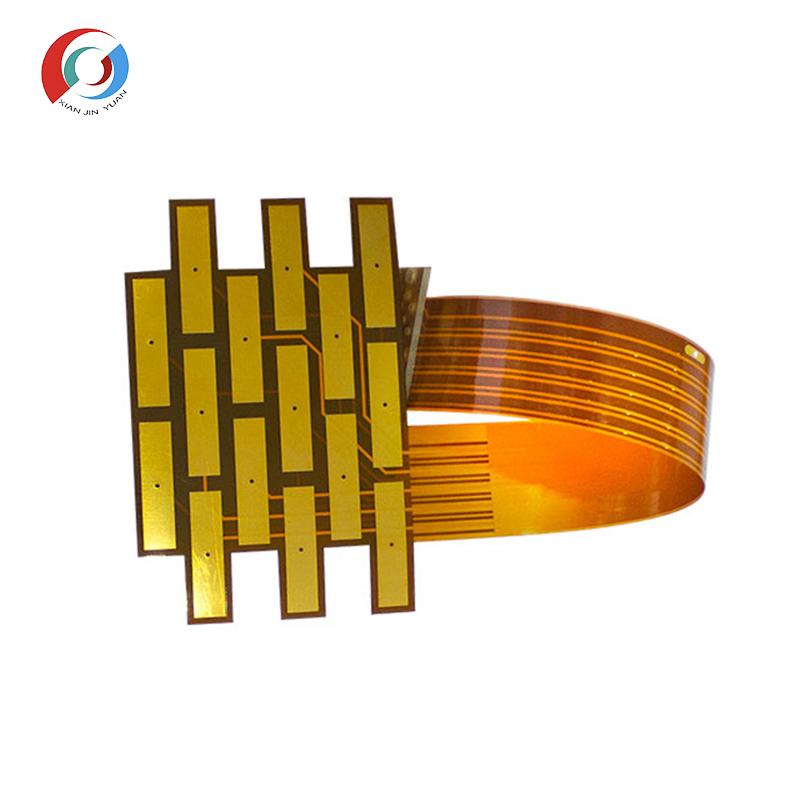
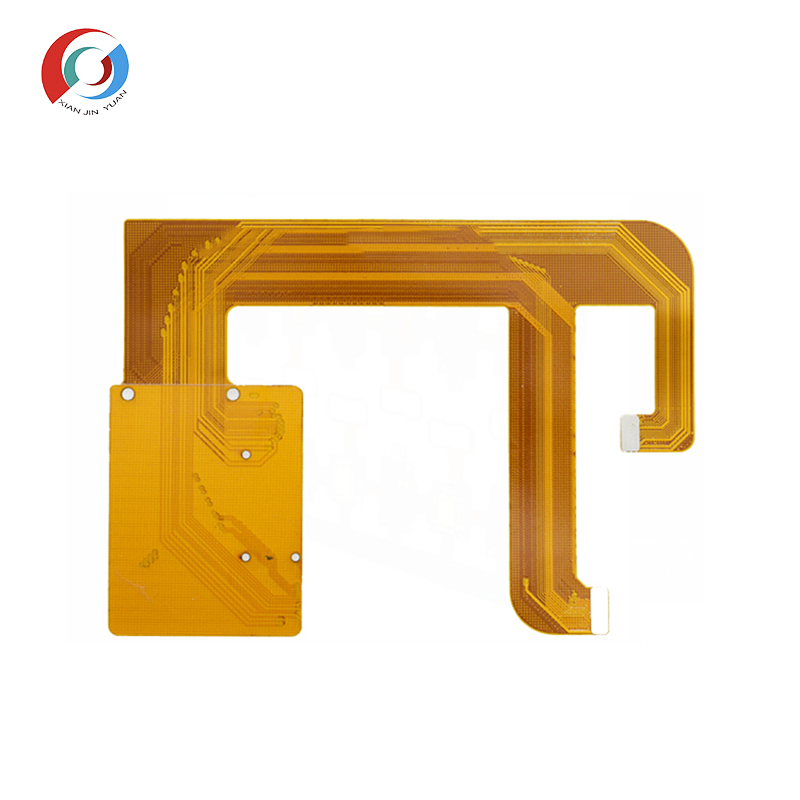
The introduction of FPC soft boards fundamentally changed this situation. FPC is made of polyimide (PI) or polyester film as the substrate, with a thickness that can be controlled within 0.2 millimeters, which is only one-third of that of traditional circuit boards, freeing up more space for internal components such as batteries and chips in hearing aids. More importantly, FPC flexible boards allow designers to freely layout circuits in three-dimensional space - they can bend into a circular shape around the battery, fold along the inner wall of the casing, and flexibly navigate between components, transforming the space that was previously unusable by fragmented rigid PCBs into effective circuit layout areas.
The FPC design of mainstream hearing aid brands is quite mature. The typical hearing aid FPC from Starkey Labs is a four layer circuit with dimensions of only 0.25 × 0.50 inches (approximately 6.35 × 12.7mm). It is insulated with polyimide and has a line width and spacing of 0.003 inches (approximately 76 μ m). After SMT mounting, the components are bent into a three-dimensional shape, achieving maximum circuit functionality in the smallest volume. Sonic Innovations also uses four layer FPC technology, with a thickness as thin as 0.002 inches (approximately 50 μ m). These data indicate that FPC has become the core technology path for miniaturization design of hearing aids.
2、 The core technological advantages of FPC soft board in hearing aid circuit
The performance advantages of FPC soft boards in hearing aid circuits can be understood from the following three dimensions.
Ultra thin and high-density integration are the core competitiveness of FPC. The hearing aid PCB needs to integrate the complete audio system - microphone, DSP amplifier, receiver, power supply, and wireless module - in a space typically less than 10mm x 10mm. FPC flexible board achieves high-density interconnection through multi-layer stacking design and precision circuit processing. The circuit width can be as fine as 75 μ m, and the micro hole processing accuracy can reach 0.1mm level. This high-density integration capability enables hearing aids to integrate more functional modules without increasing their size, from traditional sound amplification to Bluetooth wireless connectivity, AI noise reduction, adaptive scene recognition, and more.
Fatigue resistance and long-term reliability are equally crucial. Hearing aids are worn on the ears and are frequently subjected to bending and vibration caused by head movements and removal operations. After more than 100000 bending tests, the resistance change rate of high-quality FPC flexible boards can be less than 1%, ensuring stable signal transmission during long-term use. Polyimide substrate itself has excellent high temperature resistance, can withstand welding temperatures below 260 ℃, and has good chemical corrosion resistance. In addition, the FPC soft board can also achieve IPX4 waterproof and sweat resistant properties through a protective layer and conformal coating, effectively resisting the erosion of high humidity and weakly acidic body fluid environments in the ear.
Customization flexibility and design freedom are another important advantage of FPC soft boards. There are many types of hearing aids - from back of the ear (BTE), in the ear (ITE) to fully in the ear (CIC) and invisible in the ear (IIC) - each model has a different housing shape, internal space, and component layout. FPC flexible board can flexibly adjust the length, bending angle, and circuit density of the flexible board according to the ear canal shape and circuit layout requirements of different hearing aids, achieving precise adaptation of "one machine, one board". Professional FPC manufacturers can customize design according to the needs of hearing aid manufacturers, meeting the circuit requirements of different brands and models of hearing aids.
3、 Three core application scenarios: from behind the ear to invisible hearing aids
The fully in ear and invisible in ear hearing aids represent the application direction with the highest miniaturization requirements for FPC soft boards. CIC and IIC hearing aids are completely embedded inside the ear canal, with an ultimate pursuit of concealed appearance and comfortable wearing. The available space inside is often less than 10mm × 5mm. At this scale, rigid circuit boards cannot be installed at all - only FPC flexible boards can "plug" the circuit into the irregular space deep in the ear canal through three-dimensional folding and bending. FPC flexible board allows designers to freely layout circuits in three-dimensional space, adapting to the design requirements of various shapes and sizes of hearing aids, providing possibilities for miniaturization and personalized design of hearing aids.
Ear back and ear canal hearing aids are the most widely used application areas for FPC soft boards. Although BTE and ITE hearing aids are relatively large in size, they require higher levels of functional integration - intelligent functions such as Bluetooth connectivity, multi-channel DSP processing, and programmable adjustment all require more complex circuit layouts. FPC soft board achieves signal isolation through multi-layer stacking design, reduces electromagnetic interference, and improves sound reproduction. In the design of waterproof hearing aids, FPC soft boards can also be used in conjunction with waterproof pads to achieve sealing and waterproofing, improving the efficiency and extending the service life of hearing aids.
Intelligent hearing aids and OTC hearing aids represent the cutting-edge application of FPC soft boards in emerging markets. With the upgrading of hearing aid chips to advanced 6-12nm processes and the popularization of heterogeneous multi-core architectures integrating independent NPUs, hearing aids are transitioning from "auxiliary listening tools" to "ear side health terminals". Advanced features such as AI speech recognition, large model audio algorithms, and 128 channel parallel processing have raised higher requirements for the wiring density and signal integrity of circuit boards. FPC soft board, with its high-density interconnection and excellent high-frequency performance, is becoming an indispensable hardware foundation for smart hearing aids.
4、 Selection points and design suggestions
Engineers need to pay special attention to the following dimensions when selecting FPC boards for hearing aid circuits: number of layers and wiring density - simple hearing aids can use double-layer FPC, while high-end intelligent hearing aids require four or more layers to achieve signal isolation and high-density interconnection; Substrate selection - Polyimide (PI) is the mainstream choice, with characteristics such as high temperature resistance, bending resistance, and dimensional stability; Bending area design - The bending area of FPC should avoid the dense area of open circuit devices, and the bending radius is usually recommended to be greater than 5 times the thickness of the flexible board; Protection and reliability - It is necessary to evaluate the waterproof and sweat resistant level (such as IPX4) of conformal coatings and the welding temperature tolerance (within 260 ℃).
Advanced Institute Technology provides full process technical support from FPC soft board design, sample trial production to batch delivery, helping hearing aid manufacturers incorporate flexible circuit solutions into system considerations in the early stages of product design.
5、 Outlook
The global hearing aid market is undergoing a profound transformation from "traditional hearing aids" to "intelligent health terminals". By 2025, the global hearing aid market sales have reached 10.22 billion US dollars, and the Chinese market size has increased to 18.6 billion yuan. It is expected that the global hearing aid market will grow from $11.21 billion to $12.02 billion at a compound annual growth rate of 7.2% from 2025 to 2026. The growth rate of China's hearing equipment market is more significant, and it is expected that the overall scale will increase from about 18 billion yuan in 2025 to over 40 billion yuan from 2026 to 2030, with an average annual compound growth rate of over 17%.
In this rapidly growing market, FPC soft boards serve as the core hardware foundation for miniaturization and intelligence of hearing aids, and their market demand will continue to rise. Especially in the field of intelligent hearing aids such as Bluetooth hearing aids, the application of FPC soft boards is moving from "optional" to "mandatory". In the future, with the further development of materials science, electronic technology, and manufacturing processes, the performance of hearing aid circuit FPC soft boards will continue to improve - thinner substrates, thinner line widths, higher integration, and stronger environmental adaptability - bringing more innovation and opportunities to the hearing aid industry.
Advanced Institute (Shenzhen) Technology Co., Ltd. will continue to deepen its expertise in the field of hearing aid circuit FPC soft boards, providing professional and reliable flexible circuit solutions for the miniaturization and high performance of hearing aids through precision technology and continuous innovation.

 en
en  Español
 Français
 Português