1、 Why is it "gel" -- Understanding performance advantages from material morphology
Thermal conductive gel is a kind of paste thermal interface material based on silicone rubber and highly filled with thermal conductive fillers (aluminum oxide, boron nitride, zinc oxide, etc.). Compared with traditional thermal conductive gaskets and thermal conductive pastes, the core advantages of thermal conductive gel can be summarized into three key words: flexible bonding, low thermal resistance, and repairable.
The flexible fit originates from the low modulus of gel. The hardness of the thermal conductive gel is usually in the Shore OO 20-50 range, which can fully wet the contact surface at a lower pressure (20-40psi). Compared with thermal conductive gaskets, which require higher assembly pressure to press micro voids, thermal conductive gel can adaptively fill various uneven interfaces - whether it is the micron level roughness of machined surfaces or the millimeter level gap caused by large dimensional tolerances - and can achieve nearly 100% interface filling rate. The large area and tolerance between the battery cells and the cold plate in this new energy vehicle battery pack are particularly critical.
Low thermal resistance is the core performance index of thermal conductive gel. The total thermal resistance of the thermal interface is composed of two parts: the body thermal resistance (depending on thickness and thermal conductivity) and the contact thermal resistance (depending on the degree of interface wetting), with the contact thermal resistance often accounting for 40% -70% of the total thermal resistance. The low modulus of thermal conductive gel enables it to reduce the contact thermal resistance to a very low level. Under the thickness of 50-200 μ m, the total thermal resistance of typical high-quality thermal conductive gel can be controlled within the range of 0.08-0.30 ℃ · cm ²/W. Research shows that when a high thermal conductivity gel (λ ≈ 3.75W/m · K) is compressed to about 107 μ m, the total thermal resistance is as low as 0.062 ℃/W, which is about 7% -10% lower than similar commercial products. In the battery management system of new energy vehicles, the use of gel with a thermal conductivity of 6-8W/m · K and a thickness controlled within 150 μ m can effectively control the temperature rise of the battery within a safe range.
Reworkable is the unique advantage of thermal conductive gel compared with solidified materials. Single component thermal conductive gel is usually pre cured or incompletely cured, which is not fully cured after construction. When the radiator is disassembled, the gel can be easily stripped, which is convenient for device repair and reuse. This has significant engineering value for the maintenance and upgrade of data center servers.
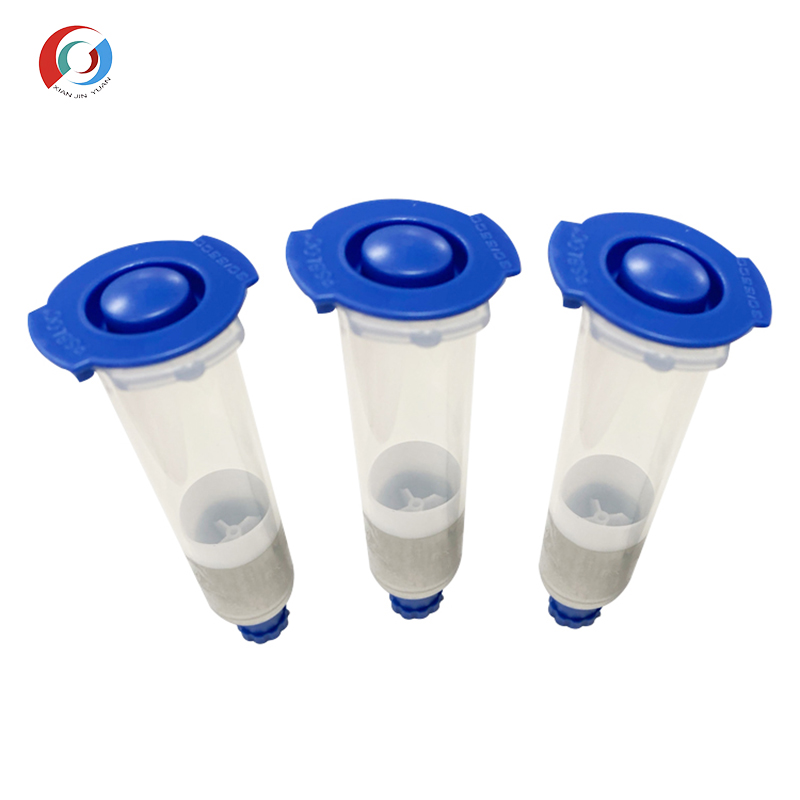
According to the curing mode, thermal conductive gel can be divided into two categories: one component and two components. One component thermal conductive gel can be used immediately after uncapping without mixing. It can trigger the curing reaction by heating or moisture, and supports the automatic dispensing process. It is suitable for scenarios requiring high production efficiency. The two-component thermal conductive gel needs to be cured after mixing A/B components in proportion on site. It is specially designed for low pressure environment and high compression modulus requirements. It can accurately fill uneven interfaces and has better long-term stability. Some high-end products also introduced silicon free (non silicon based) thermal conductive gel to meet the optical module and other scenes with strict requirements for optical cleanliness.
2、 From laboratory to mass production: technical evolution direction of thermal conductive gel
The technical progress of thermal conductive gel is accelerating. The industry is evolving from "single thermal conductivity" to "systematic thermal management solutions".
The continuous breakthrough of thermal conductivity is the primary direction. At present, most mainstream thermal conductivity gel have thermal conductivity of 3-10W/m · K, and high-end products have approached or exceeded 10W/m · K. By using spherical aluminum nitride, aluminum oxide, or mixed fillers with high filling content (accounting for over 80% by volume) and optimizing the particle size distribution (bimodal distribution of large and small particles), an efficient thermal conductivity network can be significantly constructed. When the proportion of filler volume increases from 50% to 60%, the effective thermal conductivity can be significantly improved. In 2026, Dow Chemical launches DOWSIL ™ The thermal conductivity of TC-3120 thermal conductive gel has reached about 12W/m · K, and has achieved optical cleanliness, which can support the heat dissipation requirements of 800G and 1.6T optical modules.
The ultimate optimization of low thermal resistance is another core direction. The key is to control the thickness of the adhesive line within 100 μ m - for every 50 μ m reduction in thickness, the thermal resistance of the body can be reduced by about 30% -50%. In the future, it is expected to further reduce the typical thermal resistance to below 0.05 ℃· cm ²/W, providing stronger heat dissipation support for AI servers, 800G optical modules, and next-generation power batteries.
Multi functional integration is a longer-term trend. The future thermal gel will pay more attention to the design of "intelligent path" - adaptive phase change, magnetic orientation, multi-scale filler coordination and other technologies will further reduce the interface thermal resistance and improve long-term stability. The thermal conduction path is no longer a simple material stacking, but a precise thermal "highway" project.
3、 Three core application scenarios: from AI servers to new energy vehicles
AI servers and data centers are the fastest growing areas of thermal gel demand. The high-power processors and accelerators used in AI training and inference systems generate a large amount of heat, and the hot spot temperature on the AI accelerator can be 10-30 ℃ higher than the surrounding area, generating mechanical stress and increasing the risk of failure. The segmented market for advanced thermal conductive materials used in artificial intelligence servers and data centers may have an annual growth rate of over 25% by 2025, significantly higher than the overall industry growth rate. Thermal conductive silicone material is an ideal choice for the interface between CPU and GPU cold plates, which can effectively resist the pumping effect caused by severe thermal cycles caused by AI workload fluctuations. As the memory capacity of each system in AI servers rapidly increases, the requirements for the unit usage of thermal conductive materials and the performance of each interface are synchronously increasing. The global thermal interface materials market is expected to reach $4.66 billion by 2026 and grow at a compound annual growth rate of 8.22% to $7.5 billion by 2032.
New energy vehicles and power batteries are one of the most demanding applications of thermal conductive gel. The dual wave of electrification and intelligence in new energy vehicles has made battery thermal management, electric drive systems, and onboard computing units a new incremental market for thermal interface materials. In the new energy battery pack, the thermal conductive gel is mainly used to fill the gap between the cell and the cooling plate, and between the upper cover of the battery and the box, and to conduct heat and dissipate heat. It can effectively derive the heat of battery charging and discharging, inhibit local heat accumulation, and reduce the risk of heat runaway. The two-component thermal conductive gel is especially suitable for filling complex structures or irregular gaps to meet the dispensing needs of large-scale production. In the vehicle mounted millimeter wave radar, electronic control unit (ECU) and IGBT power module, thermal conductive gel also plays a key role in heat dissipation. The global thermal gel market continues to expand at a compound annual growth rate of 6.7% -7.1%.
5G communication and consumer electronics are the most mature fields for thermal conductive gel applications. High power electronic devices such as 5G communication equipment, data centers, servers, and power modules have strict requirements for thermal management. As an interface material with high thermal conductivity, soft buffer, compressibility and easy construction, thermal conductive gel has become an ideal choice for thermal management of 5G base stations, communication transformers, high-power power supplies and other equipment. In the field of consumer electronics, with the continuous pursuit of equipment thinness and performance limits, high-performance thermal conductive gel is accelerating its penetration. The automatic dispensing adaptability of the single component thermal conductive gel makes it particularly suitable for large-scale production scenarios of consumer electronics. In scenes with special requirements for cleanliness such as optical modules, low volatility, optical grade thermal conductive gel is becoming a new standard configuration.

4、 Selection points and design suggestions
When selecting thermal conductive gel, engineers need to focus on the following dimensions: thermal conductivity and thermal resistance - according to the thermal conductivity required for chip power consumption and radiator performance evaluation, the thermal conductivity requirements of devices with different power densities are significantly different; Curing method - single component is suitable for automated dispensing and large-scale production, while two-component is suitable for scenarios with higher long-term reliability requirements; Adhesive line thickness control - for every 50 μ m reduction in thickness, the thermal resistance of the body can be reduced by about 30% -50%, and the optimal thickness needs to be determined based on the actual gap tolerance; Environmental tolerance - requires evaluation of working temperature range, weather resistance, and long-term reliability requirements.
Advanced Institute Technology provides full process technical support from material selection, sample testing to batch delivery, helping customers to consider the thermal gel scheme systematically in the early stage of thermal design.
5、 Outlook
The global thermal gel market is expanding at a compound annual growth rate of 6.7% -7.1%. Driven by the accelerated expansion of AI computing infrastructure, the in-depth evolution of automotive electrification and intelligence, and the continuous deployment of 5G/6G communications, thermal gel is moving from "auxiliary materials" to the standard configuration of high power density electronic equipment thermal management. At the same time, the industry is continuously evolving towards higher thermal conductivity, lower thermal resistance, longer lifespan, and customizable application solutions. Future market opportunities mainly focus on AI server high thermal conductivity gel, new energy vehicle power battery thermal conductivity gel, optical grade thermal conductivity gel of optical module and low volatility high reliability thermal conductivity gel.
Advanced Institute (Shenzhen) Technology Co., Ltd. will continue to deepen the field of thermal conductive gel, and provide customers with higher thermal conductivity, lower thermal resistance, and more reliable interface thermal management solutions with constantly iterative material formulas and manufacturing processes.
 en
en  Español
 Français
 Português