1、 From "Reflection" to "Absorption": The Physical Logic of Soft Magnetic Absorbing Materials
There are two ways to deal with electromagnetic interference: blocking or swallowing.
Traditional shielding materials (such as metal conductive cloth and copper foil) take the route of "blocking" - using conductive layers to reflect electromagnetic waves back. This is effective in shielding external interference, but inside the device, reflected waves will bounce back and forth in the cavity, forming standing waves and resonance, which may actually exacerbate interference with sensitive components.
Soft magnetic absorbing materials follow the path of 'swallowing'. It is composed of soft magnetic powder (such as ferrite, Permalloy, ultrafine crystalline alloy, etc.) and polymer matrix composite. When electromagnetic waves enter the interior of materials, soft magnetic fillers undergo magnetization response in alternating electromagnetic fields - converting electromagnetic energy into trace amounts of thermal energy and dissipating it through mechanisms such as hysteresis loss, eddy current loss, and natural resonance.
Simply put, the shielding cover "bounces back" electromagnetic waves, while the soft magnetic absorbing material "eats up" electromagnetic waves. For suppressing cavity resonance, reducing surface traveling waves, and decreasing free space reflection, "eating" is far more effective than "bouncing back".
Soft magnetic alloys have shown great potential in the field of electromagnetic wave absorption in the gigahertz frequency band due to their high saturation magnetization, excellent magnetic permeability, rich magnetic loss mechanism, and adjustable electromagnetic parameters. The higher the magnetic permeability of soft magnetic absorbing materials, the stronger their ability to absorb electromagnetic waves.
2、 Research Platinum ™ Soft magnetic absorbing materials: engineering implementation of flexible sheets and broadband absorption
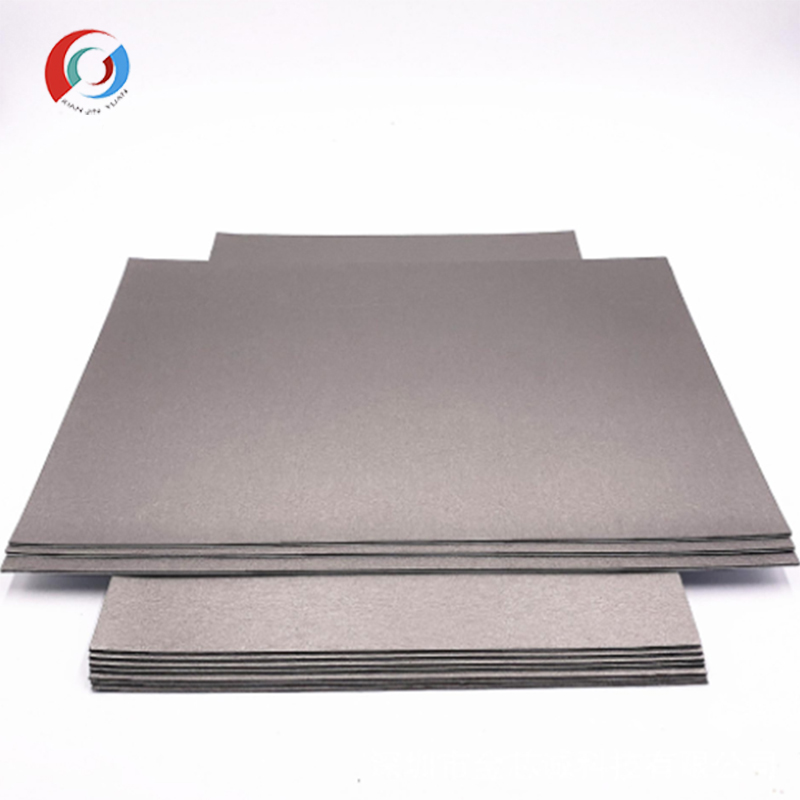
Advanced Institute of Technology's Platinum Research ™ Soft magnetic absorbing material, which mixes two-dimensional soft magnetic powder with resin and processes it into a flexible sheet.
The material has the following core characteristics:
-
High magnetic permeability: capable of effectively guiding and concentrating magnetic fields, guiding electromagnetic waves into the interior of materials
-
Low coercivity: The material is easily magnetized and demagnetized, and has a fast response speed to alternating magnetic fields
-
Broadband absorption: capable of absorbing electromagnetic waves over a wide frequency range, providing a wide range of shielding effects
-
Lightweight and flexible: easy to punch and shear, can be processed into various shapes, and can also be used for flexible surfaces and flexible cables (FPC/FFC) and other occasions
-
Good temperature stability: Operating temperature range from -45 ℃ to 160 ℃, suitable for various environments
At the functional level, research platinum ™ Soft magnetic absorbing materials can achieve three major functions:
-
Reduce free space reflection: When applied to metal surfaces, greatly reduce electromagnetic wave reflection caused by metal objects or structures
-
Suppressing cavity resonance: Attaching it to a conductive cavity can effectively suppress high-order harmonic resonance and ensure the normal operation of the circuit
-
Reduce surface traveling waves: effectively absorb crawling waves along transmission lines or conductive surfaces
3、 From Consumer Electronics to Aerospace: The Application Landscape of Soft Magnetic Absorbing Materials
5G communication and network equipment is one of the areas with the highest demand for soft magnetic absorbing materials. In communication equipment such as base stations, routers, switches, etc., it is used to reduce mutual interference between signals and improve communication quality. The 5G millimeter wave frequency band (24-40GHz) places higher demands on the frequency response of absorbing materials - the excellent performance of soft magnetic materials in the gigahertz frequency band makes them an ideal choice for high-frequency communication equipment.
Automotive electronics and intelligent driving are the fastest-growing application directions. In electric vehicles and autonomous driving vehicles, it is used to reduce electromagnetic interference and ensure the normal operation of sensors and control systems. Vehicle mounted millimeter wave radar, laser radar, electronic control unit (ECU), etc. have extremely strict requirements for electromagnetic compatibility - soft magnetic absorbing materials can be used to suppress cavity resonance and reduce clutter interference.
Aerospace and defense represent the highest dimension of reliability requirements. Used in aircraft, satellites, and other spacecraft to protect electronic devices from external electromagnetic interference. In scenarios such as radar systems and missile guidance cabins, the complexity of the electromagnetic environment is much higher than that of ground equipment, and soft magnetic absorbing materials occupy a place with their broadband absorption and lightweight characteristics.
Consumer electronics and wearable devices are the fields with the largest usage of soft magnetic absorbing materials. Used in portable electronic devices such as mobile phones, tablets, and laptops to reduce electromagnetic interference between internal components. With the development of electronic devices towards miniaturization, thinning, and high-density, the number of electronic components in circuit boards continues to increase, making it increasingly important to suppress noise radiated from ICs or cables.
4、 Technological Frontier: Evolution Direction of Soft Magnetic Absorbing Materials
The technological progress of soft magnetic absorbing materials is accelerating. The industry is continuously evolving in the following directions:
The diversification of material systems is the primary trend. The material system, preparation methods, and morphology design of soft magnetic alloys and their composite materials are showing a diversified development trend. Multiple systems such as ferrite, Permalloy, ultrafine crystalline alloy, and nanocrystalline materials coexist, corresponding to different frequency bands and performance requirements.
Component optimization and element doping are continuously improving the absorption performance. Through component optimization, element doping, and post-treatment improvement, the electromagnetic parameters and absorption properties of the material are further precisely controlled. The introduction of rare earth soft magnetic materials and amorphous powders provides new possibilities for high-frequency absorption.
Machine learning assisted research and development is accelerating material development efficiency. The deep integration of material testing, performance simulation, and machine learning is expected to promote the efficient research and development of absorbing materials.
Thinning and flexibility are the core demands of the industry. Research Platinum ™ Soft magnetic absorbing materials have achieved mass production of flexible sheets, which are soft, non fragile, lightweight, easy to process and cut, and can be installed in small spaces.
5、 Selection points: How to choose soft magnetic absorbing materials for your device?
When engineers select soft magnetic absorbing materials, it is recommended to start from the following dimensions:
The working frequency band is the first matching item. The optimal absorption frequency band varies among different material systems. Select the corresponding material based on the main interference frequency of the device (from MHz to millimeter wave). Soft magnetic materials perform particularly well in the gigahertz frequency band.
The thickness and installation space determine feasibility. Research Platinum ™ Soft magnetic absorbing materials are flexible sheets that can be processed into various shapes. The thickness can be customized according to customer needs, suitable for small spaces, flexible surfaces, and flexible cables.
Environmental tolerance is crucial for long-term reliability. The working temperature ranges from -45 ℃ to 160 ℃, meeting the temperature requirements of different scenarios such as consumer electronics, automotive electronics, aerospace, etc. The product has a flame retardant rating of V0, is halogen-free and lead-free, and meets the RoHS directive.
The installation method determines the convenience of use. The product is made of insulating material and needs to be bonded or pressed onto a metal substrate to achieve good absorption effect. We can provide customized services such as adhesive backing, punching and cutting according to customer requirements.
The global market for electromagnetic wave absorbing materials is expected to grow from $5.06 billion in 2025 to $7.58 billion in 2030. Driven by the deployment of 5G/6G communication, electrification and intelligence of automobiles, high-frequency and lightweight consumer electronics, and upgrading of aerospace equipment, soft magnetic absorbing materials are moving from "professional material selection" to standard configuration for electromagnetic compatibility design of electronic devices.
Advanced Institute (Shenzhen) Technology Co., Ltd. will continue to deepen its cultivation in the field of soft magnetic absorbing materials, providing customers with higher performance and more reliable electromagnetic noise suppression solutions through material innovation and precision technology.

 en
en  Español
 Français
 Português