1、 From rigidity to flexibility: paradigm shift of electrochemical electrodes
Traditional electrochemical electrodes are based on rigid materials such as glassy carbon, gold, platinum, etc., which have stable performance but cannot adhere to human skin or curved tissues. When electrodes need to coexist with dynamic and flexible biological interfaces for a long time, the mechanical mismatch of rigid electrodes becomes a fatal weakness.
The breakthrough of flexible electrochemical electrodes lies in the deep fusion of conductive materials with flexible substrates, allowing the electrode to maintain electrochemical activity even under deformation such as bending, stretching, and twisting.
In 2026, the team led by Xu Yadong from Peking University and Professor Wei Gao from the California Institute of Technology reported in the journal Science a strain resistant intrinsic stretchable electrochemical biological interface (SIRES), which achieved multimodal molecular monitoring on dynamic tissues for the first time. At the same time, stretchable electrochemical sensors based on laser-induced graphene (LIG) can maintain their electrochemical performance even under 20% uniaxial strain - these cutting-edge breakthroughs are pushing flexible electrochemical electrodes from the laboratory to clinical applications.
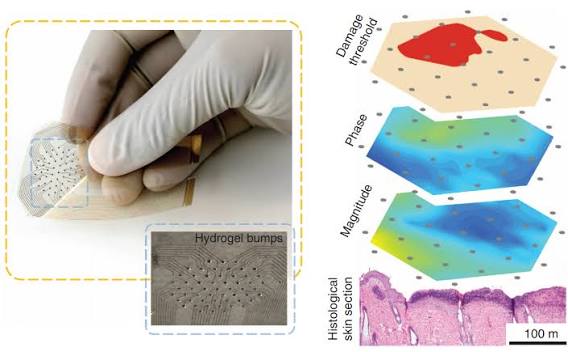
2、 Material System: Multi Choice from Carbon nanotubes to MXene
The performance of flexible electrochemical electrodes is rooted in the synergy between conductive materials and flexible substrates. The current mainstream material systems in the industry include:
Carbon based materials are the most widely used solution. Carbon nanotubes (CNTs) and graphene have become strong candidates for flexible electrodes due to their excellent conductivity and mechanical strength. The carbon nanotube/polyaniline (CNT/PANI) composite film electrode has achieved ultra-high stability after 100000 cycles.
Metal nanomaterials provide higher conductivity. Gold nanowires (AuNWs) based on virus templates have been used for the preparation of flexible wearable glucose sensing electrodes. The composite electrode of silver nanowires (AgNWs) and nickel remained stable after 1000 bending tests.
MXene and conductive polymers have been a research hotspot in recent years. MXene/polyurethane composite hydrogel increases current output by 15 times. MXene/polyaniline modified nylon fabric electrodes have been used for wearable non-invasive sweat glucose monitoring.
Advanced Institute Technology can flexibly select material systems and processing techniques based on customer requirements for sensitivity, bending life, biocompatibility, and cost.
3、 Data Speaking: What Can Flexible Electrochemical Electrodes Detect?
The performance of flexible electrochemical electrodes ultimately needs to be answered by data.
Sensitivity is the core indicator for measuring detection capability. A flexible non enzymatic glucose sensor based on copper nanoparticles/laser-induced graphene fibers, with a sensitivity of up to 1438.8 µ A/mM · cm ². The graphene fiber/gold/nickel hydroxide composite fiber sensor has a sensitivity of 1095.63 µ A · mM ⁻¹ · cm ⁻² in the detection range of 5 µ M-2.2mM. The silver nanowire/nickel composite electrode has a sensitivity of 915 µ A · mM ⁻¹.
The detection limit determines how low concentration of the target substance can be detected. The detection limit of dopamine biosensors based on organic electrochemical transistors is as low as 1 pM (picomolar level).
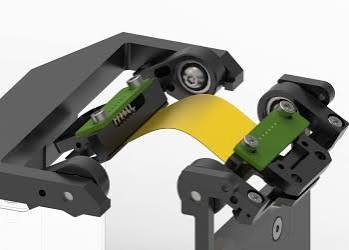
The bending stability is related to the reliability of wearable scenarios. The silver nanowire/nickel composite electrode remained stable after 1000 bending cycles. The sensor based on copper/laser-induced graphene maintains long-term stability at different bending angles of 0 °, 45 °, 90 °, 135 °, and 180 °.
The detection targets cover various biomarkers such as glucose, lactate, dopamine, sweat electrolytes (Na ⁺, K ⁺, pH), etc.
4、 Three major application battlefields: from sweat patches to neural interfaces
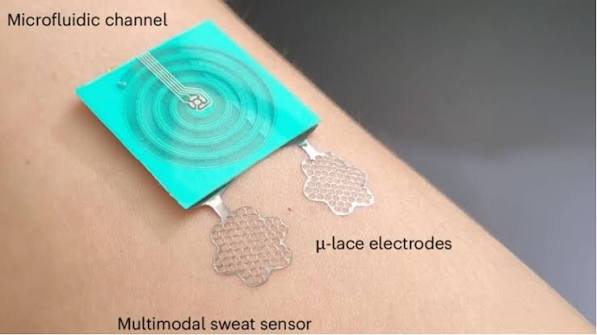
Wearable sweat sensing is the field with the largest usage of flexible electrochemical electrodes. A flexible electrochemical sensor based on non-invasive sweat analysis can monitor health indicators such as glucose, lactate, and electrolytes in real-time. The ultra-thin skin adaptive electrode inspired by temporary tattoos can be directly attached to the skin surface, and 24-hour skin patch testing shows no irritation. A washable self powered biosensor based on cellulose textiles has been integrated into T-shirts for sweat glucose sensing. No need for blood draws, no need for needles - flexible electrochemical electrodes are bringing health monitoring from hospitals to daily life.
The neural interface and brain computer interface represent the highest requirements for precision and reliability of flexible electrochemical electrodes. The flexible microelectrode array used for neural signal recording needs to work stably for a long time in dynamic tissues. The emergence of SIRES interface provides a universal solution for dynamic tissue multimodal molecular monitoring. The intelligent wearable patch based on conductive microneedles can directly penetrate the stratum corneum to reach the dermis layer, forming a stable bioelectrochemical interface. Flexible electrochemical electrodes are becoming the "translator" connecting electronic devices with biological tissues.
Instant diagnosis and medical monitoring are the fastest-growing application directions for flexible electrochemical electrodes. Non enzymatic glucose sensors are becoming a powerful alternative to enzyme based sensors due to their advantages in stability, cost, and scalability. Flexible electrochemical sensors can be used for continuous monitoring of sweat pH, which is a key indicator reflecting human metabolism and steady-state levels. In sports monitoring, a self powered lactate sensor based on MXene has achieved non-invasive lactate detection during physical activity.
5、 Customization: Matching on demand from substrate to pattern
There are significant differences in the substrate, conductive material, electrode pattern, and size requirements for flexible electrochemical electrodes in different application scenarios. Advanced Institute Technology provides the following customized services:
The substrate selection includes various flexible films such as PET, PI, PEN, etc., and the thickness can be customized. Conductive materials support various systems such as carbon based (carbon nanotubes, graphene), metal based (gold, silver, copper, platinum), conductive polymers (PEDOT: PSS, polyaniline), etc. The electrode pattern supports various precision processing techniques such as screen printing, laser direct writing, and photolithography, and can be customized with complex patterns such as forked electrodes and microelectrode arrays as needed. Surface modification can be customized for enzyme immobilization, nanomaterial modification, antibody conjugation, and other functional treatments.
The company has passed ISO9001 certification and its products comply with RoHS environmental requirements.
The global flexible forked electrode market is expected to grow from $2.81 billion in 2025 to $8 billion in 2035, with a compound annual growth rate of 11.0%. The global market for flexible ultra-thin battery electrode solutions has reached 3.24 billion US dollars by 2026 and is expected to grow to 19.09 billion US dollars by 2034. The global thin film electrode market is expected to grow from $570 million in 2025 to $970 million in 2030.
Driven by the popularization of wearable health monitoring, breakthroughs in neural interface technology, explosive demand for instant diagnosis, and accelerated penetration of intelligent healthcare, flexible electrochemical electrodes are moving from "cutting-edge research tools" to standard components in the wearable and biomedical fields.
Advanced Institute (Shenzhen) Technology Co., Ltd. will continue to deepen its cultivation in the field of flexible electrochemical electrodes, providing customers with higher performance and more reliable flexible sensing and bioelectronics solutions through precision machining processes and material innovation.

 en
en  Español
 Français
 Português