1、 Why do O-rings need to be "conductive" - the functional transition from sealing to shielding
O-ring is one of the most basic sealing components in the industry, which functions to form a compression seal between two mating surfaces, preventing liquid or gas leakage. However, in electronic devices, simple sealing is no longer sufficient to meet system requirements - the seams of the device casing are both channels for environmental leakage and paths for electromagnetic leakage.
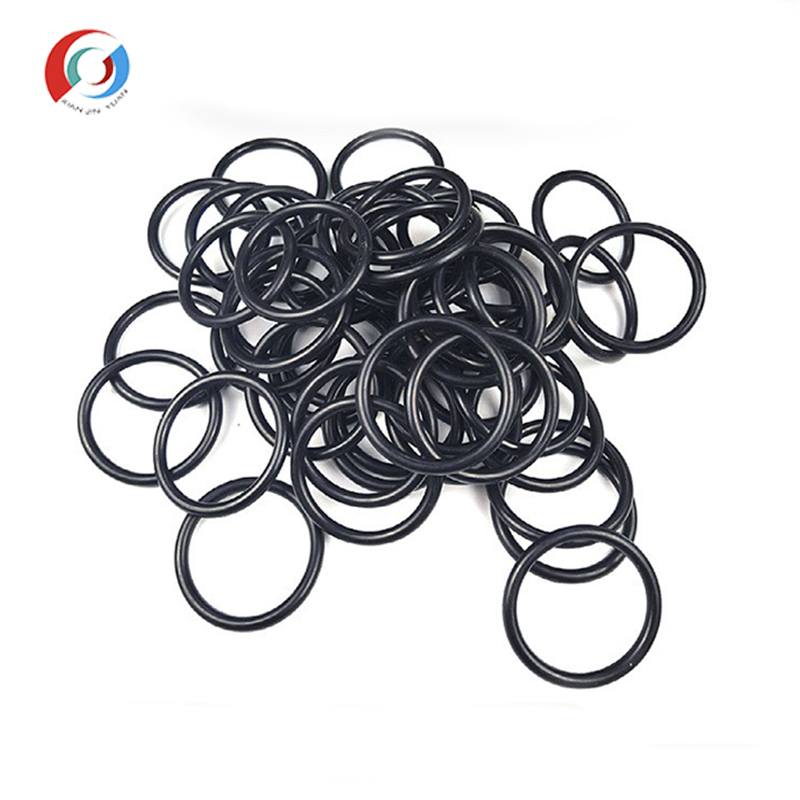
The value of molded O-ring conductive silicone rubber lies in integrating both sealing and conductive functions into the same annular component. When the O-ring is compressed in the installation groove, the three-dimensional conductive network formed by the conductive filler in the silicone rubber matrix is "compressed", establishing a low resistance conductive path between the mating surfaces. This conductive path can not only remove static electricity from the device casing and achieve electrical connections between different components, but also block the leakage and intrusion of electromagnetic waves through the reflection and absorption of conductive shielding bodies. At the same time, the silicone rubber matrix still maintains excellent elastic recovery and sealing performance, effectively blocking water vapor and dust while conducting electricity.
This "dual energy" feature allows molded O-ring conductive silicone rubber to directly replace standard non-conductive O-rings - adding an electromagnetic protection barrier to the equipment while maintaining the same size.
2、 Value of molding process: why choose molding rather than extrusion splicing
There are two main manufacturing paths for conductive silicone rubber O-rings: compression molding and bonding after extrusion. The core advantage of the molding process lies in "integrated molding, no joints".
Compression molding is the process of placing mixed conductive silicone rubber raw materials into precision molds and completing vulcanization and shaping under high temperature and high pressure conditions. Compared to O-rings that are cut and bonded after extrusion, molded O-rings do not have joints - and joints are precisely the weakest link in electromagnetic leakage. For application scenarios that require high-level shielding and sealing, the molding process can provide more reliable electromagnetic continuity and sealing integrity.
Another advantage of the molding process is its dimensional accuracy and shape flexibility. The accuracy of the mold directly determines the dimensional accuracy and shape accuracy of the O-ring. Through precision mold design and manufacturing, molded O-rings can achieve strict dimensional tolerance control, ensuring precise fit with installation slots. At the same time, the molding process supports flexible customization from standard circular to irregular cross-sections, which can meet the differentiated sealing structure requirements of different equipment.
Advanced Institute Technology strictly controls the process parameters of mixing, molding, vulcanization, demolding and other links in the molding process - ensuring that the conductive filler is evenly distributed in the silicone rubber during the mixing process to ensure the consistency of the conductivity of the entire O-ring; Accurate control of temperature and time during the vulcanization process ensures that the silicone rubber transitions from a plastic state to a solid state with elasticity and strength, thereby ensuring stable and reliable performance of each batch of products.
3、 From filler selection to performance realization: synergy between conductive network and elastic matrix
The performance of molded O-ring conductive silicone rubber is rooted in its material composite system - using silicone rubber (VMQ) or fluorosilicone rubber (FVMQ) as the matrix, forming a three-dimensional conductive network by uniformly filling conductive particles.
The silicone rubber matrix provides elastic recovery, sealing durability, and environmental resistance. Silicone rubber itself is an excellent electrical insulator and mechanical sealing material, with a working temperature range covering -60 ℃ to 200 ℃. The fluorosilicone rubber system is more resistant to chemical attacks such as fuel and solvents. Through the molding process, the hardness (Shore A) of silicone rubber can be adjusted according to specific needs to meet the sealing pressure requirements of different application scenarios.
Conductive fillers are responsible for establishing low resistance conductive pathways. Different filler systems correspond to different ranges of volume resistivity and shielding effectiveness: silver plated copper system has the best conductivity, with a volume resistivity as low as 0.002-0.004 Ω· cm; silver plated aluminum system is about 0.008-0.012 Ω· cm; nickel plated graphite system is usually in the range of ≤ 0.1 Ω· cm. The type, particle size, filling ratio, and dispersion uniformity of the filler collectively determine the conductivity stability and shielding effectiveness of the final product. In terms of shielding effectiveness, high-quality molded O-ring conductive silicone rubber can achieve a shielding effectiveness of 80-120dB in the frequency range of 100MHz-10GHz.
Advanced Institute Technology can flexibly select filling systems and hardness levels based on customer requirements for shielding frequency bands, conductivity, environmental tolerance, and cost budgets, providing a full range of products from commercial grade to military grade.
4、 Three core application scenarios: from communication base stations to military equipment
5G/6G communication equipment is one of the fields with the highest demand for molded O-ring conductive silicone rubber. In 5G base stations, communication cabinets, and RF modules, equipment shell interfaces, connector mating surfaces, and panel seams are not only critical parts for environmental sealing, but also the main channels for electromagnetic leakage. The molded O-ring conductive silicone rubber can be directly installed in the standard O-ring groove, while completing EMI shielding and environmental sealing. With the continuous deployment of 5G infrastructure, 5G related EMI shielding applications are expected to account for over 22% of the total demand for conductive silicone rubber by 2028.
New energy vehicles and electrical systems are the fastest-growing application directions for molded O-ring conductive silicone rubber. In battery management systems, electronic control units (ECUs), high-voltage connectors, and other components, molded O-ring conductive silicone rubber not only prevents water vapor and dust from entering sensitive circuits, but also ensures a low impedance grounding path between components. In the sealing between the battery pack casing and the charging interface, the conductive O-ring simultaneously plays a role in EMI shielding and dust and water resistance. The global sales of electric vehicles continue to rise, which is driving the accelerated growth of demand for conductive elastomer seals.
The military and aerospace industries represent the application areas where molded O-ring conductive silicone rubber has the highest reliability requirements. Military and aerospace equipment have extremely strict requirements for sealing and conductivity performance. Molded O-ring conductive silicone rubber is widely used for sealing and conductive connections in military electronic chassis, radar systems, satellite communication equipment, and aviation electronic equipment cabins. The molded O-ring conductive silicone rubber can meet the requirements of MIL-DTL-83528 US military standard conductive elastomer shielding gasket specification. This specification establishes a complete technical standard for conductive elastomer shielding gaskets from material composition to performance testing. Products certified by this specification mean that they meet military grade requirements in key indicators such as conductivity, shielding effectiveness, and environmental tolerance.
5、 Selection points and design suggestions
When engineers select molded O-ring conductive silicone rubber, they need to focus on the following dimensions: filler system and conductivity - different fillers correspond to different volume resistivity and shielding effectiveness, which need to be comprehensively matched according to the EMC requirements and cost budget of the equipment; Hardness and permanent compression deformation - Hardness affects the installation sealing pressure and long-term compression rebound performance, and should be selected reasonably according to the installation groove design and closing force requirements; Environmental tolerance - requires assessment of working temperature range, chemical corrosion risks (such as fuel, solvents, etc.), and flame retardant rating requirements (such as UL94 V-0); Dimensions and tolerances - Molded O-rings can directly replace standard non-conductive O-rings, but the tolerance fit needs to be confirmed based on the actual size of the installation slot.
Advanced Institute Technology provides full process technical support from cross-sectional design, material selection to mold development, sample trial production, and batch delivery, helping customers incorporate conductive sealing solutions into system considerations in the early stages of electromagnetic compatibility design.
6、 Outlook
The global market for conductive elastomers is estimated to be worth approximately $107 million in 2024 and is expected to grow to $176 million by 2031. The global conductive silicone rubber market is estimated to reach $4.6 billion by 2025 and is expected to grow to $8.9 billion by 2034. Conductive elastomer O-rings are moving from "professional material selection" to standard configuration for electromagnetic compatibility and environmental sealing design of electronic devices.
At the same time, the industry is evolving towards a more refined direction - the introduction of nanoscale conductive fillers (such as carbon nanotubes and graphene) is expected to achieve the target conductivity at lower filling levels; Advanced processes such as continuous vulcanization and liquid injection molding are improving the production efficiency and consistency of molded products; The optimization of shielding effectiveness for higher frequency bands (millimeter waves) is constantly expanding the performance boundaries of conductive silicone rubber O-rings. The molded O-ring conductive silicone rubber, with its comprehensive advantages in four dimensions of "integrated molding, no joint, high precision, and dual function", will play an increasingly important role in the continuous drive of 5G/6G communication, automotive electrification, and aerospace equipment upgrades.
Advanced Institute (Shenzhen) Technology Co., Ltd. will continue to deepen its expertise in the field of conductive elastomers, providing customers with higher performance and more reliable conductive sealing solutions through material innovation and process optimization.
 en
en  Español
 Français
 Português