Introduction
Advanced Institute (Shenzhen) Technology Co., LtdThe rubber patch type absorbing material is a flexible composite material based on rubber and doped with magnetic or dielectric loss fillers. Its core feature is the ability to attach directly to complex curved surface structures, achieving efficient absorption of electromagnetic waves. With the development of high-frequency, miniaturized, and curved electronic devices, traditional rigid absorbing materials are difficult to adapt to irregular structures, while rubber patch materials have shown significant advantages in solving electromagnetic compatibility (EMC) and radar stealth problems due to their flexibility and ease of adhesion. This article will analyze from three aspects: process characteristics, core advantages, and typical application areas.
1、 Process features: Flexible fitting of complex curved surfaces
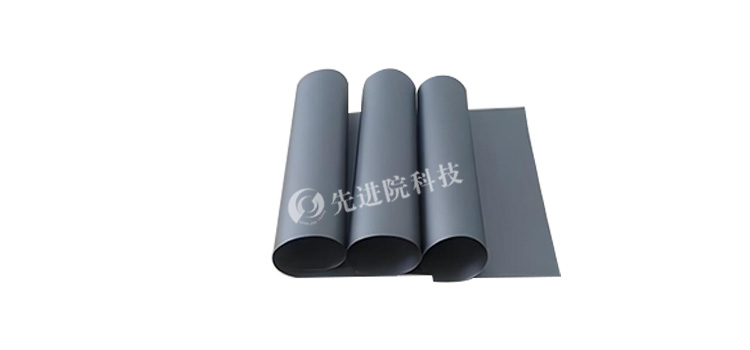
Flexible absorbing material sheetThe core of the process lies in its flexible molding and adhesion technology. The material is made of silicone rubber, fluororubber or natural rubber as the matrix, filled with absorbers such as carbon black, ferrite, carbonyl iron powder, etc., and processed into thin sheets through mixing, rolling or coating processes. Its flexibility allows the material to withstand bending, twisting, or tensile stress without breaking, and the back is often pre coated with pressure-sensitive adhesive or thermosetting adhesive, which can achieve curved surface bonding through the following steps:
1. Surface pretreatment: Clean the substrate to be attached (such as metal or composite surfaces) to ensure that there is no oil or dust.
2. Precise cutting: Cut materials according to the shape of the surface to reduce splicing gaps.
3. Low temperature or room temperature bonding: The material is tightly adhered to the curved surface by pressing or rolling, without the need for high temperature curing, to avoid thermal damage to the substrate.
4. Edge sealing treatment: Enhance the durability of the fit and prevent warping or detachment.
This process avoids the strict requirements of traditional spraying or curing materials on equipment and environment, and is particularly suitable for narrow spaces or irregular structures.
2、 Core advantages: lightweight, environmental resistance, and design freedom
1. Lightweight and Thinning: The material thickness is usually 0.1-5 mm, with low surface density and low load on the carrier structure. It is suitable for weight sensitive fields such as aerospace and unmanned aerial vehicles.
2. Excellent environmental adaptability: The rubber matrix endows the material with high and low temperature resistance (-50 ℃ to 200 ℃), moisture resistance, salt spray resistance, and chemical corrosion resistance, making it suitable for outdoor or harsh working conditions.
3. Design flexibility and integration convenience: Without changing the original structural design, it can be directly attached to complex surfaces such as electronic casings, antenna covers, and conduits, supporting local or global coverage and simplifying the production process.
4. Broadband absorption performance: By adjusting the filling ratio and multi-layer design, effective absorption (reflection loss>10 dB) in the 1-40 GHz frequency band can be achieved, meeting the requirements of multi band electromagnetic compatibility.
3、 Application areas: From electronic protection to stealth technology
1. Electromagnetic compatibility (EMC) of electronic devices:
Attach to surfaces such as 5G communication base station antennas, internal circuit boards of mobile phones, and automotive electronic control units (ECUs) to suppress electromagnetic interference (EMI) and ensure signal integrity.
2. Aerospace and unmanned aerial vehicles:
Used for electronic cabin walls in aircraft cabins, inner walls of radar covers, curved bodies or wings of drones, to reduce radar cross section (RCS) and minimize internal crosstalk.
3. Military stealth and protection:
Covering missile guidance heads, ship masts, and inclined surfaces of armored vehicles, achieving broadband radar wave absorption and enhancing concealment.
4. Medical and industrial equipment:
Applied to MRI equipment shielding chambers, industrial robot sensor housings, etc., to prevent electromagnetic noise from affecting the operation of precision instruments.
Summary
Advanced Institute of TechnologyElectromagnetic shielding rubber patchBy using flexible and adhesive technology, the electromagnetic wave absorption problem of complex curved structures has been successfully solved. Its advantages of lightweight, environmental robustness, and design freedom make it an irreplaceable solution in fields such as civil electronics, defense industry, aerospace, etc. In the future, with the development of new material technologies such as metamaterial structures and intelligent responsive fillers, this type of material will further evolve towards ultra-thin, ultra wideband, and adaptive directions, empowering more innovative application scenarios.

 en
en  Español
 Français
 Português