1、 Nickel plated graphite: cheaper than silver, stronger than carbon black
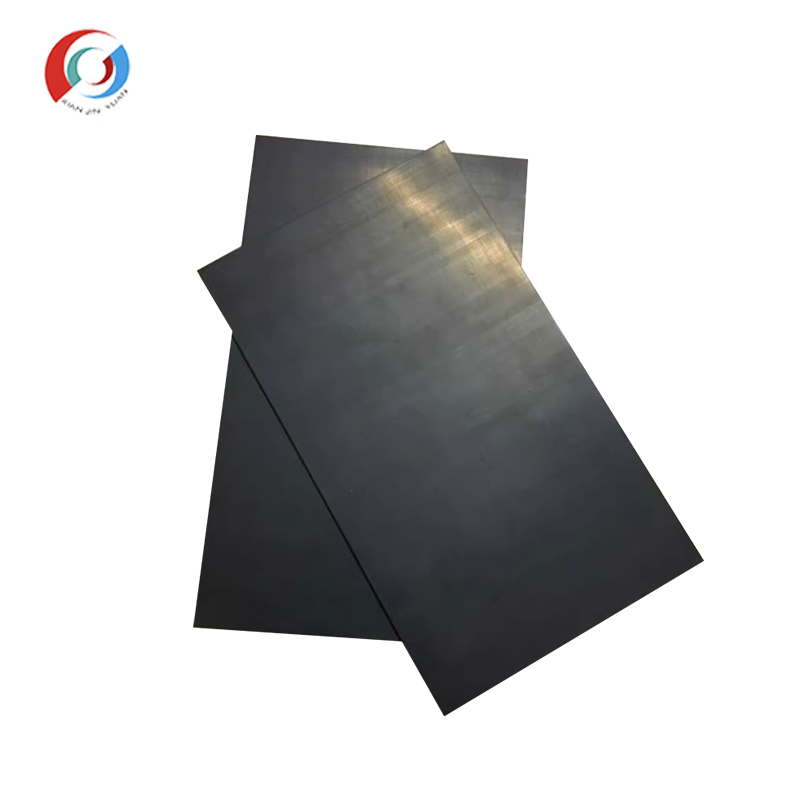
The core of conductive silicone rubber lies in conductive fillers. Silver filled silicone rubber has the best performance, but it is expensive; Carbon black filled silicone rubber is cheap, but its shielding effectiveness is limited. Graphite nickel plating is right in the middle - its performance is close to silver plating, and its cost is much lower than silver plating.
Nickel coated graphite composite powder is coated with a layer of metallic nickel on the surface of graphite powder by electroless nickel plating. Graphite serves as the core, providing lightweight and lubricity; Nickel serves as the shell, providing conductivity. The combination of the two has created a "lightweight, conductive, and cost-effective" conductive filler.
Research has shown that the shielding effectiveness of graphite nickel plating and silver plating materials is comparable, but the cost is lower. In the broadband range of 10MHz to 10GHz, the shielding effectiveness of graphite nickel plated conductive silicone rubber can reach over 80dB - which means 99.99% of electromagnetic waves are effectively blocked. In the frequency band below 2GHz, its shielding effectiveness can even exceed 100dB. Although the volume resistivity is 20-500 times higher than silver plating, the shielding effectiveness is surprisingly similar - this is precisely the core value of graphite nickel plating: to achieve shielding effects close to silver plating at a lower cost.
2、 Full frequency shielding environment sealing: dual energy of one material
Graphite nickel plated conductive silicone rubber is a special type of composite material that combines the flexibility of silicone rubber with the conductivity of conductive materials. Silicone rubber matrix provides elasticity, temperature resistance, and sealing properties; Nickel plated graphite particles are dispersed and form a conductive network through mutual contact.
The performance parameters of typical products are impressive. The volume resistivity can be as low as 0.01 Ω· cm or less, far below the industry standard. The hardness is about 70 ± 5 Shore A, the tensile strength is greater than 1.3 MPa, and the elongation at break is 100% -300% - maintaining a certain mechanical strength while retaining the elasticity of silicone rubber. The temperature range covering -55 ℃ to 160 ℃ is sufficient to cope with the vast majority of industrial and commercial scenarios. After thermal aging, the volume resistivity can still be maintained at the level of 0.01 Ω· cm, indicating that long-term reliability can withstand the test.
More importantly, this material can not only shield electromagnetic waves, but also simultaneously achieve water vapor sealing. The core value of conductive elastomers is to solve both EMI shielding and environmental sealing problems with one component and one process.
In terms of shielding effectiveness, it can reach 60dB at 30MHz, and 100dB across the entire frequency range from 100MHz to 10GHz. 95dB at 100MHz, 105dB at 500MHz, 100dB at 2GHz, and 95dB at 10GHz and 18GHz - the shielding effectiveness remains stable at high levels from low to high frequencies.
3、 Common choice between commercial and military products
The application range of graphite nickel plated conductive silicone rubber spans civil commercial and general military products.
In the field of network communication equipment, the interfaces and seams of switches, routers, and communication chassis are the main channels for electromagnetic leakage. Graphite nickel plated conductive rubber strip can effectively block electromagnetic interference and ensure stable communication signals. In the field of automotive electronics, in vehicle electronic control modules and communication equipment need to adapt to complex temperature zones and high reliability requirements. Graphite nickel plated materials have good shielding performance in moderately corrosive environments and can achieve dual sealing of electromagnetic and water vapor simultaneously.
In industrial chassis and instruments, graphite nickel plated conductive rubber is widely used in small and medium-sized electronic chassis, outdoor electronic equipment, and cable TV equipment, which have strict cost requirements. In the military and aerospace fields, it can be used in typical civilian and general military/aerospace applications, winning a place with high cost-effectiveness and broadband shielding capability.
In addition, graphite nickel plating has excellent electrochemical compatibility with aluminum chassis, which makes it less prone to galvanic corrosion when matched with aluminum flanges, which is a often overlooked but crucial engineering detail.
4、 Key selection points
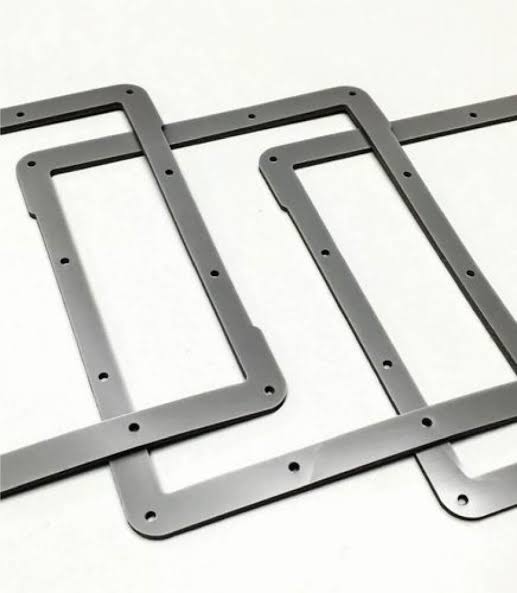
Engineers need to focus on several dimensions when selecting models. Shielding effectiveness requirements -60-80dB is sufficient for general commercial scenarios, and above 100dB is required for military or high-frequency scenarios. The working temperature range -55 ℃ to 160 ℃ covers the vast majority of scenarios. Installation method - can be molded into sheet metal, punched into gaskets, or extruded into sealing strips of various cross-sectional shapes. Compression ratio - recommended compression ratio for solid bars is 15% -25%, not less than 10%.
Advanced Institute Technology provides full process technical support from material selection, sample trial production to batch delivery.
The global market for conductive silicone rubber is expected to reach $19.6 billion by 2034. Driven by the dual pressures of commercial equipment costs and the demand for broadband shielding in military products, graphite nickel plated conductive silicone rubber is becoming a practical choice for more and more engineers due to its unique positioning of "performance close to silver plating and significantly reduced cost". When both performance and budget need to be respected, graphite nickel plating is the balance point.
 en
en  Español
 Français
 Português