1、 Why do O-rings need to be 'conductive' - the functional transition from sealing to shielding
O-ring is the most fundamental sealing component in the industrial sector. But modern electronic devices have long exceeded the requirements of "preventing air and water leakage".
At the joint of the equipment casing, there are two "leakage" channels simultaneously: one for water vapor and dust, and the other for electromagnetic waves. If the O-ring can only block the former and allow the latter to pass, the EMC performance of the device will be compromised. At the gap of a communication cabinet, electromagnetic leakage may cause the shielding effectiveness of the entire machine to drop from 90dB to below 60dB.
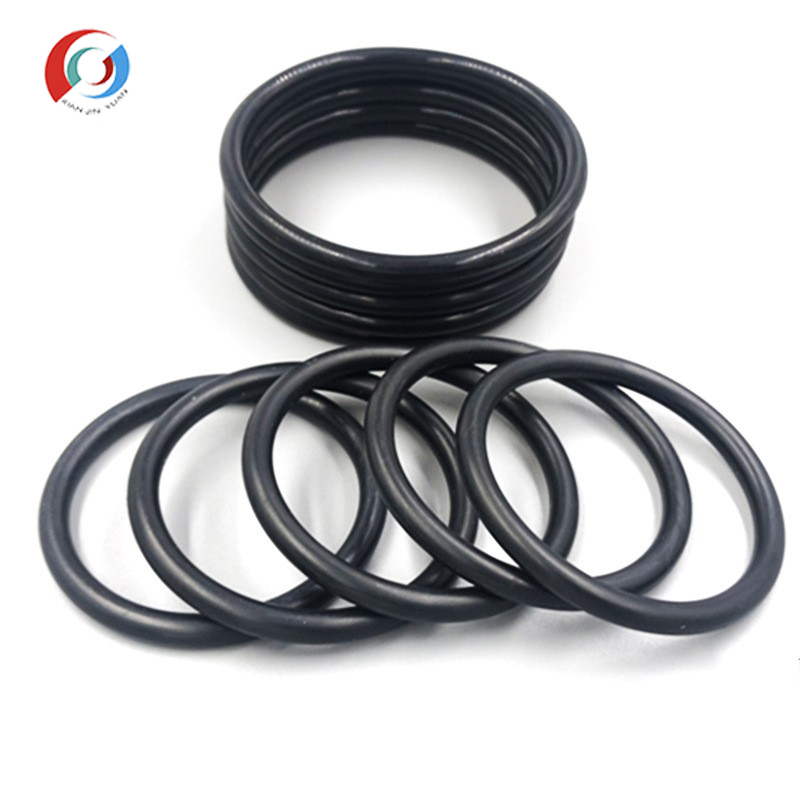
The value of molded O-ring conductive silicone rubber lies in integrating two functions into one annular component. Conductive fillers (such as silver plated aluminum, silver plated copper, etc.) form a three-dimensional conductive network in the silicone rubber matrix. When the O-ring is compressed into the installation groove, this conductive network is "compressed", establishing a low resistance conductive path between the mating surfaces. At the same time, the silicone rubber matrix still maintains excellent elastic recovery and sealing performance.
The core value of conductive O-rings is to achieve both environmental and electromagnetic sealing with a single O-ring.
2、 Molding vs Extrusion: Why must O-rings be "molded"?
There are two main manufacturing paths for conductive silicone rubber O-rings: compression molding and bonding after extrusion. The difference between the two directly determines the reliability level of the product.
Extrusion bonding is the process of first extruding conductive silicone rubber into continuous circular strips, and then cutting and bonding them into a circular shape. The advantages are high efficiency, low cost, and suitable for large-scale standard specifications. But the bonding point is precisely the weakest link of electromagnetic leakage - the conductive network at the joint is cut off, and the shielding effectiveness has a "breakpoint".
Compression molding is the process of placing mixed conductive silicone rubber raw materials into precision molds and completing vulcanization and shaping under high temperature and high pressure conditions. The molded O-ring has no joints - the conductive network around the entire circumference is continuous and complete. For application scenarios that require high-level shielding and sealing, such as military electronic chassis and microwave waveguide systems, the electromagnetic continuity provided by the molding process cannot be compared to extrusion bonding.
Another advantage of the molding process is its dimensional accuracy and shape flexibility. The accuracy of the mold directly determines the dimensional accuracy of the O-ring, enabling it to achieve strict tolerance control and ensure precise fit with the installation groove. Meanwhile, the molding process supports flexible customization from standard circular to irregular cross-sections. Molded O-rings can directly replace standard non-conductive O-rings - adding an electromagnetic protection barrier to the equipment while maintaining the same size.
3、 Data speaks for itself: the "hard index" of molded O-ring conductive silicone rubber
The performance of molded O-ring conductive silicone rubber ultimately needs to be demonstrated through data.
Conductivity is the core indicator for measuring whether the conductive channel is unobstructed. The volume resistivity of different filler systems varies significantly: the silver plated copper system can reach 0.002-0.006 Ω· cm; the silver plated aluminum system is about 0.01 Ω· cm or less; The nickel plated graphite system is usually around 0.1 Ω· cm. Excellent products can maintain stable volume resistivity even after aging.
The shielding effectiveness determines how much electromagnetic waves an O-ring can "block". At the frequency of 10GHz, the shielding effectiveness of the copper silver plating system can reach up to 120dB. The optimized formula can achieve a shielding effectiveness of 122-139dB at 100MHz. Typical products have a shielding effectiveness greater than 90dB over a wide frequency range. The shielding effectiveness of conductive O-rings can suppress electromagnetic interference at frequencies up to 40GHz.
The working temperature range covers -55 ℃ to 160 ℃. This wide temperature range is sufficient to handle the vast majority of application scenarios from polar regions to deserts, from the ground to space. By using fluorosilicone rubber matrix, it can also withstand the erosion of fuel and solvents.
Compression permanent deformation is related to long-term sealing reliability. After thermal aging at 100 ℃ for 70 hours, the compression set of the optimized formula can be controlled within a single digit percentage. This data means that O-rings can maintain stable sealing pressure during long-term service and will not cause leakage or shielding failure due to being flattened and unable to bounce back.
4、 Three major application battlefields: from military chassis to 5G base stations
The military and aerospace industries are the most dominant fields for molded O-ring conductive silicone rubber. Ultra high conductivity silicone rubber products have been proven to be widely used in military electronic equipment such as aviation, aerospace, and ships through practice. Molded O-rings are particularly suitable for small and medium-sized military electronic chassis and microwave waveguide systems. The product meets the US military standard MIL-DTL-83528 (formerly MIL-G-83528), which establishes a complete technical standard for conductive elastomer shielding gaskets from material composition to performance testing, providing military customers with a full chain guarantee from materials to certification.
5G communication and data centers are one of the areas with the highest demand for molded O-ring conductive silicone rubber. In communication cabinets, RF modules, and base station equipment, circular gaps such as connector interfaces, panel openings, and maintenance windows are not only critical parts for environmental sealing, but also the main channels for electromagnetic leakage. The molded O-ring can be directly installed in the standard O-ring groove, while completing EMI shielding and environmental sealing. In 5G base station equipment, excellent electromagnetic shielding performance (up to 90dB or more) and wide temperature range working ability (-55 ℃ to 160 ℃) effectively solve the electromagnetic compatibility problem in high-frequency signal transmission.
Automotive electronics and industrial control are the fastest-growing application directions for molded O-ring conductive silicone rubber. Vehicle electronic control units, sensors, and connectors have dual requirements for sealing and EMI shielding. Especially in the battery management system of new energy vehicles, the sealing ring needs to maintain stable performance for more than 10 years under composite working conditions of long-term high temperature (starting at 85 ℃, hot spot up to 125 ℃), continuous compression (20% -30% compression rate), and corrosion by coolant, salt spray and other media. The wide temperature range working ability and low compression permanent deformation characteristics of molded O-ring conductive silicone rubber make it the preferred solution for automotive grade applications.
5、 Selection points: How to choose the right conductive O-ring for your device?
When engineers select molded O-ring conductive silicone rubber, it is recommended to start from the following dimensions:
The packing system is the first choice. The silver plated copper system provides the highest shielding efficiency (up to 120dB or more), suitable for military and high-end communication scenarios; The silver plated aluminum system has excellent galvanic compatibility in aluminum chassis scenarios; The nickel plated graphite system has outstanding cost-effectiveness and is suitable for commercial equipment and general industrial scenarios.
The size and tolerance determine the installation adaptability. The molded O-ring can directly replace the standard non-conductive O-ring, but the tolerance fit needs to be confirmed based on the actual size of the installation groove. The standard size can refer to the O-ring standard specified in MIL-DTL-83528.
Hardness and compression are related to sealing reliability. The hardness is usually adjustable between Shore A 45-85. The recommended compression range for solid O-rings is 10% -30%. Overvoltage may cause the conductive path to be squeezed apart and accelerate permanent deformation.
Environmental tolerance determines long-term lifespan. It is necessary to evaluate the working temperature range (standard silicone rubber -55 ℃ to 160 ℃), chemical medium contact conditions (coolant, fuel, salt spray, etc.), and flame retardant level requirements.
Advanced Institute Technology provides full process technical support from material selection, mold development to sample trial production and batch delivery.
The global conductive silicone rubber market is expected to grow from $10.41 billion in 2026 to $22.48 billion in 2034, with a compound annual growth rate of 10.10%. The Asia Pacific region dominates the global market with a market share of 34.62%. Driven by the upgrading of military electronics, deployment of 5G/6G communication, and deep evolution of automotive electrification and intelligence, molded O-ring conductive silicone rubber is becoming the preferred solution for more and more engineers to meet the EMI sealing requirements of annular gaps due to its unique advantages of "no joints, high precision, and dual functionality".

 en
en  Español
 Français
 Português