I. Introduction
Surface Electromyography (sEMG), as a non-invasive method for detecting muscle electrical activity, is playing an increasingly important role in fields such as rehabilitation medicine, sports science, human-computer interaction, and neuroengineering. With the rapid development of wearable medical devices and flexible electronic technology, the performance requirements for sEMG acquisition electrodes are constantly increasing - not only good conductivity and signal fidelity are needed, but also flexibility, biocompatibility, and long-term comfort of the electrodes are required.
Electrode coating technology, as a key link in improving the performance of flexible electrodes, directly determines the conductivity, contact impedance, signal-to-noise ratio, and service life of the electrodes. In recent years, significant progress has been made in the innovation of coating materials and processes for flexible sEMG electrodes, providing solid technical support for high-performance non-invasive electromyography signal acquisition.
2、 Technical requirements for flexible sEMG electrode coating
The coating layer of flexible sEMG electrodes must meet the following core requirements:
- Low contact impedance.The impedance of the electrode skin interface is a key parameter that affects signal quality. Low impedance means higher signal transmission efficiency and better signal-to-noise ratio. Research has shown that through reasonable selection of coating materials and process optimization, interface impedance can be effectively reduced.
- High conductivity and stability.The coating layer needs to have excellent conductivity and maintain stable electrical performance under mechanical deformation conditions such as repeated bending and stretching.
- Good biocompatibility.As a device that comes into direct contact with the skin, the coating material needs to be non-toxic, non irritating, and meet the biological safety requirements for long-term wear.
- Flexibility and adhesion.The coating layer needs to be firmly combined with the flexible substrate, and should not fall off or crack in dynamic usage scenarios such as bending and twisting.
3、 Mainstream coating materials and their characteristics
3.1 Metal Coating Materials
Gold (Au).Gold has become one of the preferred materials for flexible sEMG electrode coating due to its excellent conductivity, chemical stability, and biocompatibility. Research has shown that electrodes plated with gold (approximately 2 μ m thickness) on polyimide (PI) flexible substrates have lower impedance and can obtain stable baseline and good sEMG signals. The gold film electrode prepared by chemical plating method has a simple process and high cost-effectiveness, which can be achieved under conventional experimental conditions.
Silver (Ag) and silver/silver chloride (Ag/AgCl).Silver/silver chloride is the most common material system in biopotential electrodes, usually achieved by electrochemically depositing a thin layer of silver chloride on the silver electrode. In recent years, stretchable 3D printed Ag/AgCl dry electrode ink has provided a new approach for flexible electrode manufacturing. In addition, the silver coated fiber electrode enhances flexibility while ensuring conductivity by constructing a three-dimensional multi-channel structure.
Copper (Cu).Copper has good conductivity and cost advantages, and is often used in combination with materials such as gold. By combining chemical copper plating with non-destructive modification technology, efficient metallization can be achieved on flexible substrates such as PET.
3.2 Carbon based Coating Materials
Carbon based materials such as carbon nanotubes (CNTs) and graphene have attracted much attention in the field of flexible sEMG electrodes due to their excellent conductivity, mechanical flexibility, and lightweight properties.
Tokyo University of Technology has developed an ultra-thin conductive biological electrode, which forms a fiber network structure by coating a single-layer carbon nanotube (SWCNT) fibrous conductive material on the elastomer film, and its signal-to-noise ratio is equivalent to the commercial gel electrode.
Graphene flexible electrodes can be prepared by depositing a single layer of graphene on the surface of copper foil using chemical vapor deposition (CVD) method, followed by coating with flexible polymer and etching the copper foil. Single layer graphene film has excellent conductivity and mechanical properties, which can effectively reduce the loss and interference of surface electromyographic signals. The contact impedance of laser-induced porous graphene electrodes can be as low as about 17k Ω (100Hz).
3.3 Conductive Polymer Coating Materials
PEDOT:PSS。Poly (3,4-ethylenedioxythiophene): Polystyrene sulfonate (PEDOT: PSS) is currently one of the most widely studied conductive polymers. PEDOT: PSS coating can reduce the contact impedance of textile electrodes by over 85% while suppressing metal oxidation. In three-dimensional micro cone electrode structures, PEDOT: PSS coating can improve electrode impedance by up to 99.3%. PEDOT: PSS and MXene nanocomposite coatings exhibit excellent performance in stretchable electronic skin.
3.4 Emerging 2D materials such as MXene
MXene (such as Ti ∝ C ₂ T ₓ) is an emerging class of two-dimensional transition metal carbon/nitrides that possess both metal grade conductivity (up to 2000 S/m) and excellent solution processability. The flexible electrode based on MXene can realize gel free, high-density and high-resolution surface EMG signal acquisition, which shows great potential in the field of the next generation of flexible bioelectrodes.
4、 Typical coating process technology
4.1 Flexible Printing Process
Flexible printing technology is a mature technical route for preparing sEMG electrode arrays. This process uses flexible materials such as polyimide (PI) as carriers to form conductive coatings in designated areas through printing. The electrode array prepared by this process has the advantages of small size, low cost, and mass production capability. The electrode carrier material can be as thin as 50 μ m and has high mechanical flexibility, which can adapt to various curved skin surfaces.
4.2 Inkjet Printing Technology
Inkjet printing, as an additive manufacturing technology, provides great convenience for rapid prototyping and customized design of flexible electrodes. Researchers conducted a study on flexible Kapton ® A high-density sEMG electrode matrix was successfully prepared by inkjet printing silver based ink on the substrate, achieving good electrical performance in resolution, resistance, and electrode skin contact impedance.
4.3 Magnetron Sputtering Coating
Magnetron sputtering is a technique in which high-energy particles bombard a target material in a vacuum environment to deposit target atoms on the substrate surface to form a thin film. This method can be used to prepare uniform and dense metal conductive films on flexible substrates. By vacuum sputtering a metal layer on the surface of a flexible microneedle electrode array, a uniformly textured electrode coating can be obtained, with a simple process, low cost, and easy mass production. Magnetron sputtering technology can also be used for metallization treatment of fabric electrodes.
4.4 Chemical plating and electrochemical deposition
Chemical plating (electroless deposition) and electrochemical deposition are important supplementary methods for preparing metal coatings. Chemical gold plating can achieve the preparation of gold film electrodes under conventional experimental conditions, with a simple process and high cost-effectiveness. Silver/silver chloride electrodes typically form a thin layer of silver chloride on the surface of the silver electrode through electrochemical deposition.
4.5 Spraying and Coating Process
The spraying process can deposit conductive materials in the form of thin films directly onto flexible substrates or even spray them directly onto the surface of the skin. By spraying biocompatible two-dimensional nanosheet ink, a conformal van der Waals film can be formed on the body surface, achieving low impedance bioelectric signal acquisition. Conductive polymer PEDOT: PSS can also be applied to three-dimensional porous graphene electrode by spray coating.
5、 Performance optimization of coating technology
5.1 Reduce contact impedance
The core challenge of flexible sEMG electrodes is to reduce the impedance at the electrode skin interface. Research has shown that using gold plating technology can reduce electrode impedance to a lower level. By modifying with PEDOT: PSS coating, the contact impedance of textile electrodes can be reduced by over 85%. The average electrode skin impedance of 3D printed dry electrodes based on chemical copper plating and gold plating processes can reach 66.7 k Ω at a frequency of 50Hz, which is comparable to commercial wet electrodes.
5.2 Improving Signal to Noise Ratio
Signal to Noise Ratio (SNR) is a core indicator for measuring the quality of electrode signals. Carbon based materials perform outstandingly in this regard - the signal-to-noise ratio of laser-induced graphene electrodes can reach 48.659dB, and the signal-to-noise ratio of reduced graphene oxide (rGO) electrodes can reach 16.8dB.
5.3 Enhance mechanical stability
The stability of the performance of flexible electrodes under repeated deformation conditions is crucial. The flexible surface electromyography electrode with a three-layer structure (PDMS/silver paste/fiber skeleton) exhibits excellent mechanical stability with a resistance change rate of less than 3% after 1000 bends.
6、 Application prospects and prospects
With the cross integration of flexible electronics, nanomaterials, and advanced manufacturing technologies, sEMG flexible non-invasive electrode coating technology is rapidly developing towards higher performance, lower cost, and more comfortable wearing.
- High density sEMG array.The advancement of coating technology has made it possible to prepare high-density electrode arrays, providing a hardware foundation for high-definition spatiotemporal information collection of muscle activity.
- Long term wearable monitoring.The flexible dry electrode does not need conductive gel, which avoids dehydration, skin irritation and other problems of the traditional wet electrode, and is suitable for long-term continuous monitoring scenarios.
- Intelligent human-computer interaction.The wearable sEMG system based on conformal dry electrode array has achieved real-time classification of gesture recognition, with a recognition accuracy of over 97%.
In the future, with the continuous emergence of new coating materials such as MXene and conductive polymer composites, as well as the continuous optimization of coating processes such as roll to roll printing and large-area spraying, flexible non-invasive sEMG electrodes are expected to play a more important role in fields such as smart healthcare, sports rehabilitation, and virtual reality interaction.
7、 Advanced Institute (Shenzhen) Technology Co., Ltd.: Leading Innovation in Flexible Electrode Coating Technology
Advanced Institute (Shenzhen) Technology Co., Ltd. (hereinafter referred to as "Advanced Institute Technology") was established in 2016 and is a high-tech enterprise specializing in shielding materials, insulation materials, thermal conductivity materials, and precious metal coatings. The company has its own registered trademark "Research Platinum" and has production bases in Shenzhen and Dongguan. It has passed ISO9001 quality management system certification and its products comply with GJB 773A military standards and RoHS environmental requirements.
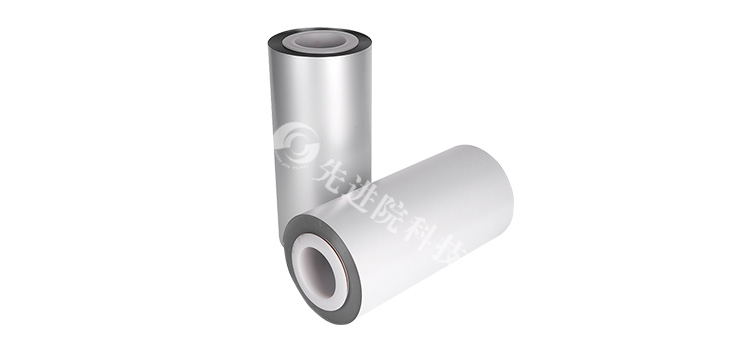
In the field of flexible electrode coating, Advanced Institute Technology has developed three types of flexible substrate coating solutions: silver plating, gold plating, and platinum plating, with metal coating technology as the core. The company has independently built a magnetron sputtering and vacuum evaporation roll to roll production line, which can continuously deposit metal layers on the surface of various flexible polymer films such as PI (polyimide), PET, FEP, etc. It has process advantages such as uniform coating, strong adhesion, and support for large-scale supply. In response to the problem of insufficient bonding strength between metal and polymer substrates, the company has developed a plasma pretreatment process to effectively improve the bonding strength between the substrate and the metal layer; Adopting cyanide free gold plating technology in the gold plating process, balancing environmental protection and safety.
The skin stretchable flexible electrode product series launched by Advanced Institute Technology adopts a composite structure of elastic substrate and high conductivity functional layer, which can closely fit the curves of the human body and continuously collect high-quality sEMG signals in dynamic environments such as movement and muscle contraction. The company has mastered carbon nanotubes, graphene PEDOT:PSS、 Multi functional conductive layer material systems such as silver nanowires and MXene can be flexibly customized for electrode solutions according to different application scenarios. In addition, the company's R&D platinum brand series platinum electrode slurry provides high-performance material support for bioelectrode applications with excellent conductivity, extraordinary biocompatibility, and stable long-term working ability.
From flexible substrate precious metal coating to bio electrode slurry, from stretchable electrodes on the skin surface to neural probe coating solutions, Advanced Institute Technology continues to promote innovation and industrialization of flexible non-invasive electrode coating technology. In the future, the company will continue to delve into the field of flexible electronic materials, providing high-performance and highly reliable core components and solutions for cutting-edge applications such as surface electromyography acquisition, wearable health monitoring, and brain computer interfaces.
Advanced Institute (Shenzhen) Technology Co., Ltd
- Customized Hotline:0755-22277778
- mobile phone13826586185 (Mr. Duan)
- Fax0755-22277776
- Email:duanlian@xianjinyuan.cn
- Address:8th Floor, Zhongxing Building, Xinsha Road, Xinqiao Street, Bao'an District, Shenzhen City, Guangdong Province
- Official website:www.xianjinyuan.cn
Advanced Institute (Shenzhen) Technology Co., Ltd. · Flexible electrode coating technology · All rights reserved
 en
en  Español
 Français
 Português