Silver printing pastePreparation scenario of service RFID tag antenna
Introduction
With the rapid development of IoT technology, RFID (Radio Frequency Identification) technology, as its core component, has been deeply integrated into many fields such as warehousing and logistics, retail, and asset management. As the "soul" of RFID tags, the antenna's preparation process directly determines the performance and cost of the tag. Among them, printed electronic technology, especially the use of conductive silver paste for antenna printing, is gradually becoming the mainstream preparation solution due to its advantages of high efficiency, flexibility, and low cost.
1、 Process principles and core advantages
Advanced Institute of TechnologyThe core of preparing antennas with printed silver paste is to directly form preset antenna lines on flexible substrates such as PET and PI using conductive paste rich in micro - or nano silver particles through screen printing, inkjet printing, and other processes. The essential advantage of this process lies in "additive manufacturing", which abandons the "subtractive" mode of traditional etching methods, avoids the waste of metal materials and the pollution of chemical etching, and achieves green manufacturing. At the same time, it can meet the requirements of RFID tags for lightweight and flexibility, laying the foundation for large-scale, low-cost production.
2、 The key role of performance implementation
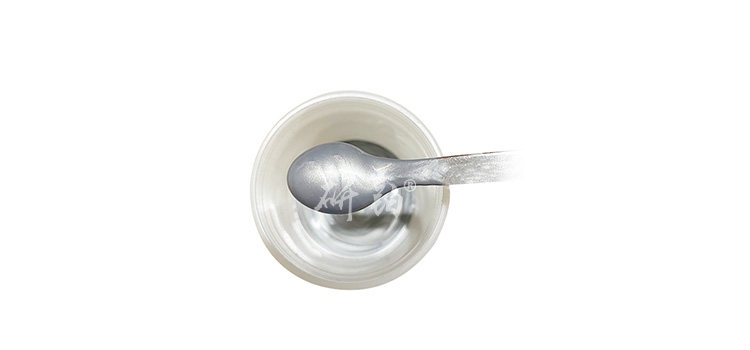
In RFID systems, the antenna is responsible for receiving energy and signals from the reader/writer, and its conductivity is crucial.Conductive silver pasteThe silver particles in the sample form a dense conductive network after sintering, providing excellent conductivity and ensuring that the label has sufficient reading distance and signal sensitivity. In addition, the graphic accuracy and consistency of printed antennas directly affect the stability of antenna resonance frequency, thereby ensuring the reliable performance of RFID tags in the operating frequency band.
3、 Promoting industrial applications
The printing process endows antenna design with extremely high flexibility. Without the need for expensive molds, antenna iterations of different sizes and shapes can be quickly achieved by simply changing the design drawings, greatly shortening the product development cycle. This flexibility enables RFID tags to be customized according to specific application scenarios, such as being attached to metal surfaces or liquid bottle bodies, promoting the widespread application of RFID technology in more diverse and demanding environments.
4、 Challenges and Development Trends Faced
Despite its significant advantages, this technology still faces some challenges. For example, the relatively high cost of silver paste has prompted the industry to explore low-cost alternative materials such as silver coated copper. Meanwhile, under the requirements of finer line widths and faster printing speeds, ensuring the uniformity of antenna edges and consistency of conductivity remains a key focus of process optimization. In the future, with the development of new conductive ink materials and higher precision printing equipment, the performance and cost-effectiveness of printed antennas will be further improved.
Summary
In summary, adoptingLine printing silver pasteThe preparation of RFID tag antennas is an advanced manufacturing technology that integrates efficiency, environmental protection, economy, and flexibility. It is not only a key driver for the large-scale application of RFID tags, but also represents the trend of the electronic manufacturing industry towards additive and green development. With the continuous maturity and breakthroughs of technology, printing silver paste will play a more important role in the future Internet of Things industry.

 en
en  Español
 Français
 Português