1、 PP: an underestimated 'lightweight substrate'
In the field of flexible substrate coating, PI (polyimide) and PET (polyester) are more common names. But PP (polypropylene) has an advantage that none of them have: lightweight.
The density of PP is only 0.9g/cm ³, which is 35% lighter than PET (1.38g/cm ³) and 37% lighter than PI (1.43g/cm ³). This means that PP gold-plated film of the same thickness is more than one-third lighter in weight than PET gold-plated film. In scenarios such as aerospace, wearable devices, and portable electronic products that are extremely sensitive to weight, this gap is decisive.
Another advantage of PP is cost. PP is a bulk chemical raw material with a price much lower than special engineering plastics such as PI. This makes PP gold-plated film have significant economic advantages in scenarios that require large-scale applications.
But PP also has a 'fatal flaw' - low surface energy and strong chemical inertness. The non-polar structure of PP molecular chains results in poor adhesion between them and metal coatings. The untreated surface of PP makes it almost impossible for the gold layer to hang on - this is the biggest technical threshold for PP gold plating film to move from the laboratory to mass production.
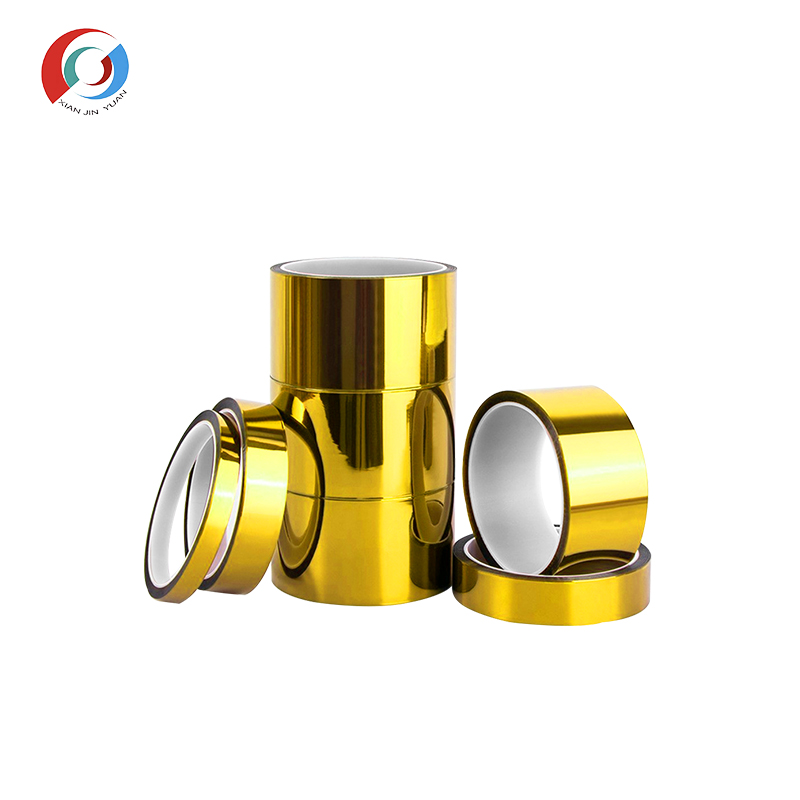
2、 Advanced Institute's technological breakthrough: allowing gold to grow on PP
Advanced Institute Technology adopts a composite process of vacuum evaporation and chemical plating to form a uniformly thick gold layer on the surface of PP substrate. The core of this process lies in three technological breakthroughs:
The control of interface adhesion is the primary challenge. Through plasma pretreatment technology, nanoscale concave convex structures are etched on the surface of PP to provide "anchor points" for gold atoms. The mechanical interlocking between gold atoms and polymer chains results in a peel strength of 12N/cm for the gold-plated film, far exceeding industry standards (≥ 5N/cm).
The purity assurance system is equally crucial. Using 99.99% pure gold target material and a closed-loop vacuum system, the impurity content is controlled below 0.001%. The resistivity of the coating is as low as 2.2 × 10 Ω· m (20 ℃), which is close to the theoretical value of pure gold.
The stress balance design addresses long-term reliability issues. By using a gradient coating structure (with a 0.05 μ m nickel transition layer at the bottom), stress cracking caused by the difference in thermal expansion coefficients between metals and plastics can be effectively alleviated. After cyclic testing from -40 ℃ to 120 ℃, the sample integrity rate reached 100%.
3、 Data Speaking: What Can PP Gold Plated Film Do?
The performance of PP gold-plated film ultimately needs to be answered with data.
In terms of electromagnetic shielding, the shielding effectiveness of a 3 μ m thick gold plating film reaches 80dB in the frequency range of 10kHz-40GHz. 80dB means that 99.99% of electromagnetic waves are effectively blocked - enough to meet the EMC standards of military electronic equipment. A communication company's actual test shows that the use of this material has improved the anti-interference ability of equipment by three orders of magnitude.
In terms of conductivity, the surface resistivity of PP gold-plated film is as low as 0.01 Ω/□, making it an ideal substrate for flexible circuit boards. A wearable device manufacturer's application case shows that using PP gold-plated film instead of traditional copper foil reduces product weight by 40% and has a bending life exceeding 100000 times.
In terms of biocompatibility, the cell adhesion rate of the gold layer surface was increased by 60% after special treatment. The cell culture experiment at a research institute in Nanjing confirmed that the proliferation rate of fibroblasts cultured on the surface of gold-plated film was 2.3 times higher than that of untreated PP. This characteristic enables PP gold plating film to demonstrate unique potential in the field of implantable medical devices.
4、 Three major application battlefields: from foldable screens to satellites
Folding screens and consumer electronics are the most representative application scenarios for PP gold-plated films. A folding screen mobile phone manufacturer has applied gold plating film to the hinge structure, utilizing its self-lubricating properties to extend the opening and closing life beyond 500000 times. The lightweight characteristics of PP significantly reduce the weight of the hinge area, contributing to the overall weight reduction of foldable screen phones.
Aerospace represents the highest dimension of reliability requirements. A satellite manufacturer uses a 0.5mm thick PP gold-plated film as the back panel of solar panels, which improves thermal control efficiency by 15% while maintaining the same total weight. According to space environment simulation tests, the material has a mass loss rate of only 0.03% per year under the condition of atomic oxygen flux of 10 ¹⁶ atoms/cm ² - which means that PP gold plating film can serve stably for decades in the harsh environment of near Earth orbit.
High frequency communication and electromagnetic shielding are areas where PP gold-plated film is rapidly penetrating. 5G/6G communication equipment has strict requirements for high-frequency signal transmission and electromagnetic shielding. The low density and high conductivity of PP gold-plated film make it an ideal shielding material for base stations, RF front-end modules, and antenna systems. Maintain stable shielding effectiveness in the wide frequency range of 10kHz-40GHz, enabling it to cope with electromagnetic interference challenges across the entire frequency range from low frequencies to millimeter waves.
5、 Customization: adjustable thickness, scene customization
Advanced Institute Technology supports customized thickness services for PP gold plating film, with precise control of the gold layer thickness within the range of 0.01 μ m to 5 μ m. Ultra thin gold layer (<0.1 μ m) is suitable for flexibility and cost sensitive scenarios; Medium thickness (0.1-1 μ m) is suitable for mainstream applications in flexible circuits and electromagnetic shielding; Thicker gold layers (>1 μ m) are suitable for aerospace and medical scenarios that require high wear resistance and long-term reliability.
The company has passed ISO9001 certification, and its products comply with GJB 773A aerospace standards and RoHS environmental requirements. It has the ability to support high-end fields such as aerospace, military, and 5G communication.
The global metalized film market is expected to reach 3.77 billion US dollars by 2030. Driven by the popularization of foldable screens, lightweight aerospace payloads, 5G/6G communication deployment, and flexible medical electronics, PP gold-plated film, which combines lightweight, flexibility, and high conductivity, is moving from an "emerging material" to a standard option for multifunctional substrates in multiple fields.
Advanced Institute (Shenzhen) Technology Co., Ltd. will continue to deeply cultivate the field of PP gold plating film, providing customers with higher performance and more reliable flexible substrate coating solutions through precision coating technology and continuous technological innovation.

 en
en  Español
 Français
 Português