1、 Why "Aluminum Nickel Plating" - Understanding the Bottom Logic of Filler Selection from the Perspective of Galvanic Corrosion
The performance of conductive silicone rubber is rooted in the synergy between conductive fillers and silicone rubber matrix. Different filler systems correspond to different conductivity, shielding effectiveness, and corrosion resistance characteristics - silver plated copper has the best conductivity, followed by silver/aluminum system, nickel/graphite system has outstanding cost-effectiveness, and aluminum nickel plating exhibits irreplaceable advantages in the dimension of "electrical compatibility with aluminum flanges".
The unique value of aluminum nickel plated particles lies in their "galvanic compatibility". Aluminum is widely used as a housing material in electronic device chassis due to its lightweight and good thermal conductivity. However, when the metal particles filled in the conductive rubber come into direct contact with the aluminum flange, if the potential difference between the two metals in the electrochemical sequence is too large, it may cause galvanic corrosion in a humid environment - aluminum as the anode is preferentially corroded, resulting in gradual oxidation of the flange surface, increased contact resistance, and ultimately electromagnetic shielding failure.
Nickel plated aluminum particles are designed to solve this problem. The nickel coating wraps around the surface of aluminum particles, serving as a "potential buffer" between the conductive rubber and the aluminum flange. Compared to silver/aluminum or copper/silver systems, aluminum nickel plated conductive silicone rubber has better corrosion resistance when matched with aluminum contact surfaces. International mainstream conductive elastomer suppliers have recommended the nickel aluminum (Ni/Al) filler series as the preferred solution for use with aluminum metal workpieces.
2、 From conductive network to shielding effectiveness: performance realization of aluminum nickel plated conductive silicone rubber
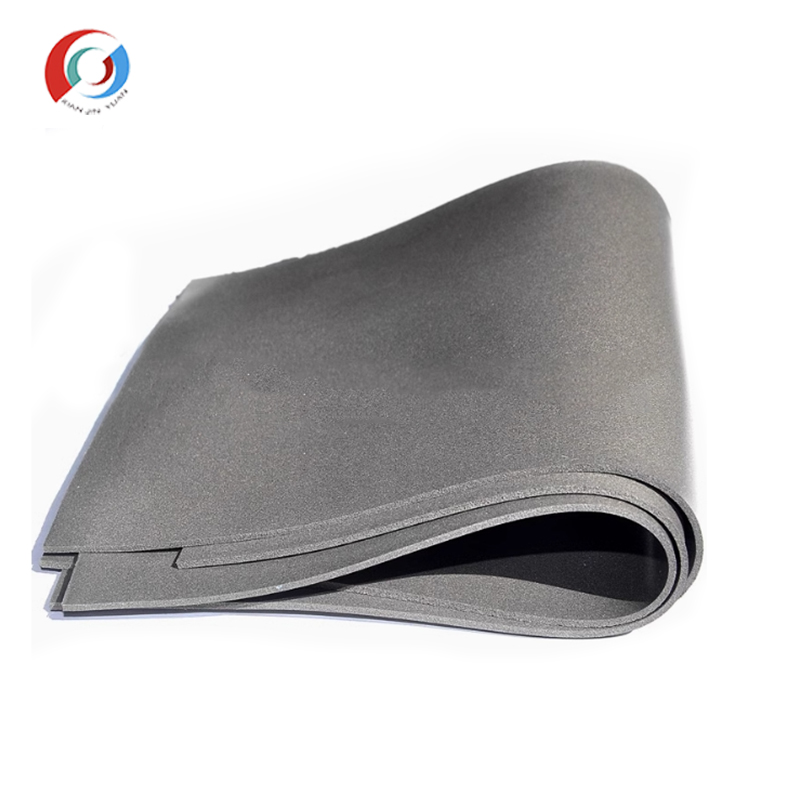
The preparation of aluminum nickel plated conductive silicone rubber requires mixing nickel plated aluminum particles with silicone rubber in a specific ratio and curing them into shape through vulcanization process. In this process, the filling ratio, dispersion uniformity, and particle size distribution of the conductive filler jointly determine the conductivity and shielding effectiveness of the final product.
In terms of conductivity, when conductive particles reach a certain volume fraction in the silicone rubber matrix, they come into contact with each other to form a continuous conductive network. The volume resistivity can reach the range of 0.004-0.1 Ω· cm. Under appropriate filling conditions, aluminum nickel plated filled silicone rubber composite materials exhibit excellent shielding performance in the range of 2-18GHz.
In terms of shielding effectiveness, the shielding effectiveness of aluminum nickel plated conductive silicone rubber can exceed 90dB. Typical products can achieve a shielding effectiveness of over 100dB at the 10GHz frequency point. Conductive rubber can suppress electromagnetic interference with frequencies up to 40GHz.
Environmental tolerance is another core advantage of aluminum nickel plating systems. After undergoing high and low temperature cycling, high humidity environment, and salt spray exposure testing, the conductive elastomer filled with aluminum nickel plating can still maintain excellent initial and long-term shielding effectiveness. Aluminum nickel plated materials provide the best corrosion resistance when used in conjunction with aluminum metal workpieces, with test data covering up to 40GHz.
In terms of processing and form flexibility, aluminum nickel plated conductive silicone rubber supports molding or extrusion forming, and can be made into sheet, strip or other punching shapes. Advanced filler dispersion technology and mixed filler strategy are further improving the consistency and stability of resistivity.
Advanced Institute Technology strictly controls the process parameters of mixing, vulcanization, and other processes to ensure the uniform distribution of conductive fillers in silicone rubber and stable and reliable batch performance.
3、 Three core application scenarios: from communication cabinets to military equipment
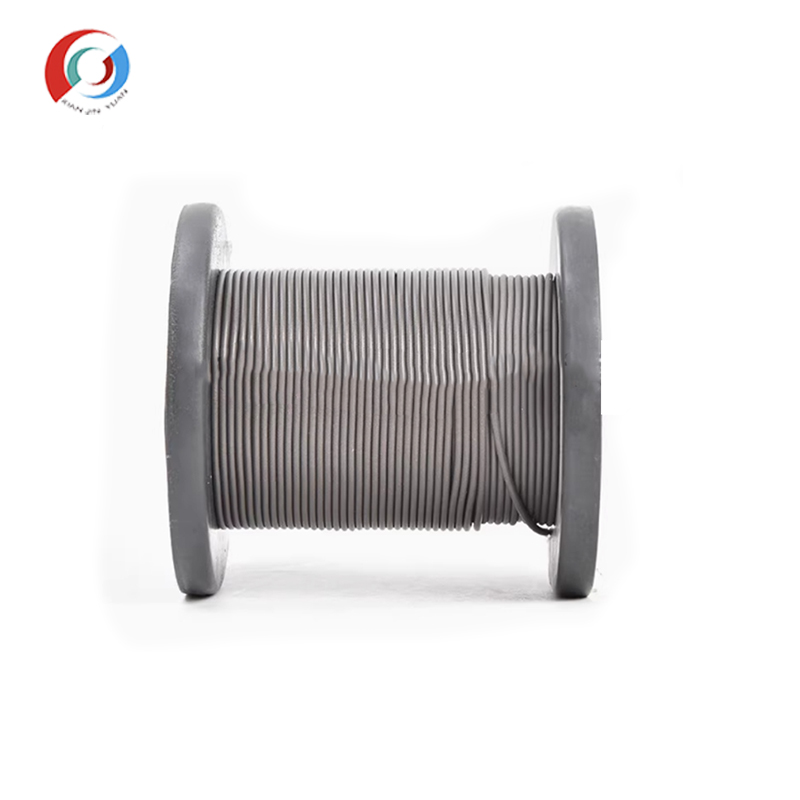
Communication equipment and data centers are one of the areas with the highest demand for aluminum nickel plated conductive silicone rubber. The outer shells of communication cabinets, RF modules, and base station equipment are mostly made of aluminum materials, and the internal electronic components require reliable electromagnetic shielding and environmental sealing. Continuous extrusion of conductive rubber strips is suitable for scenarios such as whole machine chassis, military wireless communication, RF modules, etc. that require high waterproof level communication equipment. Aluminum nickel plated conductive silicone rubber plays an important role in the construction of communication base stations, used for shielding and protection of signal transmission cables. The miniaturization of devices and the popularity of embedded sensors are accelerating the demand for silicon-based conductive solutions.
The military and aerospace industries require the highest reliability for aluminum nickel plated conductive silicone rubber. Conductive rubber meets the US military standard MIL-G-83528 (now MIL-DTL-83528) and is widely used in fields such as electronics, telecommunications, power, military, aviation, aerospace, and ships. Aluminum nickel plated filled fluorosilicone rubber elastomers can maintain performance over a wide temperature range of -55 ° C to 160 ° C. Aluminum nickel plated conductive silicone rubber is used to seal cabin doors and various interfaces in aircraft and spacecraft, ensuring the safe and reliable operation of electrical systems. Aluminum nickel plated conductive silicone rubber is an ideal choice designed for equipment such as aluminum chassis that require aluminum metal flanges.
Automotive electronics and industrial control are the fastest-growing application directions for aluminum nickel plated conductive silicone rubber. The wiring and cable wrapping inside the car, as well as the connection between battery components, require conductive sealing materials. Conductive silicone rubber is mainly used in fields such as electrical and electronic, automotive and transportation. Aluminum nickel plated conductive silicone rubber also plays a key role in scenarios where EMI shielding and sealing protection need to be met simultaneously, such as industrial control chassis and medical equipment.
4、 Selection points and design suggestions
When selecting aluminum nickel plated conductive silicone rubber, engineers need to focus on the following dimensions: matching of contact surface materials - the aluminum nickel plating system is particularly suitable for aluminum flanges or chassis shells, which can effectively avoid galvanic corrosion; Volume resistivity and shielding effectiveness - suitable filling system and filling ratio should be selected according to the EMC requirements of the equipment; Hardness and permanent deformation under compression - the optimal height compression of the board is 7-15%, and the optimal compression of solid circular and D-shaped boards is 12-30%; Environmental tolerance - requires assessment of working temperature range (-55 ° C to 160 ° C), salt spray corrosion risk, and chemical medium exposure; Form and processing method - choose molded parts, extruded strips or sheets according to the installation groove design.
Advanced Institute Technology provides full process technical support from material selection, sample trial production to batch delivery, helping customers incorporate aluminum nickel plated conductive sealing solutions into their system considerations in the early stages of electromagnetic compatibility design.
5、 Outlook
The global conductive silicone rubber market is continuously expanding at a compound annual growth rate of over 10%. By 2025, the total size of the global conductive silicone rubber market has reached 58.969 billion yuan. The global market for conductive silicone rubber composite materials is expected to reach a sales revenue of 16 billion yuan by 2025 and is projected to reach 28.06 billion yuan by 2032. The Asia Pacific region dominates the global conductive silicone rubber market with a market share of 34.62%.
Driven by the continuous deployment of 5G/6G communication infrastructure, upgrading of military electronic equipment, iteration of aerospace technology, and deep evolution of automotive electrification, aluminum nickel plated conductive silicone rubber, which combines high shielding efficiency and excellent corrosion resistance, is moving from "professional material selection" to the standard configuration of electromagnetic compatibility design for aluminum chassis. At the same time, the industry is continuously evolving towards lower volume resistivity, more stable shielding effectiveness, longer service life, and more flexible form customization.
Advanced Institute (Shenzhen) Technology Co., Ltd. will continue to deepen its expertise in the field of conductive elastomers, providing customers with higher performance and more reliable conductive sealing solutions through material innovation and process optimization.
 en
en  Español
 Français
 Português