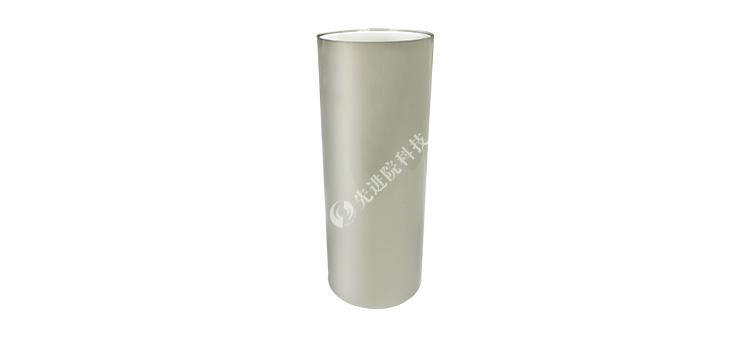
In the high-frequency signal transmission module of 5G base stations, a metal foil with a thickness of only 12 μ m is passing through precision machining equipment at a speed of 300 meters per minute, ultimately becoming the core component supporting stable transmission of high-frequency signals. This seemingly ordinary metal foil material is actually independently developed by Advanced Institute TechnologyRolled double-sided nickel plated copper foil——A composite functional material that combines the conductivity of copper and the protective properties of nickel. As the global electronics industry evolves towards high frequency, miniaturization, and high reliability, this material is quietly becoming a key foundational material supporting high-end manufacturing.
1、 Breakthrough Innovation in Materials Science: Precise Control of Double sided Nickel Plating
Traditional copper foil processing faces technical bottlenecks such as high surface roughness and uneven coating. Advanced Institute Technology has controlled the surface roughness of copper substrates to Ra ≤ 0.2 μ m through its unique "dynamic pressure compensation rolling technology", which is 60% higher than the industry average level. With the self-developed "gradient nickel plating process", a uniform nickel layer with a thickness deviation of ≤ 0.5 μ m is formed on both sides of the copper foil, solving the problem of uneven coating thickness caused by edge effects that have long plagued the industry.
Taking a well-known communication company in Shenzhen as an example, the 0.012mm thick product purchased by them maintained a bonding strength of ≥ 15N/mm ² between the nickel layer and the copper substrate after 1000 thermal shocks in extreme temperature cycling tests ranging from -40 ℃ to 125 ℃, far exceeding the requirement of 8N/mm ² in IPC-4562 standard. This performance breakthrough enables the material to perform well in harsh environments such as 5G base station filters and new energy vehicle power modules.
2、 The multiplier effect of performance superposition: the material revolution of 1 1>2
The composite of copper and nickel is not simply a superposition, but an exponential improvement in performance achieved through precision processes. In terms of conductivity, the copper substrate maintains a high conductivity of 98% IACS (International Annealed Copper Standard), while the 0.5-1 μ m nickel layer on the surface forms a dense oxide film, extending the salt spray resistance time of the material from 24 hours for pure copper to over 1000 hours. This combination of characteristics makes it irreplaceable in marine environmental communication equipment.
In the wear resistance test, Advanced Institute of TechnologyRolled double-sided nickel plated copper foilShowing astonishing performance: under a 5N load, after 100000 friction cycles, the wear of the coating is only 0.3 μ m, which is one-third of that of traditional electroplated nickel copper foil. This characteristic makes it an ideal material for new energy vehicle motor commutators. According to actual testing data from a leading car company, the use of this material increases the motor life by 40% and extends the maintenance cycle to 800000 kilometers.
3、 Industrial Aesthetics of Customized Production: From Standard Products to Solutions
The "Material Gene Bank" established by Advanced Institute Technology includes more than 2000 sets of process parameter combinations, which can achieve full dimensional customization of thicknesses ranging from 6-100 μ m and nickel layer thicknesses ranging from 0.1-5 μ m. In a space grade product developed for a certain aerospace enterprise, the nickel layer grain orientation was adjusted to reduce the material's gas release rate in a vacuum environment to 1 × 10 ⁻⁸ Pa · m ³/s, meeting the stringent requirements of spacecraft electronic systems.
This customization capability is particularly prominent in the field of new energy. A gradient nickel plating structure has been developed to meet the welding requirements of power battery terminals: the nickel layer near the copper substrate has a thickness of 0.3 μ m to ensure weldability, and the surface layer has been thickened to 1.5 μ m to enhance corrosion resistance. The production line data of a leading power battery enterprise shows that after using this material, the welding yield has increased from 92% to 99.5%, saving over 10 million yuan in annual rework costs.
4、 Paradigm innovation of industrial chain collaboration: from material suppliers to technology partners
The cooperation model between Advanced Institute Technology and Shenzhen Communication Enterprises reveals the evolutionary direction of the new materials industry. In the high-frequency filter project for 5G base stations, engineers from both parties collaborated from the material design stage to reduce the insertion loss of the material by 0.2dB/cm in the 28GHz frequency band by adjusting the grain boundary structure of the nickel layer. This deep collaboration has shortened the product development cycle by 40% and reduced costs by 25%.
In the field of new energy vehicles, this synergistic effect is more significant. In response to the requirements of the 800V high-voltage platform for material corona resistance, the R&D team innovatively adopted nano nickel coating technology to form a three-dimensional conductive network on the surface of copper foil, reducing the dielectric loss of the material to 0.005 under 1000V/100kHz conditions, providing material support for high-voltage fast charging technology.
5、 The future vision of green manufacturing: from performance improvement to full lifecycle management
The digital factory established by Advanced Institute Technology achieves carbon footprint tracking for every meter of foil material. By optimizing the rolling process, the energy consumption per unit product has been reduced by 30%, and the nickel utilization rate in the nickel plating process has been increased to 95%.
In a data center project application, the use of this material reduced the heat dissipation energy consumption of a single cabinet by 15%. Coupled with its excellent corrosion resistance, the equipment maintenance cycle was extended from 3 years to 8 years. According to calculations, each square meter of material can reduce carbon emissions by 2.3 tons throughout its entire lifecycle, providing a practical and feasible technological path for the "dual carbon" goal.
When the industry is still discussing material performance parameters,Advanced Institute of TechnologyWe have expanded our vision to system solutions for materials, processes, and applications. This full chain innovation capability from laboratory to production line not only redefines the technical standards of composite metal foil materials, but also provides a vivid example for China's high-end manufacturing to break through the bottleneck link. On the production line of a communication company in Shenzhen, the high-speed metal foil material is carrying the ambition of China's new materials industry to climb to the top of the value chain.

 en
en  Español
 Français
 Português