1、 PPS: Engineering plastics known as "plastic gold", what are their special features
Polyphenylene sulfide (PPS) is a semi crystalline thermoplastic special engineering plastic, which contains repeating structural units of p-phenylene sulfide in its molecular structure. PPS has a well-known nickname in the industry - "plastic gold". This title is not only derived from its high price, but also refers to its series of nearly "golden level" comprehensive performance.
High temperature resistance is the core label of PPS. PPS film can be used continuously for a long time at temperatures ranging from 200 ℃ to 240 ℃, and its short-term temperature resistance can even exceed 260 ℃. This characteristic enables it to exhibit excellent dimensional stability in the reflow soldering process, effectively avoiding curling deformation problems at high temperatures. For electronic components that require multiple reflow soldering processes, the heat-resistant redundancy of PPS substrate means higher process yield and longer service life.
Chemical corrosion resistance is equally outstanding. PPS has strong resistance to most acids, bases, salts, and organic solvents, and can operate reliably even in harsh chemical environments. This makes PPS gold plating film irreplaceable in corrosive scenarios such as chemical equipment sensors and marine engineering electronic devices.
Low dielectric loss is PPS's trump card in the field of high-frequency communication. The dielectric loss tangent (tan δ) of PPS thin film can be as low as below 0.002 at a frequency of 10 GHz, and the low dielectric constant (ε ≈ 3.2) and low loss factor characteristics significantly reduce signal transmission loss. As 5G/6G communication continues to advance towards the millimeter wave frequency band, the requirements for signal integrity on substrate dielectric properties are becoming increasingly stringent - PPS performs far better in this dimension than traditional film materials such as PI and PET.
In addition, PPS material itself has self extinguishing properties and can meet UL94 VTM-0 flame retardant standards without the need to add flame retardants. This characteristic is particularly important in fields such as aerospace and automotive electronics that have strict requirements for fire safety.
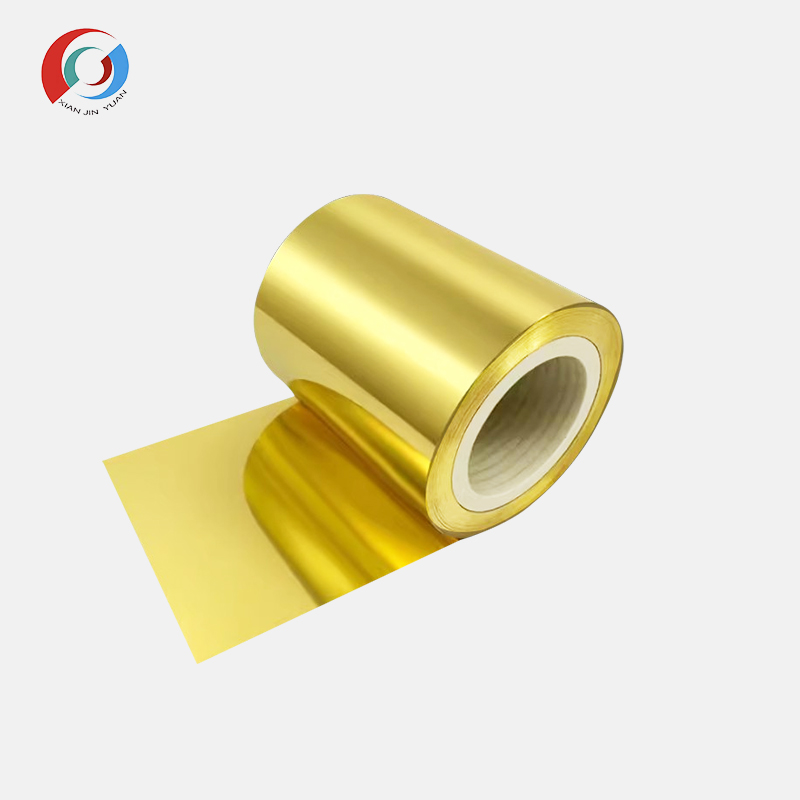
2、 When PPS Meets Gold: Technical Challenges of Metalization and Advanced Institute Solutions
PPS itself is an excellent insulating material, but by depositing a metal layer on its surface, it can be endowed with new functions such as conductivity, thermal conductivity, and electromagnetic shielding. However, the metallization of PPS is not an easy task.
PPS is a non-polar material with low surface energy. Untreated PPS has weak adhesion with the metal layer, which is the main technical difficulty restricting the mass production of PPS metallization. PPS molecular chains contain a large number of benzene rings and sulfide bonds, with strong chemical inertness. Direct metal plating is prone to problems such as coating detachment and unstable performance. At the same time, there is a problem of stress mismatch between the high hardness metal coating and PPS substrate. If not handled properly, the coating is prone to cracking during bending or thermal cycling. In addition, the diffusion of sulfur elements in PPS may have adverse effects on the conductivity of certain metal coatings.
Advanced Institute Technology has been deeply involved in the field of flexible substrate coating for many years, and has developed systematic solutions to the above-mentioned technical difficulties. The company adopts physical vapor deposition (PVD) technology, including magnetron sputtering and vacuum evaporation, to uniformly deposit cash atoms on the surface of PPS under low temperature conditions, forming a high-quality gold plating layer. Compared with traditional chemical plating methods, PVD technology has advantages such as environmental friendliness, good coating uniformity, and strong adhesion.
At the process level, Advanced Institute Technology has established a complete technical chain from substrate pretreatment to metal layer deposition. The substrate pretreatment adopts a combination process of "organic solvent ultrasonic cleaning low-temperature plasma activation", which etches micro nano anchoring structures on the PPS surface, and introduces active groups such as hydroxyl and carboxyl groups, greatly improving the surface energy of the substrate. The company has independently built a roll to roll (R2R) vacuum coating production line, which adopts continuous production technology and can achieve continuous production at a line speed of 3m/min. The uniformity of the coating is adjusted in real time through an online monitoring system, and the thickness deviation is controlled within ± 5%.
The gold coating itself has extremely high chemical stability, excellent conductivity, and low contact resistance. PPS gold-plated film integrates high temperature resistance, electrical insulation, chemical stability, and conductive decoration. The company can provide customized PPS gold plating film services with thicknesses ranging from 2 μ m to 125 μ m. The product has a shielding efficiency of over 60dB in the 10GHz frequency band. The surface resistivity can be as low as 10 Ω· cm.
3、 Four major application scenarios: from 5G base stations to spacecraft
The application layout of PPS gold plating film is rapidly expanding, and currently four core application matrices have been formed.
5G/6G high-frequency communication is currently the fastest-growing application field. PPS gold plating film can be used as a substrate and electrode material for high-frequency circuit boards. The low dielectric constant and low loss factor characteristics of PPS film significantly reduce signal transmission loss. In the 5G millimeter wave and future 6G frequency bands, the higher the signal frequency, the stronger the dependence of transmission loss on the dielectric properties of the substrate. The characteristic of PPS with tan δ as low as 0.002 or below at 10GHz gives it significant advantages in high-frequency copper-clad laminates, antenna modules, filters, and other components. In 2025, Koga Electric of Japan has launched a new type of low dielectric PPS material, which reduces the dielectric constant and dielectric loss by about 40% compared to traditional materials. This trend confirms that the technical value of PPS in the field of high-frequency communication is widely recognized by the industry.
New energy vehicles and automotive electronics are one of the markets with the highest demand for PPS gold plating film. Automotive and electronic appliances are the two largest areas of PPS application worldwide, accounting for nearly 80%. With the deep evolution of automobiles towards electrification and intelligence, the engine compartment temperature continues to rise, and the density of electronic control units continues to increase, which puts unprecedented demands on the high temperature resistance, conductivity, and electromagnetic compatibility of materials. PPS gold plating film is widely used in components such as sensors and connectors, effectively resisting high temperatures and electromagnetic interference, ensuring the stable operation of automotive systems. In the battery management system, PPS gold plating film can be used as a high-temperature conductive connection material; In millimeter wave radar modules, its excellent shielding effectiveness can effectively suppress cavity resonance.
Aerospace and military electronics represent the application scenarios where PPS gold plating film has the highest reliability requirements. The aerospace industry has extremely demanding performance requirements for materials, requiring them to possess various characteristics such as high temperature resistance, corrosion resistance, and high strength. PPS gold plating film meets the requirements of cold and hot cycling from -55 ℃ to 280 ℃, and can be used to manufacture electronic equipment casings, sensor components, etc. for aerospace vehicles. In the high-temperature and high radiation space environment, PPS gold plating film can ensure the normal operation of electronic devices. The company's products comply with GJB 773A aerospace related standards and have the ability to support high-end fields such as aerospace and military.
Medical electronics and precision instruments are emerging fields where PPS gold plating film is rapidly penetrating. PPS gold plating film, which can withstand repeated sterilization, is gradually replacing traditional metal components for high-precision equipment such as endoscopes and surgical instruments. The excellent biocompatibility of the gold layer combined with the sterilization resistance of PPS substrate makes this material exhibit unique value in scenarios such as implantable device casings and precision surgical tools.
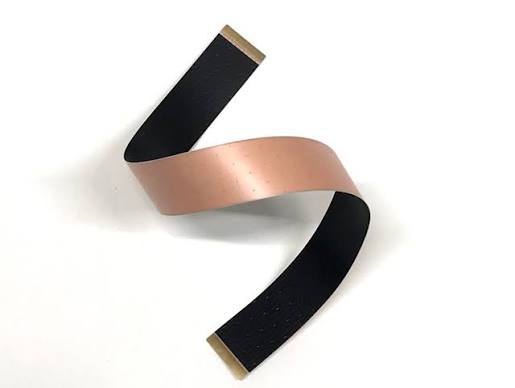
4、 Selection points and design suggestions
When selecting PPS gold plating film, engineers need to focus on the following dimensions: matching thickness and performance - ultra-thin coating (<5 μ m) is suitable for high-frequency signal transmission scenarios and can reduce signal loss; Thickened coating (>20 μ m) is suitable for scenarios such as automotive connectors that require high wear resistance. Coating uniformity and adhesion - controlling coating thickness deviation within ± 5% is a key indicator to ensure batch consistency. Environmental tolerance - It is necessary to evaluate the working temperature range, chemical corrosion risk, and flame retardant level requirements based on specific application scenarios. Customization requirements - There are significant differences in material performance requirements for different application scenarios. Advanced Institute Technology can provide flexible customization services through modular production processes.
Advanced Institute Technology provides full process technical support from material selection, sample trial production to batch delivery, helping customers incorporate PPS gold plating film solutions into their system considerations in the early stages of product design.
5、 Outlook
The global PPS film market is continuously expanding at a compound annual growth rate of 6.9% -7.4%. Driven by multiple demands such as 5G/6G infrastructure construction, automotive electrification and intelligence, and aerospace equipment upgrades, the market demand for PPS gold plating film is expected to maintain strong growth. At the same time, the industry is continuously evolving towards lower dielectric losses, higher coating adhesion, and thinner and softer coatings. PPS gold plating film, with its comprehensive advantages in four dimensions of "high temperature resistance, low loss, high conductivity, and strong shielding", is moving from high-end niche materials to mainstream electronic material solutions.
Advanced Institute (Shenzhen) Technology Co., Ltd. will continue to deeply cultivate the PPS gold plating film field, providing customers with higher performance and more reliable flexible substrate coating solutions through material innovation and process optimization.
 en
en  Español
 Français
 Português