3D Printing Silver Paste: Reshaping the Future Landscape of Electronic Component Manufacturing
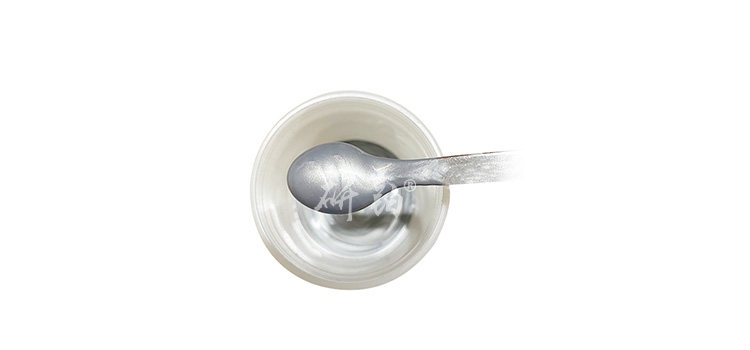
In today's rapidly advancing technology, the miniaturization and integration of electronic components have become a key driving force for the advancement of information technology. In this technological revolution, an innovative material called 3D printing silver paste is quietly changing the rules of the game. It is not only suitable for a variety of substrates, but also greatly enhances the flexibility of electronic component manufacturingAdvanced Institute of TechnologyA whole new world has been opened up in the production field. This article will delve into the unique charm of 3D printing silver paste, and demonstrate through examples and data analysis how it has become an important driving force for the transformation and upgrading of the electronic manufacturing industry.
1、 Crossing the boundary of substrate: a leap from rigidity to flexibility
Traditional electronic component manufacturing is often limited by specific substrates such as silicon wafers, ceramic plates, etc., which not only limits the freedom of design but also increases production costs. The breakthrough of 3D printing silver paste lies in its ability to tightly adhere to various substrates including plastic, paper, fabric, and even human skin, achieving a leap from hardness to flexibility, and from flat to three-dimensional.
Taking wearable devices as an example, using3D printing silver pasteTechnology allows designers to easily "draw" complex circuit patterns on soft fabrics, ensuring both device comfort and electronic functionality integrity. According to market research firm IDC, the global wearable device market is expected to reach nearly $80 billion by 2025, and 3D printing silver paste is one of the key factors driving the explosive growth of this market.
2、 Dual improvement of accuracy and efficiency
3D printing technology is known for its high precision, which can accurately spray silver paste to the micrometer level. This not only means that finer circuit layouts are possible, but also greatly reduces material waste and improves production efficiency. Compared to traditional subtractive or additive manufacturing methods, 3D printing silver paste can achieve direct molding, eliminating multiple processes and shortening the product launch cycle.
Taking a simple RFID tag production as an example, using 3D printing technology, the production time of a single tag can be shortened from a few hours to a few minutes, while maintaining a high yield rate. In addition, due to the layer by layer construction characteristics in the 3D printing process, it can easily achieve the manufacturing of complex 3D structures, such as micro antennas, embedded sensors, etc. These components, which are difficult to efficiently implement under traditional processes, are now within reach.
3、 Win win situation between environmental protection and economy
With the global emphasis on sustainable development, the electronics manufacturing industry is also actively exploring the path of green transformation.Low temperature curing 3D silver pasteDue to its efficient use of materials and reduction of waste emissions, it has become the new favorite of environmentally friendly manufacturing. It is estimated that compared to traditional manufacturing methods, 3D printing technology can reduce material usage by about 30% while also lowering energy consumption.
At the economic level, the flexibility and efficiency of 3D printing silver paste make small batch and customized production possible, lowering the threshold for entrepreneurship and promoting innovation. For startups, this means they can quickly validate product prototypes at lower costs and accelerate market response speed. For large manufacturers, 3D printing technology provides a way to optimize the supply chain and reduce inventory costs.
4、 Open up infinite possibilities for future application scenarios
The widespread application of 3D printing silver paste is gradually unlocking a series of unprecedented application scenarios. In the field of healthcare, it can be used to manufacture biological monitoring patches that fit the skin, achieving continuous and non-invasive health data collection; In smart homes, embedded sensors can seamlessly integrate into furniture design, enhancing the intelligent experience; In the aerospace industry, lightweight and high-strength 3D printed electronic components provide a new solution for reducing weight and improving energy efficiency.
It is particularly worth mentioning that with the rapid development of IoT technology, the flexibility of 3D printing silver paste makes it an ideal choice for building smart city infrastructure. From intelligent traffic signals to environmental monitoring sensors, to energy management systems, every subtle upgrade to intelligence relies on the support of this innovative material.
Conclusion: A Quiet Revolution
Nano silver 3D printing pasteThe emergence of this technology is not only a major breakthrough in materials science, but also a quiet revolution in the field of electronic component manufacturing. It is redefining the design, manufacturing, and application of electronic products with its unique adaptability, high precision, environmental friendliness, and unlimited expansion of future application scenarios. With the continuous maturity of technology and further cost reduction, we have reason to believe that 3D printing silver paste will become an important force driving the electronic manufacturing industry to a higher level, opening up a more intelligent, flexible, and sustainable future.

 en
en  Español
 Français
 Português