1、 Why do absorption plates "absorb" waves? ——The paradigm shift from reflection to absorption
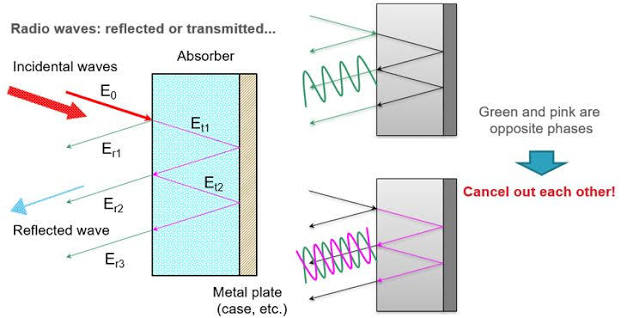
The essential difference between electromagnetic wave suppression absorbing plates and ordinary shielding materials is that shielding materials are "blocking", while absorbing plates are "swallowing".
Shielding covers (such as metal conductive cloth, copper foil) use conductive layers to reflect electromagnetic waves back - indeed blocking external interference from entering, but the reflected waves inside the cavity still exist, bouncing back and forth on the inner wall of the shielding cover, forming standing waves and cavity resonance, which may actually exacerbate interference with sensitive components.
The absorption plate took a completely different path. It is usually composed of magnetic fillers (such as soft magnetic alloy powder, ferrite, etc.) combined with polymer matrices (such as silicone rubber, acrylic resin, etc.). When electromagnetic waves enter the absorber plate, the magnetic filler undergoes magnetization response in the alternating electromagnetic field. Through mechanisms such as hysteresis loss, eddy current loss, and natural resonance, the electromagnetic wave energy is converted into trace amounts of thermal energy and dissipated.
Simply put, the shielding cover "bounces back" electromagnetic waves, while the absorbing plate "eats up" electromagnetic waves. For suppressing near-field noise, eliminating cavity resonance, and improving signal integrity, "eating" is far more effective than "bouncing back". In recent years, researchers have been expanding the absorption frequency band through multi fiber hybrid systems, continuously breaking through towards the direction of "thin, light, wide, strong, and broad".
2、 Data speaks for itself: How much can a wave absorber "eat"?
The performance of electromagnetic wave suppression absorbing plates ultimately needs to be answered with data.
Absorption rate is the core indicator for measuring how much a waveplate can eat. In the high frequency range of 5G, the average absorption efficiency of high-quality absorption plates can exceed 90%, and some frequency points can even reach 97%. In terminal devices such as mobile phones, waveplates can effectively reduce the radiation interference generated by display screens and suppress electromagnetic interference from chips such as APs and RFICs, thereby improving the antenna signal-to-noise ratio.
The frequency band coverage determines what waves can be eaten. The working frequency range of mainstream flexible absorbing wave plates covers 10MHz to 18GHz. For the 5G millimeter wave frequency band (24-40GHz), dual band metamaterial absorbing components have been designed for electromagnetic shielding applications in 5G mobile communication systems. The latest research by Gu Hongbo's team at Tongji University has successfully constructed a magnetic dielectric synergistic loss system, achieving full absorption of 5G frequency bands n77, n78, and n79 for the first time.
The global market data also confirms the popularity of this track. The global market size of electromagnetic wave absorbing materials has reached 5.06 billion US dollars by 2025, and is expected to grow to 5.48 billion US dollars by 2026. The global market size of absorbing materials is expected to reach approximately 4.76 billion US dollars by 2025 and is projected to reach 7.89 billion US dollars by 2030. Among them, the field of communication electronics is becoming the fastest-growing sub category in the EMI absorbing plate market.
3、 The Three Battlegrounds of Electromagnetic Wave Suppression Absorbing Plates
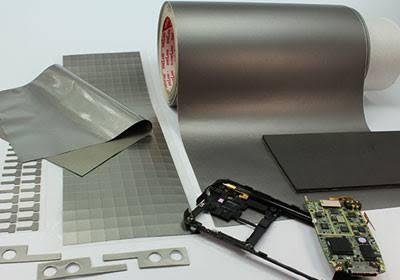
Smartphones and wearable devices are the areas with the highest usage of electromagnetic wave suppression absorbing plates. Inside smartphones, the number of RF devices, antennas, and communication frequency bands are constantly increasing. The absorbing wave plate can be directly attached to FPC flexible cables to suppress high-frequency transmission interference, reduce internal EMI (resonance, crosstalk) within the shielding frame, and minimize coupling and radiation interference between low frequencies. The global EMI absorbing plate and surface mount market has reached a scale of 1.01 billion US dollars by 2025. After a certain mobile phone brand attached a wave absorbing plate inside the motherboard shield of its flagship model, the electromagnetic noise near the camera module was significantly suppressed.
5G/6G communication and millimeter wave devices represent the most technically demanding application directions. The operating frequency of 5G millimeter wave and 6G systems has climbed to 28GHz or even higher. Wave absorbing plates are widely used in fields such as 5G base stations, communication antennas, optical transceiver modules, and RF chipsets. A certain communication equipment manufacturer has attached a high-frequency optimized absorbing plate on the inner wall of its 5G AAU antenna module, successfully suppressing radiation exceeding the standard caused by cavity resonance by more than 12dB. The global market for high-frequency RF absorbing materials has achieved a sales revenue of 4.352 billion yuan by 2025.
Vehicle mounted radar and automotive electronics are the fastest-growing application directions. Vehicle mounted millimeter wave radar (24GHz, 77GHz and other frequency bands) imposes strict requirements on the frequency response of absorbing materials. Wave absorbing plates can be used to suppress stray resonance inside radar cavities, reduce sidelobe interference, and are widely used in fields such as satellite navigation, radar, and unmanned driving. The global automotive EMI absorbing plate market is estimated to reach $2.1 billion by 2025 and is expected to grow to $4.6 billion by 2034. Smartphones, car radars, base stations, and low orbit communication satellite antennas that use 5G/6G communication can all benefit from electromagnetic wave shielding material technology that is mainly based on absorption.
4、 Selection points: How to choose the right absorber plate for your device?
When engineers select electromagnetic wave suppression absorbers, it is recommended to start from the following dimensions:
The working frequency band is the first matching item. The optimal absorption frequency band varies among different material systems. Consumer electronics EMI (10MHz-6GHz) requires broadband absorption capability; 5G millimeter wave (24-40GHz) requires a formula optimized for high frequency bands. The mainstream products operate within the frequency range of 10MHz to 18GHz.
The thickness and installation space determine feasibility. Flexible wave absorbing plates vary in thickness from ultra-thin to conventional. Thin sheets are suitable for narrow spaces. The interior of mobile phones usually chooses ultra-thin models; Base stations and automotive electronics can choose conventional thicknesses.
Environmental tolerance is crucial for long-term reliability. Need to evaluate the working temperature range, flame retardant rating, and whether vehicle grade certification is required.
The installation method is the final step. Most wave absorbing plates have pressure-sensitive adhesive layers at the bottom, which can be directly attached to noise sources or sensitive device surfaces, and support die-cutting into any shape.
Advanced Institute Technology provides full process technical support from material selection, performance testing to sample trial production and batch delivery, helping customers incorporate electromagnetic wave suppression absorption plate solutions into overall electromagnetic compatibility considerations in the early stages of product design.
The global market for electromagnetic wave absorbing materials is expected to grow from $5.06 billion in 2025 to $7.58 billion in 2030. Driven by multiple factors such as 5G/6G communication, high-frequency consumer electronics, automotive intelligence, and the popularity of wearable devices, electromagnetic wave suppression absorbing plates are moving from "professional material selection" to standard configuration for electromagnetic compatibility design of electronic devices.
Advanced Institute (Shenzhen) Technology Co., Ltd. will continue to deepen its expertise in the field of electromagnetic wave suppression and absorption materials, providing customers with higher performance and more reliable electromagnetic compatibility solutions through material innovation and process optimization.

 en
en  Español
 Français
 Português