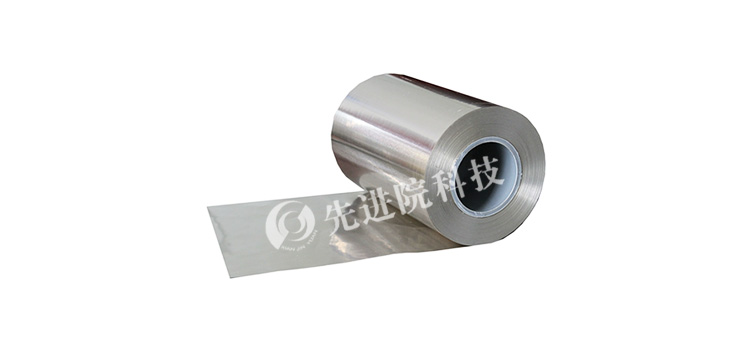
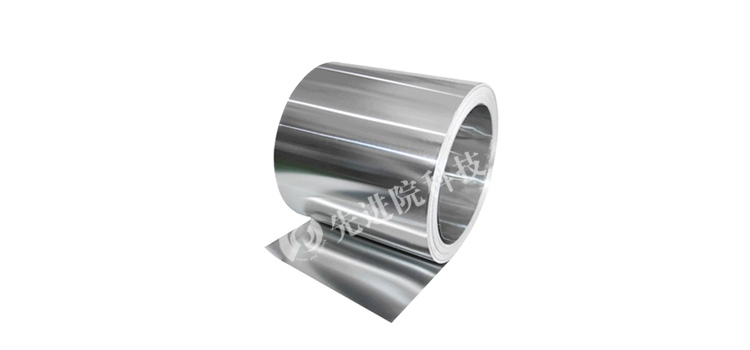
In cutting-edge fields such as new energy, aerospace, and precision optics, the ability of materials to withstand extreme environments has become a core variable determining technological breakthroughs. Advanced Institute Technology has launchedPET silver plated reflective filmWith its unique composite structure and breakthrough performance, it is redefining the application boundaries of optical thin films. This material not only achieves an average reflectivity of over 97.5% in the visible to near-infrared range, but also breaks through the traditional heat resistance limit through innovative processes, becoming an "optical armor" in extreme environments.
1、 Performance breakthroughs in extreme environments: a leap from the laboratory to the industrial field
1.1 High temperature battlefield: stable reflection at 350 ℃
Traditional silver plated glass mirrors may experience silver layer peeling in environments above 250 ℃, while advanced technology has achieved a 95.2% reflectivity of PET silver plated reflective film at 350 ℃ through gradient annealing process and double-layer protective system. Its core lies in:
·Quantum size effect: The ultra-thin silver layer of 50-200 nanometers reduces the coefficient of thermal expansion, resulting in a surface roughness increase of only 0.3 nm at 200 ℃;
·Chemical bond anchoring: Carboxyl groups in PET substrates form covalent bonds with silver atoms, inhibiting silver migration;
·Silicon dioxide barrier: A 50 nanometer thick protective layer reduces the silver oxidation rate by two orders of magnitude, resulting in a reflectivity decay of only 0.7% after 1000 hours in an air atmosphere at 250 ℃.
In the field of solar thermal power generation, this material exhibits unique advantages. After 1000 thermal cycles at 420 ℃, the reflectivity fluctuation of the corrugated structure film was controlled within ± 1.2%, far exceeding the ± 5% threshold of traditional materials. Its flexible substrate solves the industry problem of brittle materials prone to cracking at high temperatures through a stress release mechanism.
1.2 Instantaneous impact: millisecond level response of laser protection
Faced with a pulsed laser with an energy density of 5J/cm ², a micro level melting zone is formed on the surface of the material, but the reflectivity only decreases by 3.7%. This energy source comes from:
·Silver layer thermal conductivity: 429W/m · K thermal conductivity quickly disperses heat energy, avoiding local overheating;
·PET carbonization heat absorption: The substrate forms a carbonized layer at high temperatures, absorbing additional heat to protect the silver layer structure.
This material has been widely used in the fields of military laser protection and industrial high-power laser processing. A national defense project test showed that it can withstand 10 consecutive pulse impacts without structural damage, which is more than three times the performance of traditional aluminum plated films.
2、 Multi scenario application: from single reflection to system level solution
2.1 New Energy Revolution: Quantum Transition in Solar Thermal Conversion Efficiency
In heterojunction (HJT) photovoltaic modules,Advanced Institute of TechnologyBy designing DMD (dielectric metal dielectric) micro nano structures, the near-infrared reflectance can exceed 98%. Combined with the double-sided power generation feature, the gain on the back of the component is increased by 10-15%. More importantly, the high emissivity oxide coating deposited by ALD adjusts the infrared emissivity to the range of 0.3-0.4, reducing the operating temperature of the component by 3-5 ℃ and increasing the corresponding power generation by 1.2%/℃.
The measured data of a 500MW photovoltaic power station shows that the annual power generation of modules using this material increases by 12-15%, and the cost of electricity per kilowatt hour decreases by 0.03 yuan/kWh. This breakthrough fundamentally improves the economic viability of solar thermal power generation in extreme environments such as deserts and plateaus.
2.2 Display Technology: The Visual Revolution of the Flexible Era
In flexible OLED displays, double-sided silver plated PET film serves as a transparent electromagnetic shielding layer, achieving three major technological breakthroughs:
·Optical electrical coupling: A 12nm thick silver layer achieves>60dB shielding effectiveness in the 1GHz frequency band while maintaining>85% transmittance;
·Dynamic bending life: optimized by a 2nm buffer layer and grain density, the block resistance increases by less than 10% after 50000 bending cycles;
·Low resistance change rate: In the aging test at 85 ℃/85% RH, the resistance change rate is controlled within 15%, meeting the requirement of a ten-year lifespan for on-board displays.
After adopting this material, an international display giant's foldable screen phone showed a touch signal attenuation rate of less than 0.5dB in extreme temperature tests ranging from -20 ℃ to 60 ℃, which is more than three times higher than traditional ITO film.
2.3 Building Energy Efficiency: The Hidden Engine of Green Cities
In the field of intelligent dimming glass, PET silver plated reflective film achieves energy consumption revolution through its electrochromic properties:
·Reduced driving voltage: The high conductivity of the silver layer reduces the color changing driving voltage from 24V to 5V, reducing energy consumption by 80%;
·Reduced response time: The arrangement of micrometer sized silver particles increases the color change speed to 0.5 seconds, which is 4 times faster than traditional materials;
·Extended lifespan: After 100000 cycles of testing, the light transmittance changes by less than 3%, meeting the 50 year service life of commercial buildings.
After the application of this material in a building in Shanghai, the energy consumption of air conditioning in summer decreased by 28%, and the energy consumption of heating in winter decreased by 19%, resulting in an annual reduction of 1200 tons of carbon dioxide emissions. This data confirms its irreplaceability in energy-saving of super high-rise buildings.
3、 Technological Barrier: A Systematic Breakthrough from Materials Science to Manufacturing Engineering
3-nanometer process control: industrial application of free electron gas model
Based on the Drude model of free electron gas theory, Advanced Institute Technology has developed a process for preparing ultra-thin silver layers:
·Optimization of argon partial pressure: Control the sputtering pressure within the range of 0.3-0.5Pa to stabilize the silver atom deposition rate at 0.2nm/s;
·Grain orientation control: By adjusting the substrate temperature gradient, the silver crystal grain (111) surface is optimized and elongated, reducing the resistivity to 5 × 10 Ω· m;
·Interface stress management: Introducing an ITO seed layer reduces the water contact angle from 72 ° to 25 °, achieving adhesion level 5B (ASTM D3359 standard).
The measured data of a certain production line shows that the thickness uniformity of the silver layer is ± 1.5%, and the square resistance deviation is ± 3%, reaching the semiconductor level process control level.
4、 Future Vision: Industrial Transformation Driven by Metamaterial Fusion and Open Source Hardware
4.1 Silver metamaterial composite structure: invisible wings for 6G communication
By introducing artificial microstructures, Advanced Institute Technology is developing next-generation materials with active electromagnetic wave control capabilities:
·Frequency selective surface: Etching periodic patterns in the silver layer to achieve a specific frequency band reflectivity>99.9%;
·Chiral metamaterials: Obtaining circular dichroism through three-dimensional helical structures, providing polarization control solutions for quantum communication;
·Tunable plasma: combined with liquid crystal materials to achieve dynamic adjustment of reflection wavelength, meeting the requirements of 6G terahertz communication.
Laboratory tests have shown that its insertion loss in the 28GHz frequency band is less than 0.2dB, which is more than 10 times higher than traditional metal reflectors.
4.2 Open source hardware ecosystem: a revolution in low-cost precision coating equipment
In response to the demand for fragmented downstream applications, Advanced Institute Technology has launched the "OpenCoater" open source project:
·Modular design: Split the coating head, drying system, etc. into standard modules, supporting users to independently combine them;
·Digital twin simulation: providing online process parameter optimization tools to shorten the debugging cycle of new production lines from 3 months to 2 weeks;
·Community support: Establish a global developer network to share coating process databases and fault diagnosis models.
After adopting this solution, a startup reduced the investment cost of its MiniLED backlight module production line by 70% and increased the product yield from 82% to 95%.
Conclusion: The Material Revolution Reshaps the Future of Industries
From stable reflection at a high temperature of 350 ℃ to invisible control of 6G communication,PET silver plated reflective filmBreaking through the physical limits of traditional materials. Advanced Institute Technology, through the deep integration of materials science, manufacturing engineering, and digital technology, not only solves application problems in extreme environments, but also creates system level solutions for optical thin films. With the explosive growth of the new energy, flexible electronics, and quantum communication industries, this material that combines efficient reflection and extreme environmental tolerance will become the core component of the next generation of photon systems, driving human technological civilization towards a more efficient and sustainable direction.

 en
en  Español
 Français
 Português