In neural interface systems such as brain computer interfaces, electrodes are the core interface sensors that connect electronic devices and biological nervous systems, and are the core of the "interface" in brain computer interfaces. Implantable neural electrodes can achieve high-precision three-dimensional spatiotemporal detection of bioelectric signals such as electromyography and electroencephalography, providing richer signal sources for neural information decoding.
However, traditional implantable electrodes are mostly "static" - they can only be fixed in position and collected in a limited manner after implantation, and can be "passively attacked" or even lead to conduction failure in immune responses, seriously restricting the application and future development of brain computer interfaces. The rise of flexible neural electrodes is rewriting this situation.
1、 Flexible neural electrodes: a revolution from 'static' to 'dynamic'
In September 2025, Liu Zhiyuan and Han Fei from the Chinese Academy of Sciences Shenzhen Institute of Advanced Technology, together with Xu Tiantian's team and Yan Wei's team from Donghua University, published a major achievement in Nature after more than five years of collaborative research. The research team has successfully developed NeuroWorm, a nerve fiber electrode that is as thin as hair, soft and stretchable, and can be freely driven. This study is the first to propose a brain computer interfaceA new paradigm of "dynamic electrodes"Breaking the "static" tradition of implantable electrodes.
The breakthrough of NeuroWorm lies in the team's layout of up to 60 independently distributed electrode channels on a fiber with a diameter of only 196 microns. By adding a tiny magnetic head at one end of the electrode, combined with a high-precision magnetic control system and real-time image tracking technology, the electrode can autonomously regulate its direction of movement in the body and stably record high-quality bioelectric signals. This' dynamic electrode 'can' wander 'within the rabbit's skull and actively change monitoring targets as needed.
What is even more exciting is its long-term implantation performance. After 13 months of electrode implantation, the average thickness of the surrounding fibrous coating was less than 23 microns, and the apoptosis rate of the surrounding tissue was comparable to that of normal tissue, demonstratingExcellent long-term biocompatibilityIn contrast, traditional stainless steel wire electrodes have a coating thickness exceeding 451 microns under the same conditions and are accompanied by significant cell apoptosis reactions.
2、 Clinical application acceleration: 128 channel fully implantable brain computer interface enters clinical trials
On May 18, 2026, China's first multi center clinical trial of a 128 channel fully implantable brain computer interface system was officially launched. The system consists of two main modules: cortical implantable flexible electrodes and highly integrated fully implantable signal acquisition devices.Flexible electrodes made of ultra-thin biocompatible materialsIt can significantly reduce the immune response after implantation and accurately capture single neuron action potentials with high spatiotemporal resolution.
This clinical trial is led by Beijing Temple of Heaven Hospital, and currently 11 medical institutions have joined the study. Flexible neural electrode technology is accelerating from the laboratory to clinical practice, bringing new hope to neurological medical problems such as quadriplegia caused by spinal cord injury.
3、 Technical Challenge: The "Three Obstacles" of Flexible Neural Electrodes
Despite its broad prospects, flexible neural electrodes still face two key challenges in practical applications.
Firstly, the stability issue of long-term implantation.After electrode implantation, the significant difference in mechanical properties between the electrode and the tissue will continue to trigger immune rejection reactions, forming a fibrous coating around the electrode and reducing its monitoring performance. Although flexible electrodes improve biocompatibility, the difficulty of implantation also increases.
Secondly, the position control of electrodes after implantation.In traditional techniques, electrode position adjustment often requires secondary surgery, which increases surgical risk and tissue trauma.
Thirdly, there is a dual test of materials and craftsmanship.Flexible neural electrodes need to be usedFlexibility, conductivity, biocompatibility, and long-term stabilityAchieving a delicate balance between them. Electrode materials need to be soft enough to adhere to brain tissue and reduce damage, while also having excellent conductivity to accurately capture neural signals, and maintaining stability in complex environments within the body for a long time.
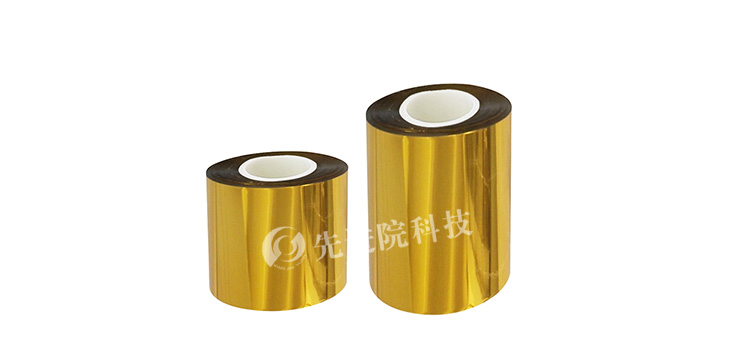
4、 PEEK Gold Plating: An Ideal Material Combination for Flexible Neural Electrodes
In the material selection of flexible neural electrodes,Combination of polyetheretherketone (PEEK) and gold plating processIt is showing unique advantages.
PEEK, as a substrate material, has excellent biocompatibility, chemical stability, and mechanical properties. Research has shown that microstructured PEEK films can achieve oriented and ordered arrangement in topological structures. In the design of composite neural electrodes, PEEK is used to constructPatterned stiffness——Maintain a certain stiffness in the width direction of the nerve to reshape its morphology, while maintaining flexibility along the length direction to conform to the bending motion of the nerve. This design concept of combining rigidity and flexibility is exactly the ideal characteristic pursued by flexible neural electrodes.
The gold plating layer empowers flexible neural electrodes in multiple dimensions:
- Biocompatibility.Gold is a widely validated biocompatible material. The surface of gold nanostructures has been proven to have good biocompatibility. The electrode wrapped in a gold shell exhibits high flexibility, high conductivity, and satisfactory biocompatibility in in in vivo applications.
- Conductivity performance.Gold has excellent conductivity, which ensures precise collection and transmission of neural signals. The transparent microelectrode array made of gold exhibits excellent electrochemical performance and can be used for neural recording and stimulation.
- Long term stability.The chemical inertness of gold enables it to remain stable in the complex physiological environment of the body for a long time, and is not prone to corrosion or performance degradation.
5、 Advanced Institute Technology: Empowering Flexible Neural Electrodes with PEEK Gold Plating Process
Advanced Institute (Shenzhen) Technology Co., Ltd. is deeply engaged in the field of flexible polymer film metallization and has independently builtMagnetron sputtering and vacuum evaporation production line, usingContinuous production process of roll to rollIt can achieve precise deposition of metal layers on various flexible film surfaces such as PEEK, PI, PET, LCP, FEP, PPS, etc. Can be plated with metals including gold, silver, copper, nickel, titanium, platinum, etc.
In response to the low surface energy and strong chemical inertness of PEEK, the company has independently developedPlasma activation combined with low-energy ion beam pretreatmentThe process effectively improves surface energy and enhances coating adhesion by bombarding the substrate surface with plasma. Relying on advanced physical vapor deposition (PVD) technology, the thickness of metal thin films can be achievedNano level precise controlCustomized as needed within the range of a few nanometers to several hundred nanometers.
The company has passed.ISO9001 Quality Management System CertificationThe product complies withGJB 773A Aerospace Related StandardsandRoHS environmental requirementsNational standardsGB/T 43763-2024 "Aerospace functional coatings - Special non-metallic materials - Metal coatings"It has been clearly stipulated that various metal coatings such as nickel gold and copper nickel gold can be prepared on the surface of special non-metallic materials such as PEEK, providing authoritative technical specifications for the PEEK gold plating process of flexible neural electrodes.
6、 Market prospect: A rapidly growing track worth billions of dollars
The flexible neural electrode market is experiencing explosive growth. The global market size of invasive flexible neural electrodes is expected to reach $778 million in 2024 and $1.86 billion by 2031, with a compound annual growth rate of 13.2%. The global market for flexible implantable electrodes is expected to reach $761 million in 2024 and $1.781 billion in 2031.
By 2025, the global market size of invasive cortical electrode arrays has reached 1.28 billion US dollars, and is expected to grow to 3.85 billion US dollars by 2030, with a compound annual growth rate of 24.6%. The global brain computer interface flexible microelectrode market is expected to reach a scale of approximately 820 million US dollars by 2025, representing a growth of 37.4% compared to 2024. With the accelerated clinical expansion of brain computer interface technology, the demand for flexible neural electrodes will continue to rise.
7、 Outlook: From "neural tentacles" to "neural symbiosis"
From NeuroWorm's "dynamic electrode" paradigm to clinical trials of 128 channel fully implantable brain computer interfaces, flexible neural electrode technology is undergoing a leap from concept validation to clinical application.
In this technological revolution of brain computer interfaces,Materials and processes are the fundamental building blocks that determine the performance of electrodesPEEK provides an ideal mechanical and biocompatible substrate, while gold plating endows it with excellent conductivity and long-term stability - the combination of the two is the key path for flexible neural electrodes to move towards a "long-term, stable, and precise" neural interface.
Advanced Institute (Shenzhen) Technology Co., Ltd. will continue to deepen the gold plating process of PEEK film, withISO9001 certification GJB 773A aerospace standard roll to roll magnetron sputtering mass productionOur core competitiveness provides reliable gold plating solutions for the research and industrialization of flexible neural electrodes, helping brain computer interface technology move from the laboratory to broader clinical applications.
Advanced Institute (Shenzhen) Technology Co., Ltd
Headquarters Address:8th Floor, Zhongxing Building, Xinsha Road, Shajing, Bao'an District, Shenzhen, Guangdong Province
Customized Hotline:0755-22277778
mobile phone13826586185 (Mr. Duan)
Email:duanlian@xianjinyuan.cn
*The content of this article is based on publicly available information and is for reference only. Please refer to the official information of the company for specific product parameters and quotations.
 en
en  Español
 Français
 Português