From 5G communication to brain computer interfaces, precision coating technology is redefining the performance boundaries of electrodes.
Today, as the high-tech industry accelerates towards miniaturization, flexibility, and high performance, metal electrodes, as the core components for signal transmission and energy conversion in electronic devices, are undergoing a profound transformation from traditional thick film structures to thin film structures. Thin film metal electrodes achieve nanoscale precise control of metal thin films on flexible substrates through advanced technologies such as physical vapor deposition (PVD), magnetron sputtering, and vacuum evaporation. The thickness can be controlled between a few nanometers to several hundred nanometers, while ensuring extremely high uniformity and density. Advanced Institute (Shenzhen) Technology Co., Ltd. has been deeply engaged in the field of precision coating for nearly ten years. Relying on its independently built roll to roll continuous vacuum coating production line, it provides high-performance metal based electrode customization solutions for cutting-edge fields such as 5G/6G communication, biomedicine, new energy vehicles, AI servers, etc.
1、 The technical core of advanced institute technology metal based electrodes
The preparation of advanced technology metal based electrodes relies on the nanoscale thin film manufacturing process. Traditional electrode manufacturing is often limited by material thickness and uniformity, while thin film metal electrodes achieve accurate control of metal thin films on substrates through advanced technologies such as PVD and magnetron sputtering. The company has independently built a magnetron sputtering and vacuum evaporation production line, using a roll to roll continuous production process, which can achieve efficient, continuous, and uniform deposition of metal layers on the surface of flexible polymer films. Compared with traditional chemical plating methods, PVD technology has advantages such as environmental protection, good coating uniformity, and strong adhesion. It can achieve uniform deposition of metal atoms on the substrate surface under low temperature conditions.
In response to the industry problem of insufficient adhesion between metal and polymer substrates, Advanced Institute Technology has developedPlasma pretreatment processBy bombarding the surface of the substrate with plasma, the bonding strength between the substrate and the metal layer is effectively improved. cooperate, coordinate, collaborateGradient coating designRealize stress transition from the substrate to the metal layer, effectively avoiding interface delamination caused by modulus differences, and achieving 100 grid adhesion of the coating5B levelThe peel strength exceeds 0.8 N/mm.
Suitable substrates include various flexible materials such as FEP, PI, PET, LCP, PPS, PEN, PP, as well as elastic materials such as PDMS and TPU. The thickness of the substrate can be adjusted from a few micrometers to several hundred micrometers, and the thickness of the carrier material can be as thin as 50 μ m. Metal plating includes a full range of metals such as gold, silver, copper, aluminum, tin, nickel, titanium, platinum, etc.
2、 Gold plated electrode (Au) - the preferred choice for high-frequency and high reliability scenarios
Gold has extremely high chemical stability, excellent conductivity (resistivity of about 2.44 μ Ω· cm), and low contact resistance, making it the preferred material for high-frequency and high reliability electrode applications. Advanced Institute Technology PPS gold-plated film electrodes can work stably in high temperature environments above 200 ℃, with surface resistivity as low as 10 Ω· cm. The company can provide customized PPS gold plating film services with thicknesses ranging from 2 μ m to 125 μ m, meeting diverse needs from ultra-thin high-frequency signal transmission to high wear-resistant connectors.
In the biomedical field, gold-plated electrodes are widely used in neural probes, brain computer interfaces, electrocardiogram/electroencephalography/electromyography monitoring and other scenarios due to their excellent biocompatibility and chemical inertness. The chemical inertness of gold endows the coating with excellent corrosion resistance, especially suitable for long-term wear and continuous monitoring applications in bodily fluid environments.
3、 Platinum plated electrode (Pt) - a professional choice for biomedical and electrochemical sensing
Platinum electrodes have irreplaceable advantages in biomedical fields such as neural probes, electrochemical sensors, and electrical stimulation therapy due to their extremely low electrical resistivity (as low as 1.65 μ Ω· cm) and excellent electrocatalytic activity.
Advanced Institute Technology has developed a specialized platinum plating solution for cutting-edge application scenarios such as neural probes and brain computer interfaces. The process of electroplating platinum mainly involves three basic elements: electrolyte, anode (platinum), and cathode (electrode to be plated). Platinum at the anode dissolves in the electrolyte to form metal ions, which are then reduced and deposited on the electrode surface by obtaining electrons at the cathode.
In addition, the company can also provide carbon based and conductive polymer coating solutions such as carbon nanotubes and graphene, providing diversified electrode material choices for applications such as electrochemical sensors and supercapacitors.
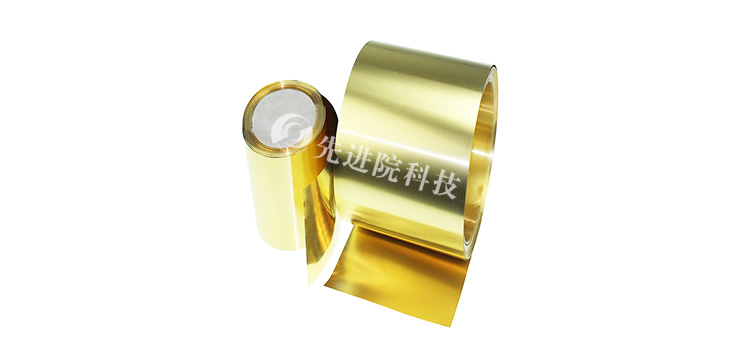
4、 Copper plated electrode (Cu) - the core material for power batteries and high-frequency copper-clad laminates
Copper has excellent conductivity (resistivity of about 1.68 μ Ω· cm) and good processability, making it a core electrode material in the fields of power batteries and flexible circuit boards.
In the field of lithium batteries, the composite current collector with PPS/Cu/PPS sandwich structure is becoming an important technological route to replace traditional copper foil, which can achieve significant weight reduction and energy density improvement while ensuring conductivity. Advanced Institute Technology has accumulated rich process experience in the field of PPS copper plated film electrodes.
In the field of high-frequency copper-clad laminates (FCCL), the combination of copper layers with low dielectric substrates such as LCP provides an ideal material solution for 5G/6G millimeter wave antennas and high-frequency high-speed transmission.
5、 Nickel plated electrode (Ni) - a versatile tool for wear resistance, corrosion resistance, and electromagnetic shielding
Advanced Institute Technology uses magnetron sputtering technology to prepare PPS nickel plated film electrodes, which can convert metal targets into high-purity thin films by sputtering high-speed charged particles in a vacuum environment. It has the characteristics of high efficiency and environmental protection, and can obtain uniform and dense thin films. PPS nickel plated film electrodes have good wear resistance, corrosion resistance, and electromagnetic shielding performance. The product thickness (2 μ m to 250 μ m optional) and square resistance can be flexibly customized according to actual needs.
6、 Core application scenarios
5G/6G high-frequency communication:PPS gold-plated film electrodes can be used as substrates and electrode materials for high-frequency circuit boards, and their low dielectric constant and low loss factor characteristics significantly reduce signal transmission losses. Advanced Institute Technology has achieved deep cooperation with leading enterprises such as ZTE Corporation.
Biomedical Electronics:Flexible surface electrode products and customized coating solutions are made of polymer films or elastomers as substrates, and conductive functional layers are prepared through high-precision PVD technology. They have low impedance, high flexibility, excellent adhesion, and long-term biocompatibility, and can be stably used in low to medium frequency therapy devices, neuromuscular electrical stimulation (NMES), transcutaneous electrical stimulation (TENS), electrocardiogram/electroencephalogram/electromyography monitoring and other scenarios. The product can meet the biocompatibility standards of ISO 10993 and GB/T 16886 series.
New energy vehicles and energy storage:The application of thin film metal electrodes in lithium-ion batteries not only improves the energy density of the battery, but also reduces material waste and lowers costs. The PPS/Cu/PPS composite current collector technology route provides a new direction for battery lightweighting and energy density improvement.
AI server and high-speed data transmission:The gold-plated thin film metal electrode supports ultra high speed transmission of over 40Gbps, making it the preferred material for AI server GPU interconnection and USB4/Thunderbolt data cables.
7、 Market prospects and development prospects
The global thin film electrode market is in a high-speed growth channel. According to market research institutions' predictions, the thin film electrode market is expected to grow from $570 million in 2025 to $970 million in 2030, with a compound annual growth rate of 11.3%. Among them, the metal based electrode segment is expected to be the largest segment market during the forecast period. The core driving force for market growth comes from the increasing demand for miniaturization, lightweight, and high-performance electronic devices in the fields of consumer electronics and industrial applications.
At the same time, the global vacuum coating industry market is steadily expanding, approaching $38 billion by 2025 and expected to exceed $55 billion by 2030. The thin film electrode market, as one of the important application directions of vacuum coating technology, is ushering in unprecedented development opportunities.
Conclusion
Advanced Institute (Shenzhen) Technology Co., Ltd. was established in 2016, headquartered in Bao'an District, Shenzhen. It is a national high-tech enterprise focusing on shielding materials, insulation materials, thermal conductivity materials, and precious metal coatings. The company has passed ISO9001 quality management system certification, and its products comply with GJB 773A aerospace related standards and RoHS environmental requirements.
In the field of metal based electrodes, Advanced Institute of Technology5B level adhesionThe coating processRoll to roll continuous vacuum coatingOur large-scale production capacity, as well as a full range of metallization solutions covering gold, silver, copper, nickel, titanium, platinum, etc., provide high-performance electrode material solutions for cutting-edge fields such as high-frequency communication, biomedicine, new energy vehicles, AI servers, etc. In the future, Advanced Institute Technology will continue to cultivate precision coating technology and promote the landing and popularization of thin film metal electrodes in more high-end application scenarios through continuous technological innovation.
Advanced Institute (Shenzhen) Technology Co., Ltd
Address: 8th Floor, Zhongxing Building, Xinsha Road, Xinqiao Street, Bao'an District, Shenzhen
Customized Hotline:0755-22277778
mobile phone13826586185(Mr. Duan)
Email:duanlian@xianjinyuan.cn
 en
en  Español
 Français
 Português