In the fields of rehabilitation therapy, pain management, neural regulation, and motor rehabilitation, electrical stimulation therapy equipment is increasingly becoming a core tool for clinical treatment and family health management. The popularization of techniques such as transcutaneous electrical nerve stimulation (TENS), neuromuscular electrical stimulation (NMES), and mid low frequency therapy has raised increasingly high requirements for the core component - surface electrodes. As the "last mile" connecting devices and the human body, the conductivity, signal quality, and long-term reliability of electrodes directly determine the effectiveness of physical therapy and user experience. In this context, Advanced Institute (Shenzhen) Technology Co., Ltd. relies on its independently developed vacuum coating and surface metallization technology platform to launch a series of flexible surface electrode coating solutions and customized products for the field of electrical stimulation therapy, providing high-performance conductive interfaces for accurate therapy and bioelectric monitoring.
1、 The market for electrical stimulation therapy is growing rapidly, and electrode performance has become key
With the increasing aging of the population, the rising incidence rate of chronic pain and the improvement of family medical and health awareness, the electric stimulation therapy market is ushering in a rapid growth period. According to market research data, the global market size of electrotherapy electrode sheets is expected to reach approximately $465 million in 2024 and $810 million in 2031, with a compound annual growth rate of 8.7%. The global TENS and EMS electrode market is expected to grow from $1.7 billion in 2025 to $3.5 billion in 2035. The market for therapeutic electrodes in China also maintains a steady growth trend.
In this rapidly growing market, the performance of electrode sheets has become a core factor determining equipment competitiveness. The body surface electrode for physiotherapy is usually composed of conductive material, hydrogel layer and backing layer. The conductive gel surface is pasted on the skin surface to transmit the electrical stimulation signal output by the electrotherapy equipment to the human body. The conductivity, impedance stability, fit comfort, and long-term durability of electrodes directly affect the transmission efficiency and therapeutic effect of electrical stimulation. How to achieve high conductivity, low contact impedance, excellent biocompatibility, and long-term reliability of metal coatings on polymer flexible substrates is one of the most core technical propositions in this field.
2、 Flexible surface electrode coating: technical difficulties and breakthrough directions
Unlike traditional rigid electronic devices, flexible surface electrodes impose more stringent comprehensive requirements on the conductive coating layer.
Low contact impedance
It is a key parameter that determines signal quality. The lower the impedance of the electrode skin interface, the higher the signal-to-noise ratio, and the more accurate the signal acquisition. In the operating frequency range of 10Hz-10kHz, electrodes need to exhibit extremely low and stable impedance characteristics to ensure efficient transmission of electrical stimulation signals and accurate collection of bioelectric signals.
High conductivity and mechanical stability
Equally indispensable. The coating layer needs to have excellent conductivity and maintain stable electrical performance under dynamic usage conditions such as repeated bending, stretching, application, and removal. Surface electrodes undergo repeated deformation caused by skin extension and joint activity during use. Once microcracks or detachment occur in the coating, impedance will sharply increase and signal quality will deteriorate accordingly.
biocompatibility
This is the bottom line requirement for medical electrodes. As a device that comes into direct contact with the skin, the coating material needs to be non-toxic, non irritating, and meet the biological safety requirements for long-term wear. According to industry standards such as YY 0868-2011 "Electrodes for Neural and Muscle Stimulators", electrode products must undergo strict biocompatibility evaluation. In addition, electrodes also need to withstand long-term corrosion from human secretions such as sweat and sebum.
Flexibility and adhesion
It is the core difference between flexible electrodes and rigid electrodes. The coating layer needs to be firmly combined with the flexible substrate, and should not fall off or crack in dynamic usage scenarios such as bending and twisting. Traditional coating or printing conductive layers are prone to detachment during repeated use, severely limiting the service life and reliability of electrodes.
3、 Advanced Institute Technology: Precision Coating Empowers High Performance Therapy Electrodes
Advanced Institute (Shenzhen) Technology Co., Ltd. was established in 2016, headquartered in Bao'an District, Shenzhen. It is a national high-tech enterprise specializing in shielding materials, insulation materials, thermal conductivity materials, and precious metal coatings. The company owns the independently registered trademark "Yanbo" and has dual production bases in Shenzhen and Dongguan. It has passed ISO9001 quality management system certification.
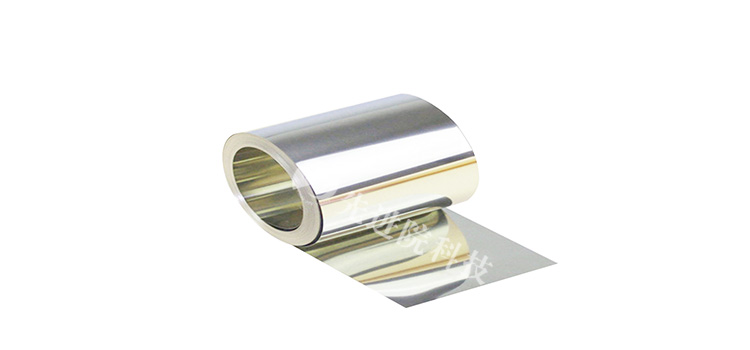
In the field of coating technology, Advanced Institute Technology has independently built magnetron sputtering and vacuum evaporation production lines, using roll to roll continuous production technology, which can continuously and uniformly deposit metal layers on the surface of flexible polymer films. Suitable substrates include high-performance films such as PET, PI, PEEK, FEP, LCP, PPS, PEN, PP, as well as elastic materials such as PDMS and TPU. Relying on advanced physical vapor deposition (PVD) technology, the thickness of metal thin films can be precisely controlled at the nanometer level, customized as needed in the range of a few nanometers to several hundred nanometers, ensuring extremely high uniformity and density.
Core Technology 1: Low temperature gradient interface locking, industry-leading adhesion
In response to the industry challenge of insufficient adhesion between metal and polymer substrates, Advanced Institute Technology has developed an online plasma activation combined with low-temperature gradient magnetron sputtering technology. By bombarding the surface of the substrate with plasma, the bonding strength between the substrate and the metal layer can be effectively improved; The metal coating achieves stress transition from the substrate to the metal layer through gradient coating design, effectively avoiding interface delamination caused by modulus differences.
This technical solution has brought excellent adhesion performance: the coating has a 100 grid adhesion of up to 5B level, a peel strength of over 0.8N/mm, and can withstand hundreds of thousands of dynamic bending and multiple uses, with no significant drift in electrode impedance. This means that therapy electrodes can maintain stable conductivity throughout their lifespan, significantly improving product reliability and user experience.
Core Technology 2: Multi material Coating System to Meet Diversified Needs
Advanced Institute Technology can provide various biocompatible metal coating solutions:
- • Silver/Silver Chloride (Ag/AgCl)——It is the most common material system in biopotential electrodes, characterized by low impedance, low polarization potential, and stable signal. Silver plating can also endow electrodes with good antibacterial properties.
- • Gold (Au)——Gold has extremely high chemical stability, excellent conductivity, and low contact resistance. Its chemical inertness endows the coating with excellent sweat corrosion resistance, making it particularly suitable for long-term wearing scenarios.
- • Platinum (Pt)——The resistivity can be as low as 1.65 μ Ω· cm, with excellent biocompatibility and electrochemical stability, suitable for high-precision neural regulation and other scenarios.
- • Titanium (Ti)——It has good biocompatibility and corrosion resistance, and can be used as a bottom transition layer to enhance adhesion.
In addition, carbon based and conductive polymer coating solutions such as carbon nanotubes, graphene, PEDOT: PSS conductive polymers can also be provided.
4、 Full vacuum dry process: meets strict standards for medical devices
Medical electrodes have extremely high requirements for biocompatibility and safety, and must pass medical certifications such as ISO 10993. They are non-toxic and non allergenic. The fully vacuum dry process of Advanced Institute Technology eliminates chemical solvent residues, and the finished product meets the ISO 10993 and GB/T 16886 series biocompatibility standards. The fully enclosed vacuum process does not produce wastewater or organic solvents, naturally complying with environmental regulations such as RoHS.
At the product level, Advanced Institute Technology's flexible surface electrode sheets are made of polymer films or elastomers as substrates, and conductive functional layers are prepared through high-precision PVD technology. They have low impedance, high flexibility, excellent adhesion, and long-term biocompatibility, and can be stably used in low to medium frequency therapy devices, neuromuscular electrical stimulation (NMES), transcutaneous nerve electrical stimulation (TENS), electrocardiogram/electroencephalogram/electromyography monitoring and other scenarios. The thickness of the substrate can be adjusted from a few micrometers to several hundred micrometers, and the thickness of the carrier material can be as thin as 50 μ m.
5、 Application scenarios: From clinical therapy to family health
The flexible surface electrode coating solution of Advanced Institute Technology is widely used in the following scenarios:
- • Rehabilitation therapy——Used for mid to low frequency physical therapy equipment and interference electrical therapy devices, efficiently transmitting electrical stimulation signals to the physical therapy site of the human body.
- • pain management——TENS transcutaneous nerve electrical stimulation electrode is used for chronic pain relief and neural regulation.
- • Neuromuscular stimulation——NMES neuromuscular electrical stimulation electrode, used for muscle rehabilitation training and exercise recovery.
- • Bioelectric monitoring——ECG, EEG, and EMG monitoring electrodes are used for dynamic ECG monitoring, brain computer interface, and precise neural regulation.
6、 Conclusion
In the fields of electrical stimulation therapy and bioelectric monitoring, the conductivity, signal quality, and long-term reliability of electrodes are the core elements that determine the competitiveness of equipment. Advanced Institute (Shenzhen) Technology Co., Ltd. provides high-performance and highly reliable conductive coating solutions for flexible surface electrodes through its independently developed precision coating technologies such as plasma activation and low-temperature gradient magnetron sputtering. From silver/silver chloride to multi material coating systems such as gold, platinum, titanium, etc., from precise control of nanoscale thickness to full vacuum dry biocompatibility assurance, advanced hospital technology is empowering the electric stimulation therapy industry with precision coating technology, providing a core conductive interface for accurate therapy and bioelectric monitoring.
Advanced Institute (Shenzhen) Technology Co., Ltd
Address: 8th Floor, Zhongxing Building, Xinsha Road, Xinqiao Street, Bao'an District, Shenzhen
Phone: 0755-222777778
Email: duanlian@xianjinyuan.cn
URL:www.xianjinyuan.cn
 en
en  Español
 Français
 Português