Introduction
In daily life, RFID (Radio Frequency Identification) technology is ubiquitous, from access cards to logistics tracking, it achieves non-contact data reading through radio waves. However, when RFID tags are attached to metal surfaces, traditional tags will completely fail due to the interference and reflection of electromagnetic waves by the metal. This is exactly“Metal surface RFID tag substrate”In the field of showcasing its skills, it is like a magical "barrier" that allows data to be accurately captured on metal carriers.
1、 Root cause of the problem - why is metal the "enemy" of RFID?
Metal surfaces have two major negative effects on electromagnetic waves:
1. Electromagnetic shielding: Metal forms a "barrier" that blocks and reflects the radio waves emitted by RFID readers, preventing signals from reaching the tag antenna.
2. Frequency detuning: The metal environment can alter the electromagnetic characteristics of the tag antenna itself, causing its resonant frequency to shift, just like a radio that is tuned to the wrong station and cannot establish an effective connection with a reader/writer.
The result is that when ordinary RFID tags are attached to metal, the reading distance will sharply decrease or even become completely unreadable.
2、 Solution - "Isolation" principle of anti metal materials
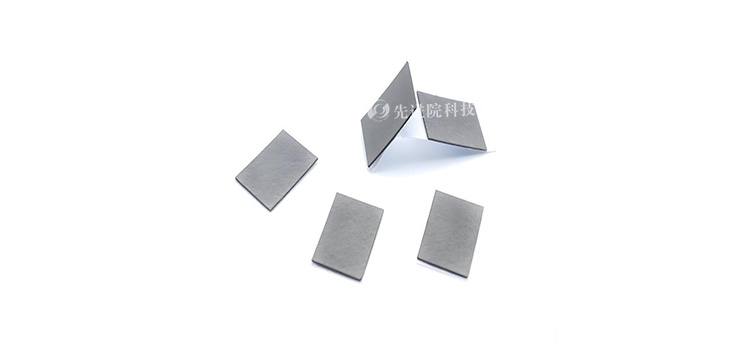
The core principles of anti metal materials are "creating distance" and "absorbing interference". It is usually a special composite dielectric material that is made into a thin substrate or filler and installed between RFID tags and metal surfaces. Its mechanism of action is:
1. Physical isolation: By adding a layer of thickness between the metal and the tag antenna, a "safe distance" is formed to effectively reduce the interference of the metal on the near-field area of the antenna.
2. Electromagnetic compatibility: This layer of material has a specific dielectric constant that can "counteract" the negative effects of metals, help the antenna maintain its original resonant frequency, and ensure the normal transmission of energy and signal interaction.
3、 Key materials - creating a sturdy 'protective layer'
In order to achieve effective isolation and protection,Anti metal materialSpecific performance is required, and common material types include:
1. Flexible foam base material: filled with tiny air bubbles inside, soft in texture, with good compressibility and cushioning, easy to paste on uneven metal surface.
2. Ceramic filled polymer: Mixing ceramic powder into resin or rubber to produce hard or flexible sheets with high dielectric constant, stable and reliable performance.
3. Special magnetic materials: use their unique magnetic permeability to guide and concentrate magnetic field lines, especially suitable for high-frequency environments, to improve read and write performance.
4、 Application Scenario - Empowering Intelligence in Various Industries
1. Asset management and tracking: Accurately manage and inventory valuable assets such as server cabinets, machine tools, metal shelves, etc.
2. Intelligent warehousing and logistics: Track metal containers, pallets, and shipping containers to achieve transparency throughout the entire logistics process.
3. Automotive and Aerospace: Manage metal parts, engines, and maintenance tools on the production line.
4. Infrastructure construction: Identify and monitor important facilities such as cable trays and metal pipelines.
Summary
In conclusion,Advanced Institute (Shenzhen) Technology Co., LtdAlthough RFID anti metal materials may seem simple, they are a key bridge connecting virtual data with the physical metal world. It cleverly resolves the electromagnetic interference problem caused by metals through sophisticated material science design, greatly expanding the application boundaries of RFID technology and providing a solid technical foundation for the implementation of Industry 4.0, the Internet of Things, and intelligent asset management in metal environments.

 en
en  Español
 Français
 Português