Mobile phone magnetic isolation sheet absorbing material: assisting in the lightweight design of the body
Introduction
In the pursuit of ultimate lightweight and powerful features in smartphones, internal space has become the most valuable resource. The increasing density of precision components arranged in narrow spaces has brought serious electromagnetic interference (EMI) problems. Although traditional metal shielding covers are effective, their thickness and weight have become bottlenecks in lightweight design. At this moment,Advanced Institute of TechnologyAs a new type of "invisible electromagnetic guard", the magnetic isolation sheet and absorbing material provide a key solution for the lightweight and high-performance of mobile phones through their unique material characteristics.
1、 Mobile phone magnetic isolation structure
Magnetic isolation sheet/absorbing materialIt is a flexible thin sheet made by mixing magnetic powder and resin, with a thickness of a few millimeters or even thinner. It can be directly attached to the surface of the chip or inside the housing, achieving shielding by absorbing and attenuating electromagnetic waves. This "sticker instead of cover" approach directly eliminates the three-dimensional height of the metal cover, providing the possibility for battery expansion or achieving a thinner body structure.
2、 Realize a more compact component layout and improve space utilization
The thinning of mobile phones is not only about the outer shell becoming thinner, but also the ultimate embodiment of internal stacking technology. The arrangement of components is becoming increasingly tight, but too close a distance can cause crosstalk, such as the noise from power management chips affecting antenna or sensor performance.
Absorbing materials can efficiently absorb stray electromagnetic waves in specific frequency bands and convert them into thermal energy for consumption. Designers can attach it precisely like a "band aid" between two components that are prone to mutual interference, forming a local electromagnetic isolation wall. This allows components that were originally required to maintain a safe distance to be brought closer together, achieving a more compact and efficient stacking design, indirectly helping to slim down the overall body.
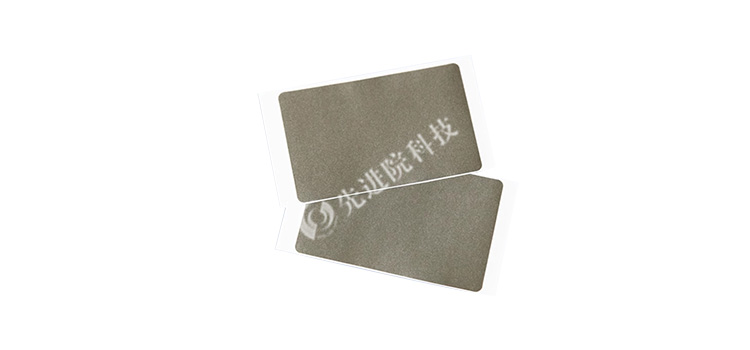
3、 Improving antenna performance to loosen design constraints
Antennas are the "senses" of mobile phones, and they are extremely sensitive to the surrounding electromagnetic environment. Within a compact body, metal frames, batteries, camera modules, and other components can obstruct and interfere with antenna signals. In order to ensure signal quality, traditional designs often require a large "clearance zone" to be reserved for the antenna, which undoubtedly limits the flexibility of internal layout.
Translate into Englishmagnetic shielding sheetApplied near the antenna, it can effectively isolate the interference of metal components on the back and stabilize the resonant frequency of the antenna. This means that the antenna performance is less affected by the internal structure, and designers can reduce the clearance area, layout the antenna in a more ideal position, or even adopt a more compact antenna design to free up space for other components, or directly compress the motherboard size.
4、 Relieve the contradiction between heat dissipation and electromagnetic interference, optimize the overall architecture
High performance chips are a major source of heat generation and interference. Although metal shielding covers can block interference, they can also hinder heat dissipation and create a "burning" effect, which is not conducive to heat dissipation. There is often a contradiction between heat dissipation and electromagnetic shielding in design.
Many advanced absorbing materials not only efficiently absorb electromagnetic waves, but also have good thermal conductivity. They can serve as an auxiliary heat dissipation path, guiding the heat generated by the chip to the metal frame or shell for dissipation. This "integrated absorption and heat conduction" function solves the dual challenges of thermal management and electromagnetic compatibility in high-density integration, allowing designers to adopt more aggressive performance scheduling strategies and more compact architectures without worrying about overheating or interference.
Summary
In summary, the Advanced Institute of TechnologyMobile anti magnetic stickerAbsorbing materials are far from simple auxiliary materials, but rather key enabling technologies that drive the development of mobile phone industry design forward. It directly saves space by replacing thickness with thinness and covering with stickers; Realize a more compact component layout by suppressing local interference; Loosening structural design by stabilizing antenna performance; And optimize the overall architecture through collaborative thermal management. It is precisely with the silent assistance of these materials that the devices in our hands are able to continuously enhance their performance and enrich their functions while becoming increasingly lightweight.

 en
en  Español
 Français
 Português